Language learners' surface, deep, and organizing approaches to ChatGPT
Introduction
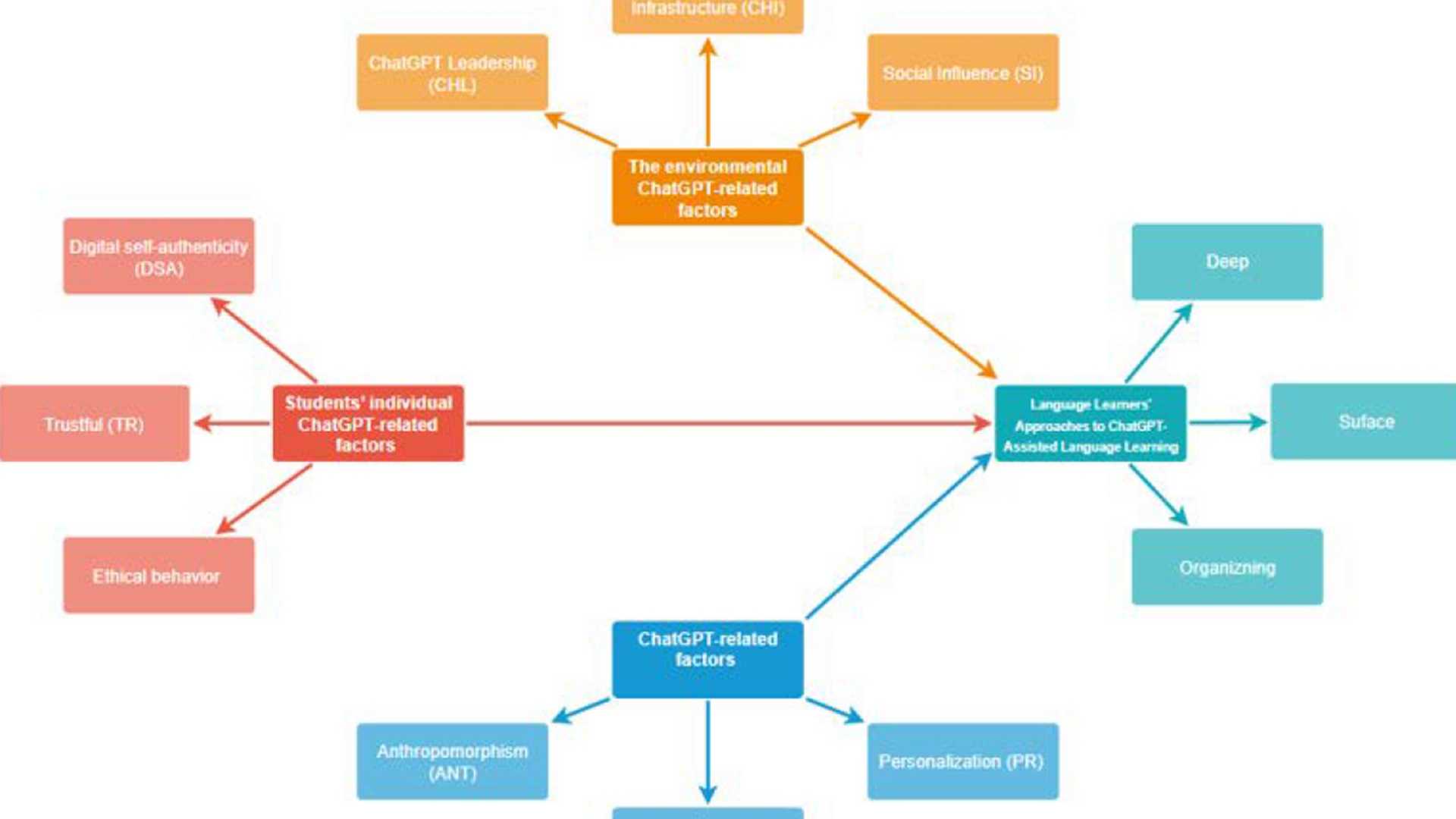
Researchers have extensively studied language learners' attitudes towards ChatGPT within the realm of technology acceptance models, specifically in its application to computer-assisted language learning (CALL). However, there is a need for further exploration in this area to implement a theoretical framework with a pedagogical-oriented perspective. In this study, researchers adopted students' approaches to the learning environment (SAL) and expanded it by integrating a multilevel perspective that considers contextual, individual, and ChatGPT-related factors.
Utilization of ChatGPT in Language Learning
The researchers incorporated ChatGPT into their language syllabus and directed learners in three universities in Ardabil City to utilize ChatGPT during the academic year 2023–2024. A total of 214 participants completed the study questionnaire. The findings from the partial least squares modeling (PLS-SEM) and Importance Performance Map Analysis (IPMA) revealed that ChatGPT leadership, characterized by the establishment of norms for ChatGPT integration by university executives, significantly influenced language learners’ organizing approach towards its use in their daily academic routine.
Personalization and anthropomorphism were identified as crucial ChatGPT-related factors that influenced learners' deep approach in utilizing ChatGPT as a valuable and cross-referenced CALL tool.  Conversely, issues such as low feedback reliability, privacy concerns, and perceived lack of value in ChatGPT contributed to language learners' surface approach, leading to minimal utilization of ChatGPT.
Impact of AI Technologies in Education
Artificial intelligence (AI) technologies, including ChatGPT, have had a significant impact on various sectors, including education. In the context of CALL, AI language learning has attracted educators, researchers, and language learners towards engaging in language activities through chatbot systems like ChatGPT.
ChatGPT, a part of OpenAI’s Generative Pre-Trained Transformer (GPT) family, is renowned for its accuracy in natural language tasks and generating contextually appropriate responses that recognize language variations, genres, and cultural nuances. The utilization of AI-driven technologies, such as ChatGPT, facilitates dialogic exchanges, instant feedback, and personalized language learning experiences for students.
Research and Studies on Language Learners' Attitudes Towards ChatGPT
Several studies have investigated language learners' perceptions of ChatGPT within the framework of technology acceptance models, integrating factors such as language learners' motivation, experience, and demographic information. These studies aim to understand the willingness of language learners to engage with AI-assisted language learning tools like ChatGPT.

Overall, the integration of AI technologies like ChatGPT in language learning environments has shown promise in enhancing learning experiences, providing personalized learning opportunities, and improving language acquisition processes both inside and outside the traditional classroom setting.