Phi-3 Tutorial: Hands-On With Microsoft's Smallest AI Model
Recently, Microsoft unveiled its Phi-3 model, a family of open AI models that brings significant advancements to the open-source community.
Understanding the Phi-3 Model
The Phi-3 model employs a dense decoder-only Transformer architecture and has been fine-tuned using Supervised Fine-Tuning (SFT) and Direct Preference Optimization (DPO). Compared to other models like Llama and GPT, Phi-3 boasts improved dataset quality and model alignment, resulting in enhanced performance.
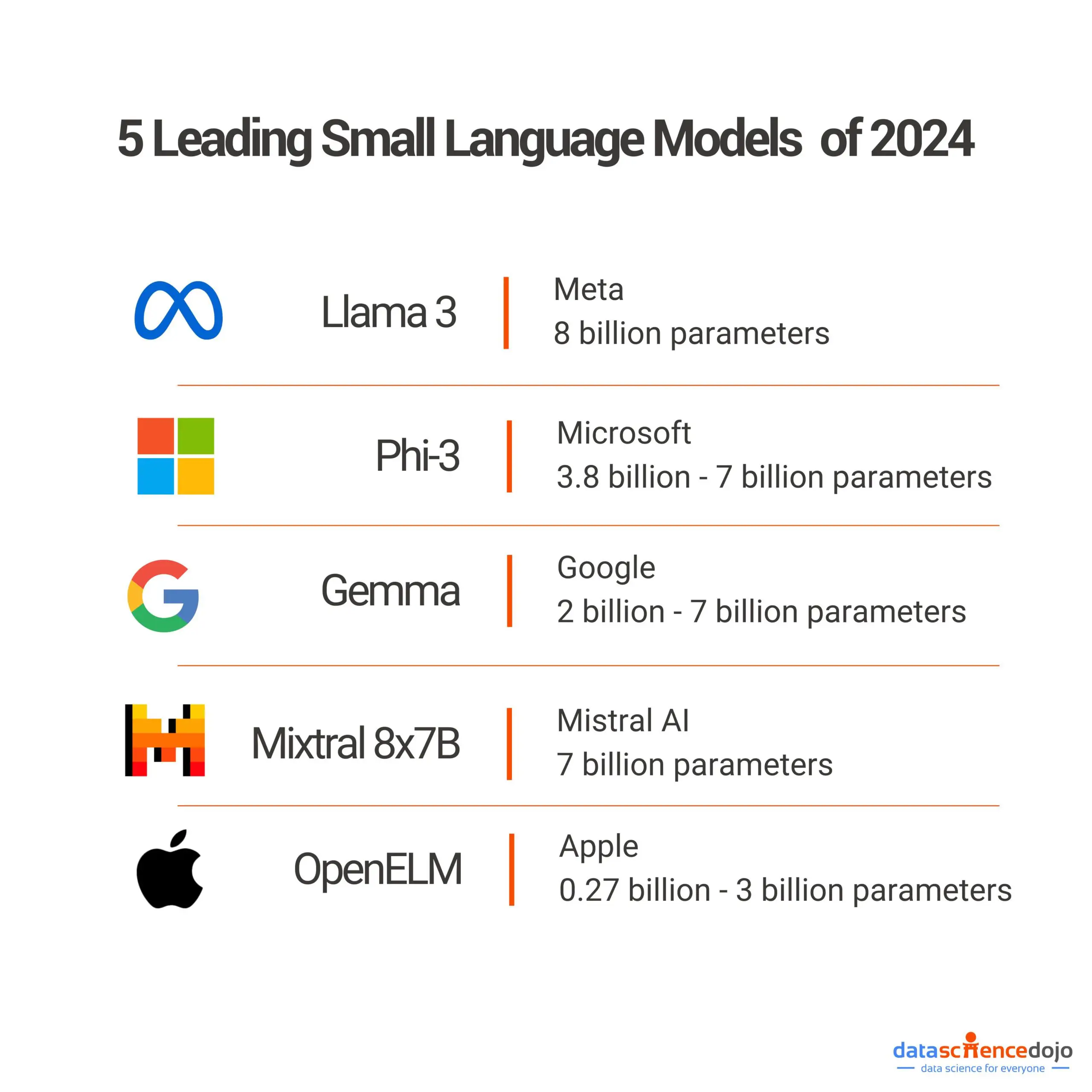
The model's training dataset, comprising 3.3 trillion tokens, is meticulously curated from various sources to ensure quality and alignment with human preferences.
Practical Insights
Users can access the Phi-3 model through the Transformers library and finetune it on real-world datasets. The model is available in several variants – mini, small, and medium – each catering to different computational and application requirements. Evaluations against other models such as Mistral and GPT-3.5 demonstrate Phi-3's competitive performance across benchmarks.
Applications and Integration
Phi-3's capabilities find practical applications in diverse fields. Integrating Phi-3 into data science workflows involves following key steps and best practices to ensure optimal performance and scalability.
Fine-Tuning the Phi-3 Model
To fine-tune the Phi-3 model effectively, access to significant computational resources is essential. The process involves installing necessary Python libraries, loading the pre-trained model, and configuring the fine-tuning process.
Preprocessing datasets, setting training arguments, and defining evaluation strategies are crucial steps in ensuring successful fine-tuning of the Phi-3 model.
Phi-3's robust performance across benchmarks highlights its potential to revolutionize AI applications. The model's diverse variants and advanced architecture position it as a dominant force in the realm of AI language models.








