Plasma Gasification Promises the World, Fails Everywhere—Pune ...
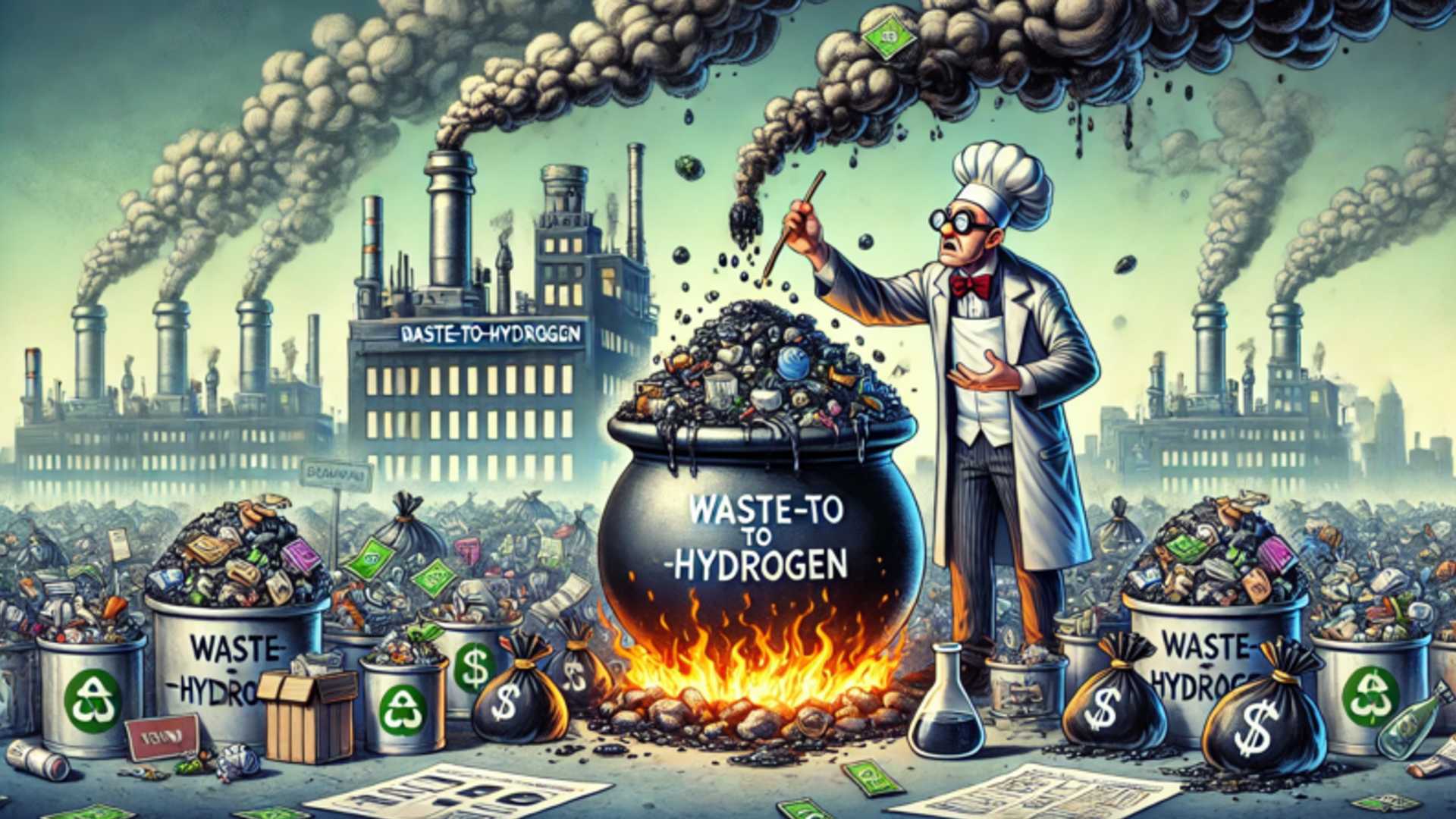
The idea was seductive: turn Pune’s mountains of garbage into clean hydrogen fuel. The city’s waste problem would be solved, and India would get a head start in the global hydrogen economy. That was the pitch when Pune Municipal Corporation and The Green Billions Limited announced India’s first waste-to-hydrogen project under the EU-India Clean Energy and Climate Partnership. The ₹450 crore (~$54 million) project aimed to process 350 tons of municipal solid waste per day, using plasma gasification to produce 10 tons of hydrogen daily. It was marketed as a breakthrough, promising to reduce landfill waste, cut emissions, and create a clean hydrogen supply for city buses and gas grid blending.

The Collapse of the Project
Yet, before a single kilogram of hydrogen was produced, the project collapsed. The Pune Municipal Corporation withdrew its ₹90 crore (~$11 million) funding, and India’s National Green Hydrogen Mission refused to provide the requested $30 million subsidy. Economic and emissions analysis suggests that hydrogen production would cost between $6 and $8 per kilogram, far above market rates. Worse, the estimated lifecycle emissions modeling showed that the hydrogen would have a carbon footprint of 40 to 60 tons of CO₂ per ton of H₂ produced, higher than steam methane reforming from natural gas or electrolysis at Pune’s high grid carbon intensity. The dream of clean hydrogen from garbage evaporated before the first plasma torch was lit.
Global Failures of Plasma Gasification
Pune’s failure is not an isolated incident. Plasma gasification and waste-to-hydrogen projects have failed worldwide, often after consuming vast amounts of public and private capital. The technical hurdles, energy inefficiencies, and high costs have made full-scale deployment elusive. The Pune fiasco fits into a broader trend—cities and investors being sold a technological silver bullet that turns out to be anything but.
.jpg)
Cautionary Tales
The Tees Valley plasma gasification project in the UK and Plasco Energy in Canada are examples of failed projects despite significant investments and promises. The technical challenges related to feedstock variability, tar formation, and operational inefficiencies have plagued these ventures, leading to their ultimate demise.
Alternative Strategies
Instead of relying on high-tech waste alchemy, cities should focus on waste prevention strategies, recycling, composting, anaerobic digestion, and efficient landfill management. These approaches not only reduce landfill waste but also have proven environmental and economic benefits.
Conclusion
Plasma gasification for waste-to-hydrogen production has proven to be an unsustainable and costly endeavor. It is time for governments and investors to shift their focus towards more viable and eco-friendly waste management solutions.


