New ChatGPT-like AI model could detect multiple different cancers with high accuracy
Researchers have developed a new artificial intelligence (AI) model named the Clinical Histopathology Imaging Evaluation Foundation (CHIEF) that shows promising results in detecting and evaluating various types of cancer. This model has shown to be up to 36% more effective than existing deep learning models in tasks such as detecting cancer, determining tumor origins, and predicting patient outcomes.
The team behind CHIEF, led by Harvard Medical School researchers, aimed to create a more versatile AI tool that can address a wide range of cancer diagnoses, unlike many current deep learning models that are specialized for specific functions. Kun-Hsing Yu, an assistant professor of biomedical informatics at Harvard Medical School and the senior author of the study, highlighted that the new model provides clinicians with accurate second opinions on cancer diagnoses by considering a broad spectrum of cancer types and variations.
The AI model can predict the molecular profile of tumor tissues based on image features.
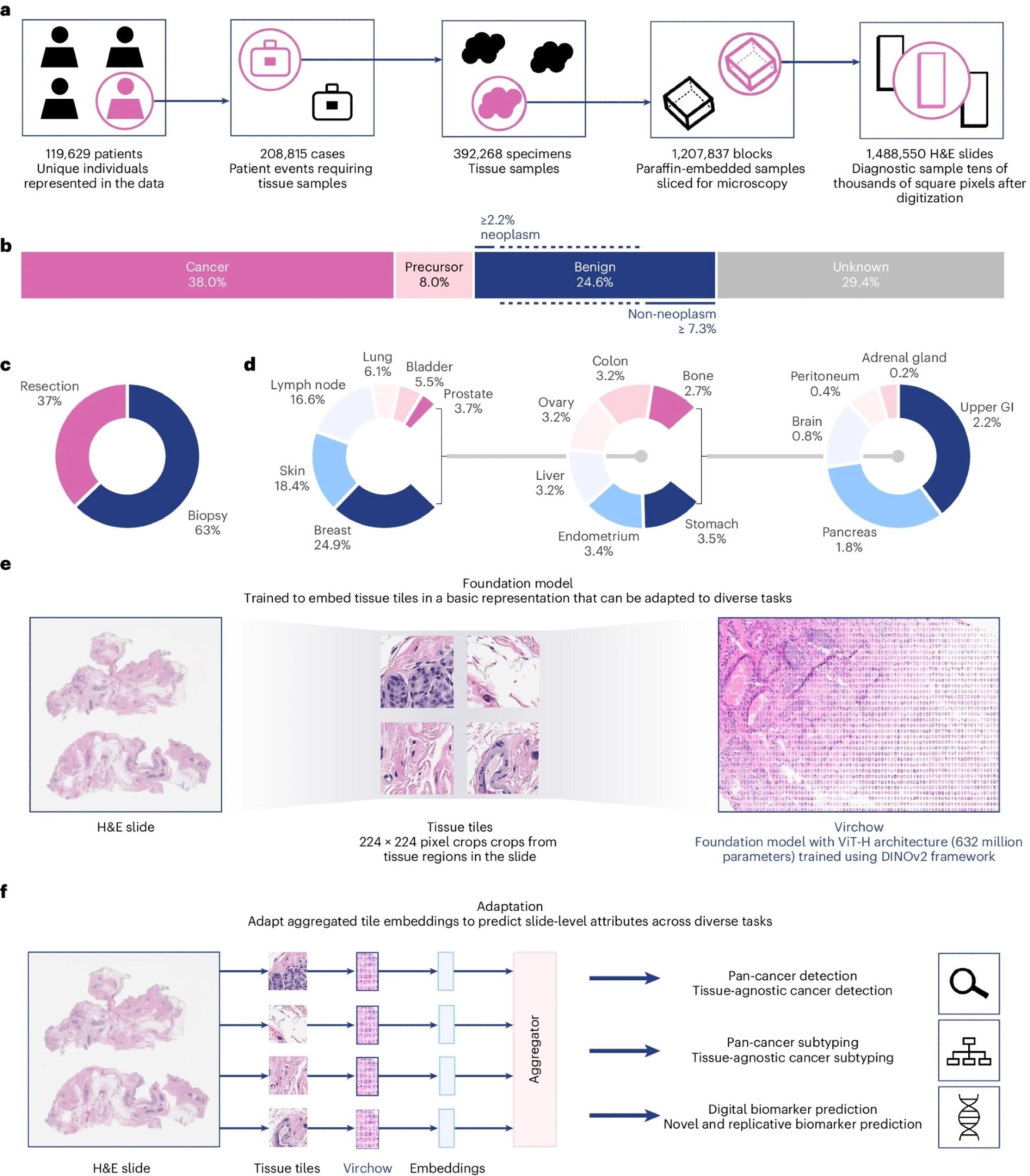
CHIEF was trained on a vast dataset of over 15 million pathology images to enhance its ability to diagnose cancers with atypical features. The researchers further refined the model using more than 60,000 high-resolution tissue slide images for specific genetic and clinical prediction tasks. In testing the model on over 19,400 images from various hospitals and patient cohorts globally, they achieved nearly 94% accuracy in detecting cancer cells across 11 different cancer types.
Key Findings of the Study:
- It can identify characteristics of a tumor that are relevant to a patient's response to treatment.
- For certain applications, the model's performance reached up to 99.43%, especially in tasks like identifying colon cancer cells or predicting genetic mutations.
According to Ajit Goenka, a professor of radiology at Mayo Clinic, this new AI model could streamline preliminary diagnostic evaluations in oncology and help pathologists by highlighting critical areas for further examination. However, the robustness of CHIEF in diverse clinical settings still needs rigorous testing to address potential biases from its large training datasets.
Press Release: Indica Labs achieves CE-IVD certification for AI ...

Before the AI model can be implemented in medical settings, it must undergo regulatory approval. The research team is planning to conduct a prospective clinical study to validate the CHIEF model in real-world clinical scenarios. They are also working on extending its capabilities to detect rare cancers.
Goenka emphasized the importance of extensive validation in diverse real-world settings to ensure the model's practical reliability in everyday clinical practice.


