ML Engineer Secrets: Resolving Complex Challenges
The interviewer poses this question to gauge your critical thinking skills, ability to analyze complex situations, and problem-solving approach, particularly in the realm of machine learning. It serves as a direct opportunity for them to delve into your experience and proactive problem-solving strategies.

Developing a Recommendation System
During my tenure as an AI engineer, our team undertook the development of a recommendation system designed to provide accurate product suggestions to online shoppers. The initial model, based on traditional collaborative filtering techniques, encountered notable constraints - specifically the cold-start issue for new users and the sparsity of the user-item interaction matrix.
To address these challenges, I suggested the implementation of a hybrid recommendation model that fused content-based and collaborative filtering techniques. Leveraging unsupervised learning methods, I constructed a product similarity model rooted in product attributes for the content-based recommendation component.
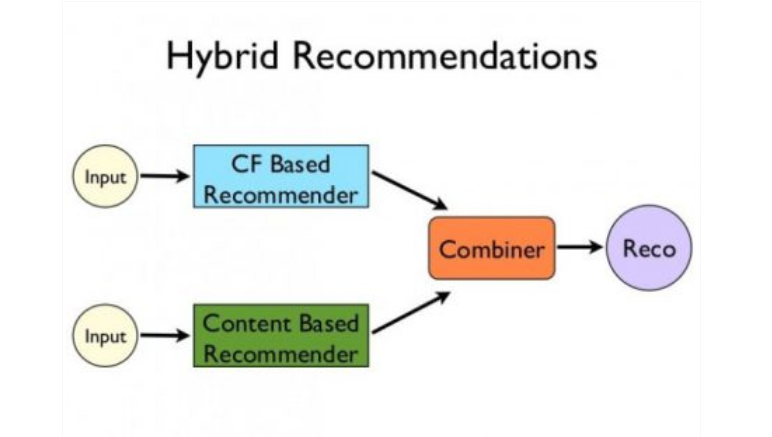
Additionally, I employed machine learning techniques such as Sparse Matrix Factorization and Deep Learning in the realm of collaborative filtering. This strategic shift effectively mitigated both the cold start problem and data sparsity concerns.
By enhancing the accuracy of recommendations, our approach elevated user experience and bolstered user engagement by 30% across a six-month timeframe.
Predicting Patient Readmissions in Healthcare
In my previous role as a data scientist within a healthcare organization, our primary challenge revolved around predicting patient readmissions - a critical endeavor as minimizing premature readmissions significantly reduces healthcare expenditures.
The dataset we worked with exhibited an imbalance, featuring a disproportionate number of non-readmission cases in comparison to instances of readmissions. Consequently, our model struggled in accurately predicting readmissions. To counter this issue, I employed a dual strategy involving down-sampling of the majority class and up-sampling of the minority class.

To prevent overfitting, I further integrated 'Predicted Probability Threshold Movements' and 'Ensemble Techniques' into the model.
To ensure the seamless integration of these methodologies, our team dedicated substantial time to cross-validation. As a result, our model's predictive accuracy regarding readmissions surged from 65% to 80%. This improvement enabled management to allocate resources more efficiently, leading to substantial cost savings.