The AI glasses battle awaits Xiaomi to issue licenses
The competition for Xiaomi's AI glasses is about to begin, and the market is highly focused on it. Xiaomi has invested heavily in the development of AI glasses, which are expected to be released in the second quarter of 2025. Although other manufacturers, such as Shanjite Technology, are trying to launch products ahead of time, they are facing challenges due to technical issues. Overall, the AI glasses market is still immature, and real competition will unfold after Xiaomi's release.
In the past few months, discussions about Xiaomi's AI glasses have been incessant. The reason hardware practitioners are collectively focusing on Xiaomi is that Ray-Ban Meta has rekindled market enthusiasm for AI glasses, yet there are almost no other products available for purchase on the market. Although some manufacturers held press conferences six months ago, their products are still hard to find.

Xiaomi's Dominance in the Market
Liu Yunlong, product manager at AI glasses ODM manufacturer Yijing Technology, stated that mature mass-produced products will only be available on the market by Q2 of this year. The long-rumored Xiaomi AI glasses are also expected to be released in Q2. As all AI glasses players enter the market, they will face a direct impact from Xiaomi, making the competition incredibly fierce.
Some manufacturers have attempted to get a head start. In late December last year, Shanjite Technology launched the AI Snap Mirror co-creation version, but faced issues with product functionality. This reflects the challenges faced by competitors in keeping up with Xiaomi's advancements.
The Challenges Faced by Competitors
The AR "Four Little Dragons," pioneers in the smart glasses track, have struggled to keep up with the evolving market demands. Their adherence to AR technology, while commendable, has posed challenges due to technological limitations and consumer preferences. The market feedback for AR devices has also been limited, indicating a plateau in sales.
Ray-Ban Meta's simplified approach to AI glasses has garnered significant success, surpassing 2 million units in cumulative sales in 2024. This success has put pressure on other players in the market, forcing them to reevaluate their strategies.
The Dilemma of the AR "Four Little Dragons"
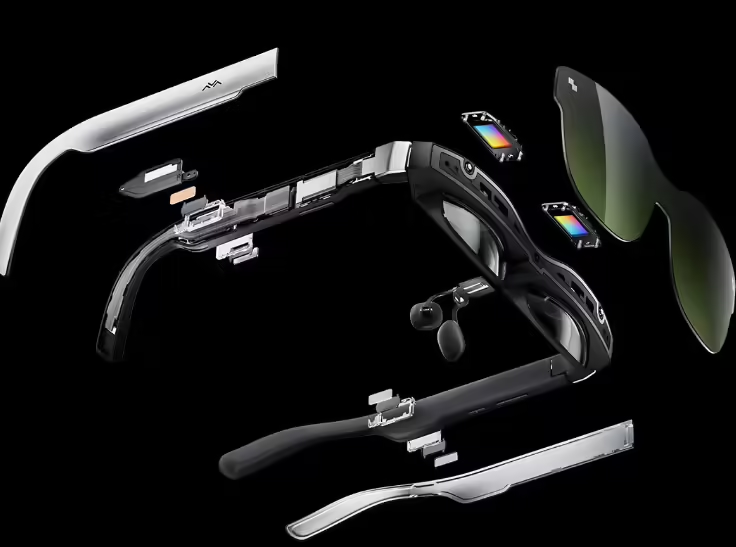
The hesitation and entanglement of the "Four Little Dragons" in the face of the AI glasses craze stem partly from the sunk costs formed by long-term investments in display technology. The high valuations of these companies have also hindered agile decision-making, potentially impacting their ability to capitalize on the AI glasses boom.
Following in the footsteps of Ray-Ban Meta means forming a separate team and reinvesting in product development and R&D. However, the financial constraints and high valuations of the Four Little Dragons have made this transition challenging, paving the way for new AI glasses startups to enter the market more agilely.
The Role of Technological Innovation
Technological innovation plays a crucial role in the development of AI glasses. The availability of mature chip solutions in the market is a key factor in producing high-quality AI glasses. However, the collective dilemma faced by AI glasses companies, especially startups, is the lack of mature chip solutions.
Qualcomm's AR1 chip solution has been recognized in the industry for AI photography glasses, but its exclusivity and cost implications have limited its adoption by smaller manufacturers. This underscores the challenges faced by startups in staying competitive in the AI glasses market.
In conclusion, the AI glasses battle is set to intensify with Xiaomi's entry into the market. Competitors must navigate technological barriers, market demands, and financial constraints to establish their presence in this rapidly evolving industry.


