Openness Challenges The Traditional Closed Nature Of Hardware IPs
In hardware design, intellectual properties (IPs) are often closed, presenting a challenge for countries like India with abundant talent but limited access to expensive tools. Efforts such as Chip to Startup aim to democratise access, but they reach only a fraction of potential users, considering the vast student base and aspiring researchers.
Therefore, the concept of openness entails two crucial aspects. First, openness provides access to free and open source tools, thus expanding accessibility beyond those restricted by costly proprietary software. Second, it pertains to making IPs open, enabling democratised development where individuals from diverse backgrounds can contribute, akin to the Linux open source movement.

Embracing openness allows for an open innovation culture in hardware. Openness challenges the traditional closed nature of hardware IPs to create standardised solutions, such as a universally open USB standard, or other such technologies.
Reducing Barriers of Entry
It is only going to increase. So, keeping things open is going to reduce the barrier of entry. Currently, funding and access to tools and specific IPs are major barriers. With an open framework, access to these tools, IPs, and design methodologies becomes much easier, allowing more people to start.

While many first-year students can easily use Python libraries to build applications, far fewer can build a chip or have access to the necessary resources.
Legal Considerations in Intellectual Property
True, but how do you validate it against a problem? If there is an IP owned by another entity and the designer tries to generate it, they will run into legal complications.
When individuals own intellectual property, such as an operational amplifier or a PLL, they typically file patents or obtain copyrights. However, relying solely on generative AI for IP creation can lead to legal challenges.
To mitigate this risk, open frameworks with Creative Commons licences offer legal protection for both commercial and non-commercial use. This becomes increasingly important with the rise of generative AI technologies.
Shifting Focus and Promoting Accessibility
With this kind of system, we are reducing the manpower requirement in companies to build solutions, thanks to proven silicon designs available for use. This shifts the focus towards system integration skills rather than specific design skills.
For startups, this means an easier start as they can leverage existing designs rather than facing difficult challenges from scratch. Hiring individuals with specialised design skills can be challenging due to budget constraints.
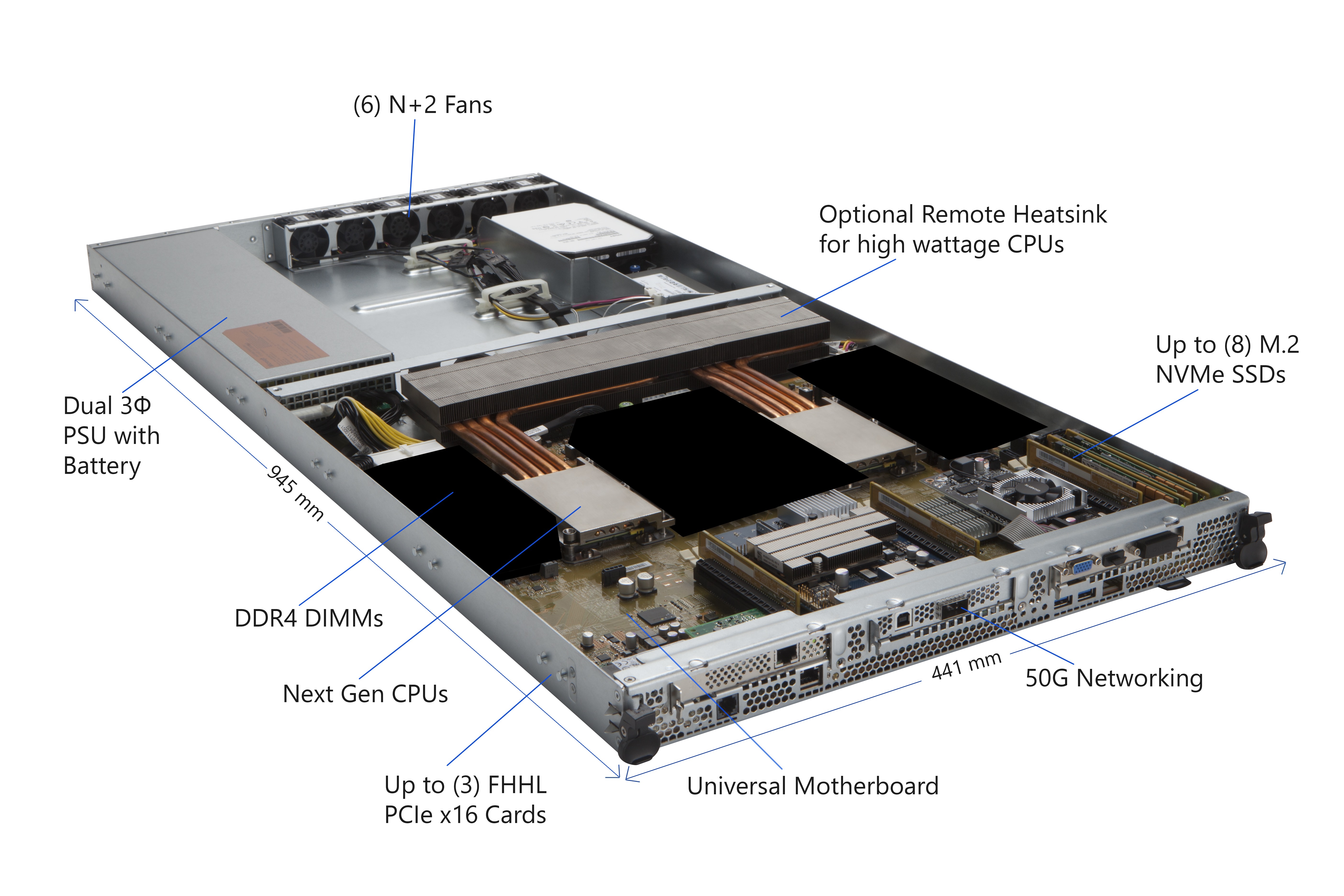
High tool costs, such as licensing fees, can be prohibitive for startups and SMEs, whose revenues are much lower in comparison. An open AI hardware ecosystem promotes accessibility and openness, encouraging the participation of SMEs, startups, designers, students, and others in the field.
Challenges in Manufacturing and Design Support
Manufacturing is another area that requires discussion. Currently, not many foundries support open source tools and democratisation of chip design is essential for the growth of this field.
A process design kit (PDK) is needed for creating the manufacturing-ready graphic design system (GDS) file required for tapeout. However, if the foundries themselves do not support it, obtaining a PDK becomes challenging.
Foundries need to support FPGAs, and someone has to develop process design tools for designers to use. This conversation needs to happen with many foundries, not just one or two. Currently, only a few foundries support open source designs, making testing possible on those foundries.
Promoting Indigenous Innovation
Certainly, if we observe companies in the technology sector, much of the design work actually occurs in India, indicating a strong talent base in fabless design. However, Indian-owned businesses in this sector are relatively few.
One change that we need to make is to focus on building Indian-owned companies that can sell their IPs and products globally, not just domestically. The challenge lies in enabling that and making those resources more affordable to encourage more people to enter the industry early on.
Transition to Experiential Learning
We have implemented a model that completely removes the need for traditional classroom-based teaching and thereby transitions to experiential learning. This means there are no fixed learning hours; it is more about continuous learning, accessible 24/7.
Our curriculum is designed around lab-based and project-based learning. This shift is driven by industry demands for targeted skills rather than generic ones. We aim to cultivate problem-solving and creativity without relying on textbooks.
In partnership with IEEE, we have launched a programme called Maker CHIPS to democratise the IC design using open source tools. Students and researchers get a chance to learn the art of IC design and manufacture the chips at no cost to the end user. The details of this programme can be found at www.makerchips.org.


