What is Meta Llama and Why Does it Matter? | Bigly Sales
Artificial intelligence is evolving at an unprecedented pace, and one of the most discussed breakthroughs in the AI space is Meta’s Llama (Large Language Model Meta AI). This family of large language models (LLMs) has revolutionized natural language processing, AI applications, and open-source AI innovation. Meta’s Llama models shape how businesses, developers, and researchers interact with AI.
Understanding the significance of Llama is crucial in a world where artificial intelligence is becoming increasingly embedded in everyday life. This article profoundly looks into what Meta Llama is, how it has evolved, why it matters, and what the future holds for this powerful AI model. Meta Llama is a series of large language models Meta (formerly Facebook) developed to democratize AI research and development. Unlike many proprietary AI models, Meta has embraced an open-source approach, allowing developers worldwide to access and innovate with Llama’s architecture.
The Journey of Meta Llama
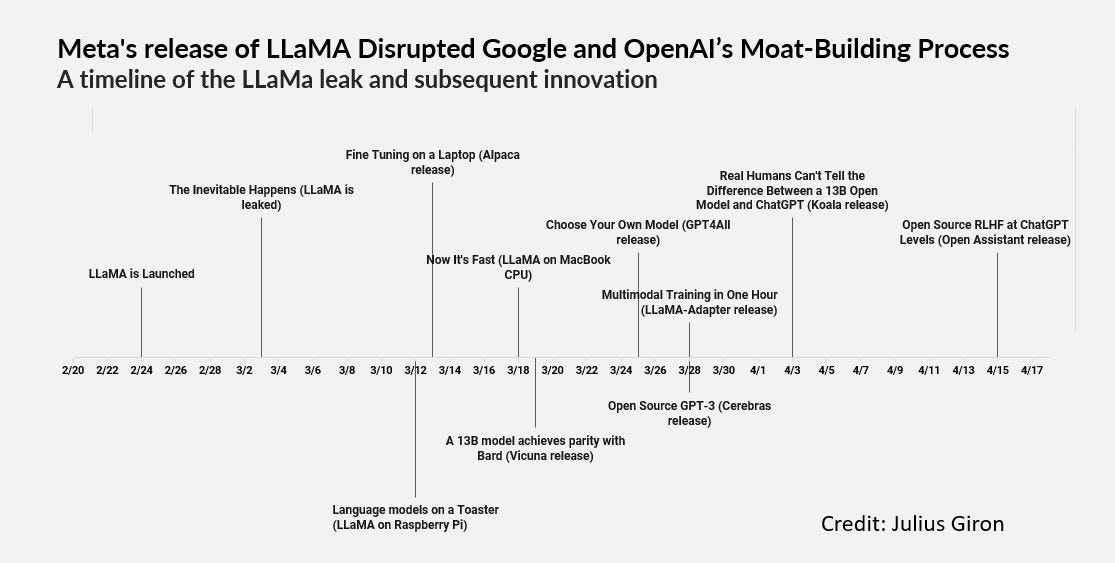
The initial version of Llama, Llama 1, was a foundational model designed for research and experimentation. Its sizes ranged from 7 billion to 65 billion parameters. Unlike proprietary models from OpenAI and Google, Llama 1 was intended to emphasize efficiency, making it possible for AI developers to run it on relatively modest hardware.
In July 2023, Meta released Llama 2, which significantly improved on its predecessor. It featured enhanced training data, making it more effective at understanding and generating human-like text. Llama 2 also introduced better fine-tuning capabilities, allowing businesses and developers to customize the model for specific applications.
Meta also released Llama 2 with varying sizes, making it adaptable for different use cases, from lightweight chatbot applications to enterprise-level AI solutions. This version of Llama was adopted across multiple industries, ranging from content generation and customer support to data analysis and software development.
As artificial intelligence continued to advance, Meta responded with the Llama 3 series, which included multiple versions with larger datasets, improved contextual understanding, and expanded multimodal capabilities. Llama 3.2 introduced image recognition and processing capabilities, allowing AI applications beyond text-based interactions.
One of the most notable developments in the Llama 3 series was the introduction of models scaling up to 405 billion parameters. These models were designed to compete with OpenAI’s GPT-4 and Google’s Gemini models while maintaining an open-source foundation.
Key Features of Meta Llama
Meta’s Llama models are open-source, unlike many AI models that are restricted behind paywalls and proprietary access. This means developers and researchers worldwide can freely use, modify, and deploy these models without licensing fees. This accessibility has contributed to rapid AI advancements and experimentation across various industries.
Llama models are built to be scalable, meaning they can run efficiently on different levels of hardware. While smaller versions can operate on personal computers and cloud servers, larger models require powerful GPUs or cloud-based AI platforms. This ability to scale makes Llama adaptable to businesses of all sizes.
The introduction of multimodal AI in Llama 3.2 marked a significant milestone. This enhancement allows the model to process and generate text and images, expanding its range of applications. For example, AI-powered assistants can now analyze pictures, understand visual data, and provide context-aware responses.
Meta has also focused on optimizing Llama for edge computing and mobile devices. AI-powered applications can run locally on smartphones, smart glasses, and other IoT devices without always relying on cloud processing. This significantly impacts real-time AI applications, privacy, and performance efficiency.
Applications and Impacts of Meta Llama
Meta has integrated Llama into its products, including Facebook, Instagram, and WhatsApp. AI-powered chatbots, content moderation systems, and smart recommendations leverage Llama’s capabilities to enhance user experiences. Additionally, Meta has used Llama to power AI assistants in devices like Ray-Ban Meta smart glasses.

Llama’s open-source nature has contributed to a significant acceleration in AI research. Universities, independent researchers, and startups have used Llama models to conduct AI experiments, develop new applications, and improve existing natural language processing technologies. Businesses across various industries have adopted Llama models to enhance productivity and engagement, from customer service chatbots to AI-generated content creation. The finance sector uses Llama for risk analysis, while healthcare applications leverage AI-driven insights for diagnostics and patient care.
Challenges Faced by Llama
With the power of AI comes responsibility. Open-source AI models like Llama can be misused for generating misleading information, deepfakes, or harmful content. Meta and the AI research community are actively working on implementing safeguards to prevent misuse while maintaining the benefits of open-source accessibility.
Despite being optimized for efficiency, large Llama models require significant computational power for training and fine-tuning. This can be a barrier for small businesses and independent researchers who lack access to high-performance GPUs or cloud computing resources.
The Future of Llama
Meta has indicated plans to continue evolving the Llama series. Future releases should include even larger models, enhanced reasoning capabilities, and better adaptability for specific industries. Future iterations may also introduce real-time learning capabilities, enabling AI to improve continuously based on new data. As AI technology advances, Meta’s Llama models are poised to shape the future of artificial intelligence significantly. Their open-source nature ensures rapid innovation, while their adaptability allows for integration into an ever-expanding range of applications. Meta’s Llama models represent a significant step forward in artificial intelligence. By making cutting-edge AI technology more accessible, Meta has enabled businesses, researchers, and developers to create innovative applications without the restrictions of proprietary models. Llama’s evolution from its initial release to the latest advancements showcases how AI is becoming more powerful, scalable, and useful in everyday applications. Llama is positioned to remain at the forefront of AI innovation as artificial intelligence advances. Whether it’s improving chatbot interactions, automating business processes, or enhancing creative content generation, Meta’s Llama models are undoubtedly shaping the future of AI.