From concerns to benefits: a comprehensive study of ChatGPT in Higher Education
Artificial Intelligence (AI) chatbots are increasingly becoming integral components of the digital learning ecosystem. As AI technologies continue to evolve, it is crucial to understand the factors influencing their adoption and use among students in higher education. This study is undertaken against this backdrop to explore the behavioral determinants associated with the use of the AI Chatbot, ChatGPT, among university students.
Exploring Behavioral Determinants
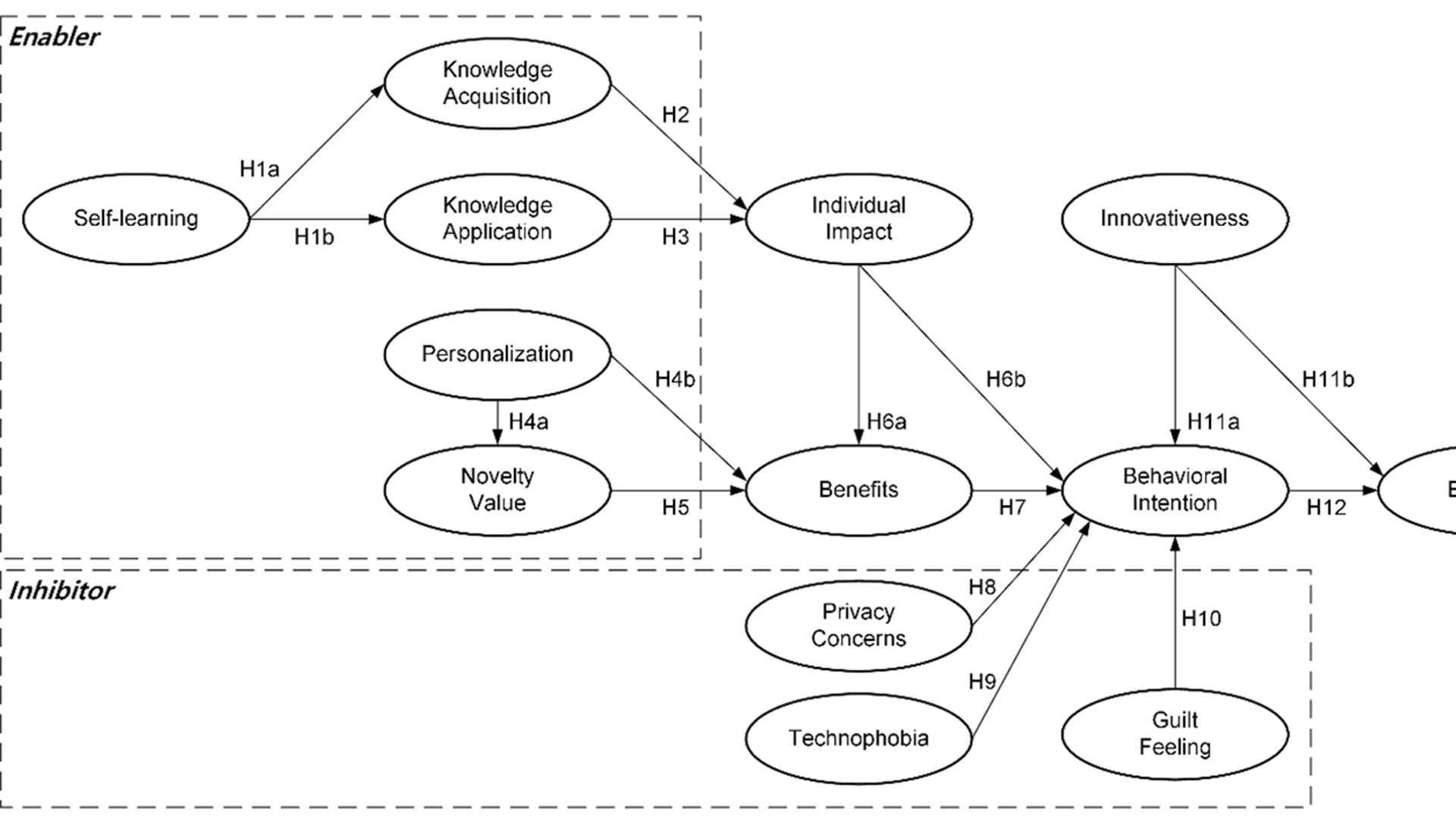
The investigation delves into the role of ChatGPT’s self-learning capabilities and their influence on students’ knowledge acquisition and application, subsequently affecting the individual impact. It further elucidates the correlation of chatbot personalization with novelty value and benefits, underscoring their importance in shaping students’ behavioral intentions.
Notably, individual impact is revealed to have a positive association with perceived benefits and behavioral intention. The study also brings to light potential barriers to AI chatbot adoption, identifying privacy concerns, technophobia, and guilt feelings as significant detractors from behavioral intention.
Impact on Student Behavior
However, despite these impediments, innovativeness emerges as a positive influencer, enhancing behavioral intention and actual behavior. This comprehensive exploration of the multifaceted influences on student behavior in the context of AI chatbot utilization provides a robust foundation for future research. It also offers invaluable insights for AI chatbot developers and educators, aiding them in crafting more effective strategies for AI integration in educational settings.
Role of ChatGPT in Education
In the realm of advanced language models, OpenAI’s Generative Pre-trained Transformer (GPT) has emerged as a groundbreaking tool that has begun to make significant strides in numerous disciplines. Education, in particular, has become a fertile ground for this innovation. A standout instance is ChatGPT, the latest iteration of this transformative technology, which has been rapidly adopted by a large segment of university students across the globe.

At its core, ChatGPT is armed with the ability to produce cohesive, contextually appropriate responses predicated on preceding dialogues, providing an interactive medium akin to human conversation.
Features and Capabilities of ChatGPT
ChatGPT is replete with remarkable features courtesy of its underlying technologies: machine learning and natural language processing. Its capabilities span across a broad spectrum, from completing texts, answering questions, to even spawning original content. In the landscape of education, these functionalities morph into a powerful apparatus that could revolutionize traditional learning modalities.
Similar to a human tutor, students can converse with ChatGPT—asking questions, eliciting explanations, or diving into profound discussions about their study materials. Beyond its conversational abilities, ChatGPT’s capacity to learn from past interactions enables it to refine its responses over time, catering more accurately to the user’s distinct needs and preferences.
Enabling Factors for Adoption
ChatGPT’s unique features manifest a range of enabling factors that can significantly influence its adoption among university students. One such factor is the self-learning attribute that empowers the AI to progressively enhance its performance. This feature aligns with the ongoing learning journey of students, potentially fostering a symbiotic learning environment. Another pivotal factor is the scope for knowledge acquisition and application. As ChatGPT assists in knowledge acquisition, students can simultaneously apply their newly garnered knowledge, potentially bolstering their academic performance. Personalization of the AI forms another significant enabling factor, ensuring that the interactions are fine-tuned to each student’s distinctive needs, thereby promoting a more individual-centered learning experience.