OpenAI unveils o1: Everything you need to know
The o1 models, which use reinforcement learning and chain-of-thought reasoning, represent a significant advancement in AI capabilities. OpenAI has made the o1 models available to both ChatGPT users and developers through various access tiers. For ChatGPT users, the o1-preview model is accessible to subscribers of the ChatGPT Plus plan, offering advanced reasoning and problem-solving capabilities. OpenAI’s API gives developers access to o1-preview and o1-mini on higher-tier subscription plans. These models are available on the API tier 5, allowing developers to integrate the advanced capabilities of o1 models into their own applications. The tier-5 API is a higher-level subscription plan offered by OpenAI for accessing its advanced models.
1. Two Model Variants: o1-Preview and o1-Mini
OpenAI has released two variants: o1-preview and o1-mini. The o1-preview model excels in complex tasks, while o1-mini offers a faster, more cost-effective solution optimized for STEM fields, particularly in coding and mathematics.
2. Advanced Chain-of-Thought Reasoning
The o1 models utilize a chain-of-thought process, allowing them to reason step-by-step before responding. This deliberate approach boosts accuracy and helps in handling complex problems that require multi-step reasoning, making it superior to previous models like GPT-4. Chain-of-thought prompting enhances AI’s reasoning by breaking down complex problems into sequential steps, improving the model’s logic and calculation abilities. OpenAI’s GPT-o1 model advances this by embedding the process into its architecture, mimicking human problem-solving. This allows GPT-o1 to excel in competitive programming, mathematics and science while also increasing transparency, as users can follow the model’s reasoning, marking a leap in human-like AI reasoning. This advanced reasoning ability causes the model to take its time before responding, which may appear slow when compared to the GPT-4 family of models.

3. Enhanced Safety Features
OpenAI has embedded advanced safety mechanisms into the o1 models. These models have demonstrated superior performance in disallowed content evaluations, showing robustness against jailbreaks, making them safer for deployment in sensitive use cases. Jailbreaking AI models involves bypassing safety measures to provoke harmful or unethical outputs. As AI systems become more sophisticated, the security risks associated with jailbreaking increase. OpenAI’s o1 model, particularly the o1-preview variant, shows improved resilience against such attacks, scoring higher in security tests. This enhanced resistance is due to the model’s advanced reasoning, which helps it better adhere to ethical guidelines, making it harder for malicious users to manipulate.
4. Improved Performance on STEM Benchmarks
The o1 models rank among the top in various academic benchmarks. For example, o1 ranked in the 89th percentile on Codeforces (a programming competition) and placed within the top 500 students in the USA Math Olympiad qualifier.
5. Superior Hallucination Mitigation
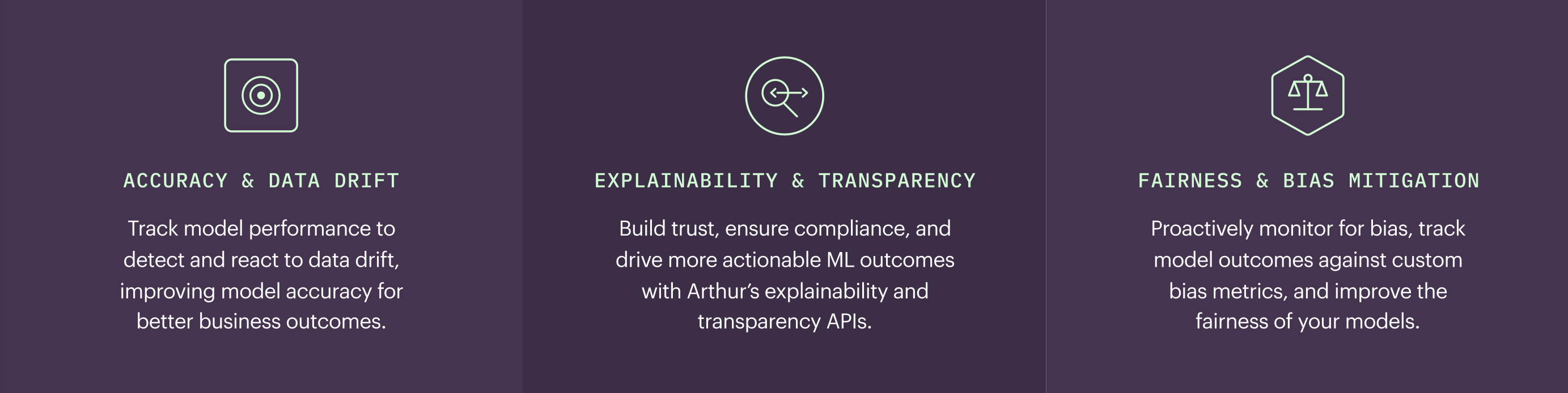
Hallucination in large language models refers to the generation of false or unsupported information. OpenAI’s o1 model tackles this issue using advanced reasoning and the chain-of-thought process, allowing it to think through problems step-by-step. The o1 models reduce hallucination rates compared to previous models. Evaluations on datasets such as SimpleQA and BirthdayFacts show o1-preview outperforming GPT-4 in delivering factual, accurate responses, lowering the risk of false information.
6. Trained on Diverse Datasets
The o1 models were trained on a combination of public, proprietary and custom datasets, making them well-versed in both general knowledge and domain-specific topics. This diversity enables robust conversational and reasoning capabilities.
7. Affordable Access and Cost Efficiency
OpenAI’s o1-mini model provides a cost-effective alternative to o1-preview, being 80% cheaper while still offering strong performance in STEM fields like mathematics and coding. The o1-mini model is tailored for developers who need high accuracy at a lower cost, making it ideal for applications where budget constraints are key. This pricing strategy ensures wider accessibility to advanced AI, especially for educational institutions, startups and smaller businesses.