
Home »
AI in Education
Artificial Intelligence (AI) is revolutionizing various industries, and education is no exception. Among the array of AI technologies available, ChatGPT stands out as a valuable resource for educators. Developed by OpenAI, ChatGPT is a language model designed to assist in idea formation, explanation, and content creation. Integrating ChatGPT into the lesson planning process can potentially enhance teaching and learning experiences for educators in schools and higher education institutions.
Understanding ChatGPT
ChatGPT is an AI language model trained to read and generate human-like text based on user input. Its capabilities include responding to questions, writing articles, summarizing content, and simulating conversations. This versatility makes ChatGPT a valuable tool for educators looking to innovate their teaching methods and increase student engagement.
Accessed from: ChatGPT website
Brainstorming and Idea Generation
One of the most time-consuming tasks in lesson planning is developing new and engaging ideas. ChatGPT can serve as a powerful brainstorming tool, offering a plethora of subject-specific ideas tailored to the academic year. Whether planning a history class on World War II or any other topic, ChatGPT can provide suggestions for interactive activities, multimedia resources, and discussion topics.
Lesson Planning and Resource Creation
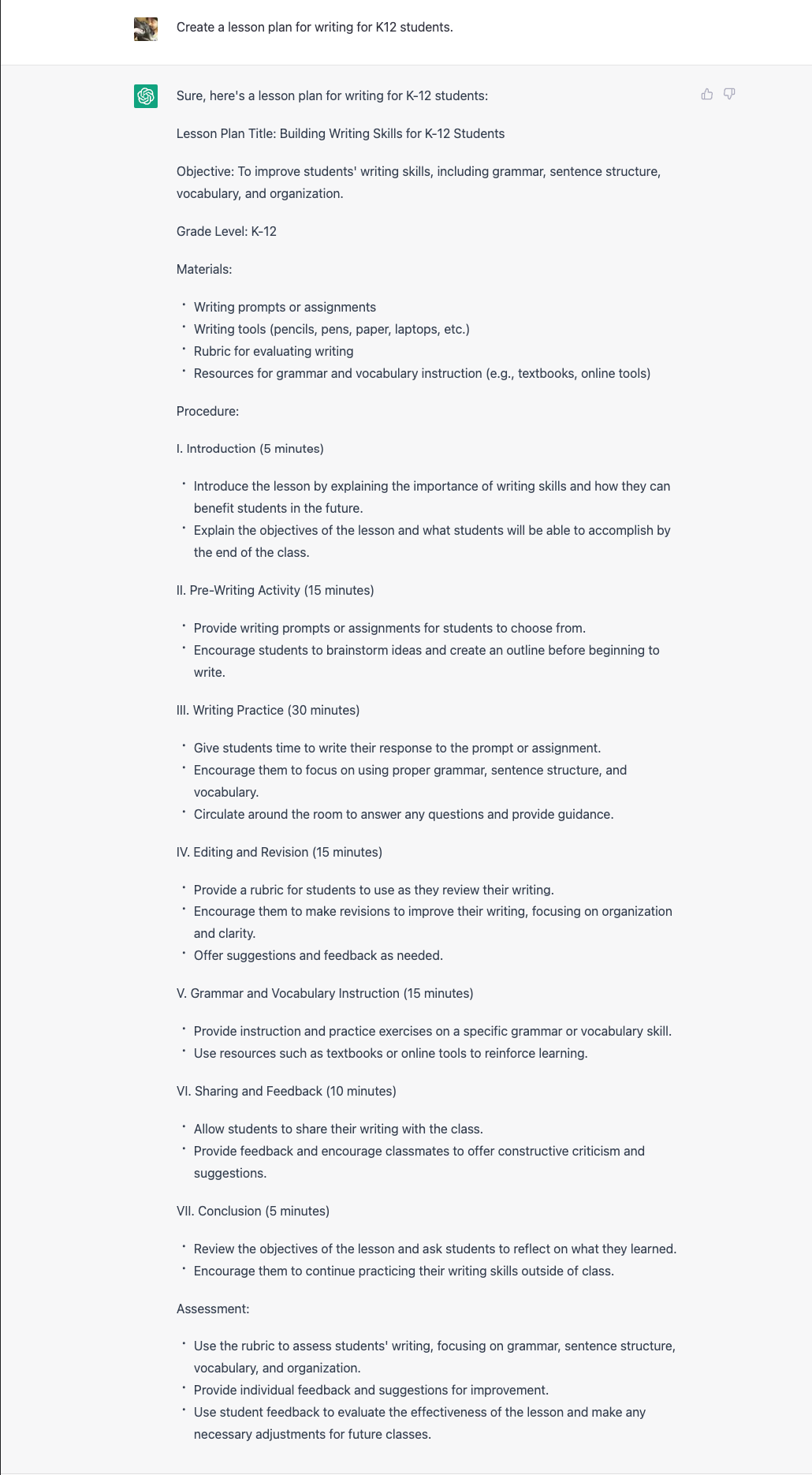
After generating ideas, the next step is to create detailed lesson plans. ChatGPT can assist in structuring lessons by providing templates and recommending activity sequences aligned with learning objectives. From initial exercises to main lessons and closing activities, ChatGPT can help streamline the planning process.

Accessed from: User Generated Education website
Differentiated Instruction and Engagement
Meeting the diverse needs of students requires differentiated instruction. ChatGPT can aid in creating content at varying levels of difficulty, ensuring all students have access to suitable learning materials. Additionally, ChatGPT can suggest interactive activities such as debates, role-playing, and group projects to enhance engagement and facilitate active learning.
Feedback and Communication
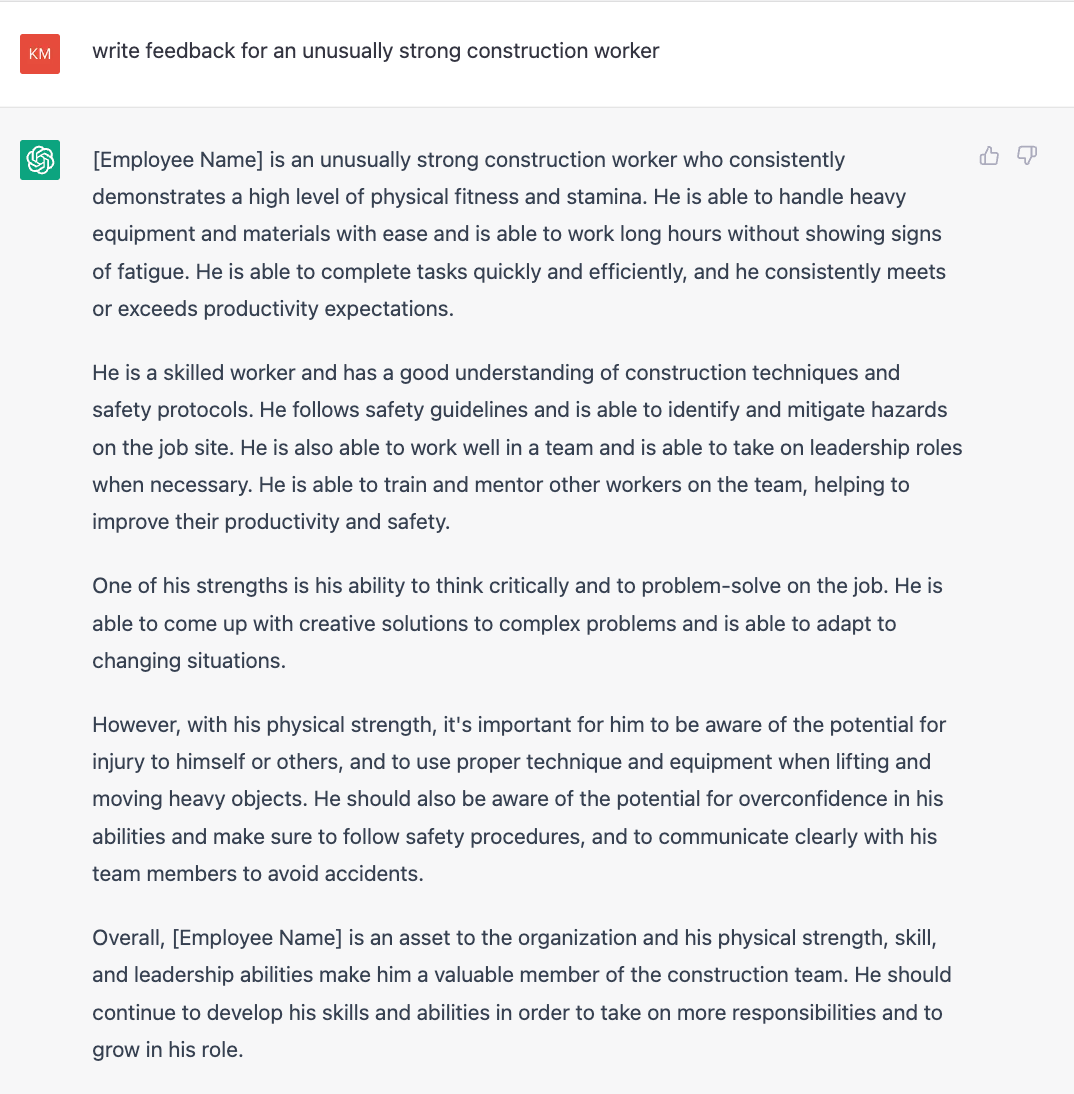
Feedback plays a crucial role in the learning process. ChatGPT enables quick feedback delivery through automated tests or written assignments. It can also assist in drafting communication materials such as emails, newsletters, and announcements, fostering clear and consistent communication with students and parents.
Accessed from: Zapier website
Administrative Support and Ethical Use
Aside from instructional support, ChatGPT can aid in administrative tasks like generating reports, tracking student progress, and organizing data. Teachers can leverage ChatGPT to streamline administrative processes, allowing them to focus more on teaching.
While ChatGPT offers numerous benefits, it is essential to address potential challenges such as data accuracy and ethical use. Verifying information generated by ChatGPT, ensuring alignment with teaching styles, and promoting ethical AI use are critical considerations for educators.
Transforming Education with ChatGPT
Integrating ChatGPT into the lesson planning process can elevate instruction quality, enhance student achievement, and create a dynamic learning environment. By leveraging AI tools like ChatGPT, educators at Harrow International School Hong Kong can save time, personalize teaching approaches, and provide prompt feedback to students. The key lies in using these technologies judiciously, always prioritizing the needs and well-being of students.
38 Tsing Ying Road, Tuen Mun,
Hong Kong








