Exploring the influence of generative artificial intelligence anxiety on problematic ChatGPT use
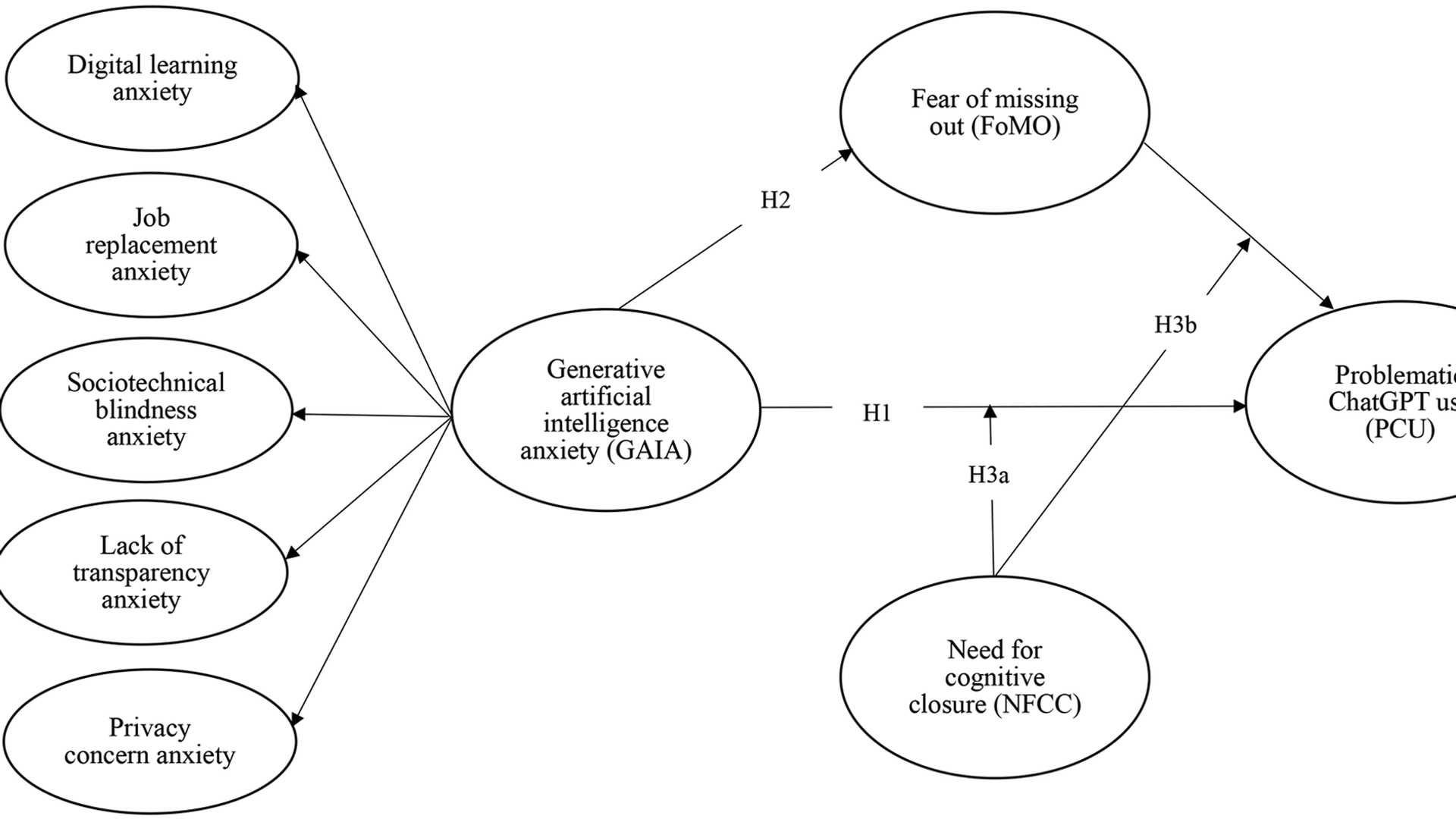
According to the person-affect-cognition-execution theory, this study delves into how generative artificial intelligence anxiety and fear of missing out contribute to problematic ChatGPT use. The research also investigates whether the need for cognitive closure plays a role in impacting these two factors on problematic ChatGPT use. The study, based on 257 valid samples, collects data from 10 occupations in Taiwan that could potentially be replaced by ChatGPT.
The authors utilize the software SmartPLS4.0 to assess both the measurement model and the structural model. The findings reveal that generative artificial intelligence anxiety exhibits a significant and direct correlation with problematic ChatGPT use. Moreover, generative artificial intelligence anxiety is found to be mediated by fear of missing out. Additionally, the need for cognitive closure positively moderates the relationship between fear of missing out and problematic ChatGPT use.

Implications and Contributions
This paper expands the existing knowledge on the impact of generative artificial intelligence anxiety by focusing on professional workers who might face the threat of being replaced by ChatGPT. It also examines the mediating role of fear of missing out and the moderating role of the need for cognitive closure as potential mechanisms between generative artificial intelligence anxiety and problematic ChatGPT use.
For further details and access to the full article, you can . Please note that pricing excludes VAT (USA) and tax calculation will be finalized during checkout.

Data referenced in this article is available within the manuscript or supplementary information files.