AI is having its Nobel moment | Business | Jamaica Gleaner
Hours after the artificial intelligence pioneer Geoffrey Hinton won a Nobel Prize in physics, he drove a rented car to Google’s California headquarters to celebrate. Hinton doesn’t work at Google anymore. Nor did the long-time professor at the University of Toronto do his pioneering research at the tech giant. But his impromptu party reflected AI’s moment as a commercial blockbuster that has also reached the pinnacles of scientific recognition.
The Rise of AI in the Commercial and Scientific Fields
That was Tuesday. Then, early Wednesday, two employees of Google’s AI division won a Nobel Prize in chemistry for using AI to predict and design novel proteins. “This is really a testament to the power of computer science and artificial intelligence,” said Jeanette Wing, a professor of computer science at Columbia University.
Asked about the historic back-to-back science awards for AI work in an email Wednesday, Hinton said only: “Neural networks are the future.” It didn’t always seem that way for researchers who decades ago experimented with interconnected computer nodes inspired by neurons in the human brain.
Advancements in Neural Network Research
Hinton shares this year’s physics Nobel with another scientist, John Hopfield, for helping develop those building blocks of machine learning. Neural network advances came from “basic, curiosity-driven research,” Hinton said at a press conference after his win.
Hinton joined Google late in his career and quit last year so he could talk more freely about his concerns about AI’s dangers, particularly what happens if humans lose control of machines that become smarter than us.
The Role of Tech Companies in AI Research
One reason why the current wave of AI research is so closely tied to the tech industry is that only a handful of corporations have the resources to build the most powerful AI systems. “These discoveries and this capability could not happen without humongous computational power and humongous amounts of digital data,” Wing said. “There are very few companies – tech companies – that have that kind of computational power. Google is one. Microsoft is another.”

Achievements in the Field of AI
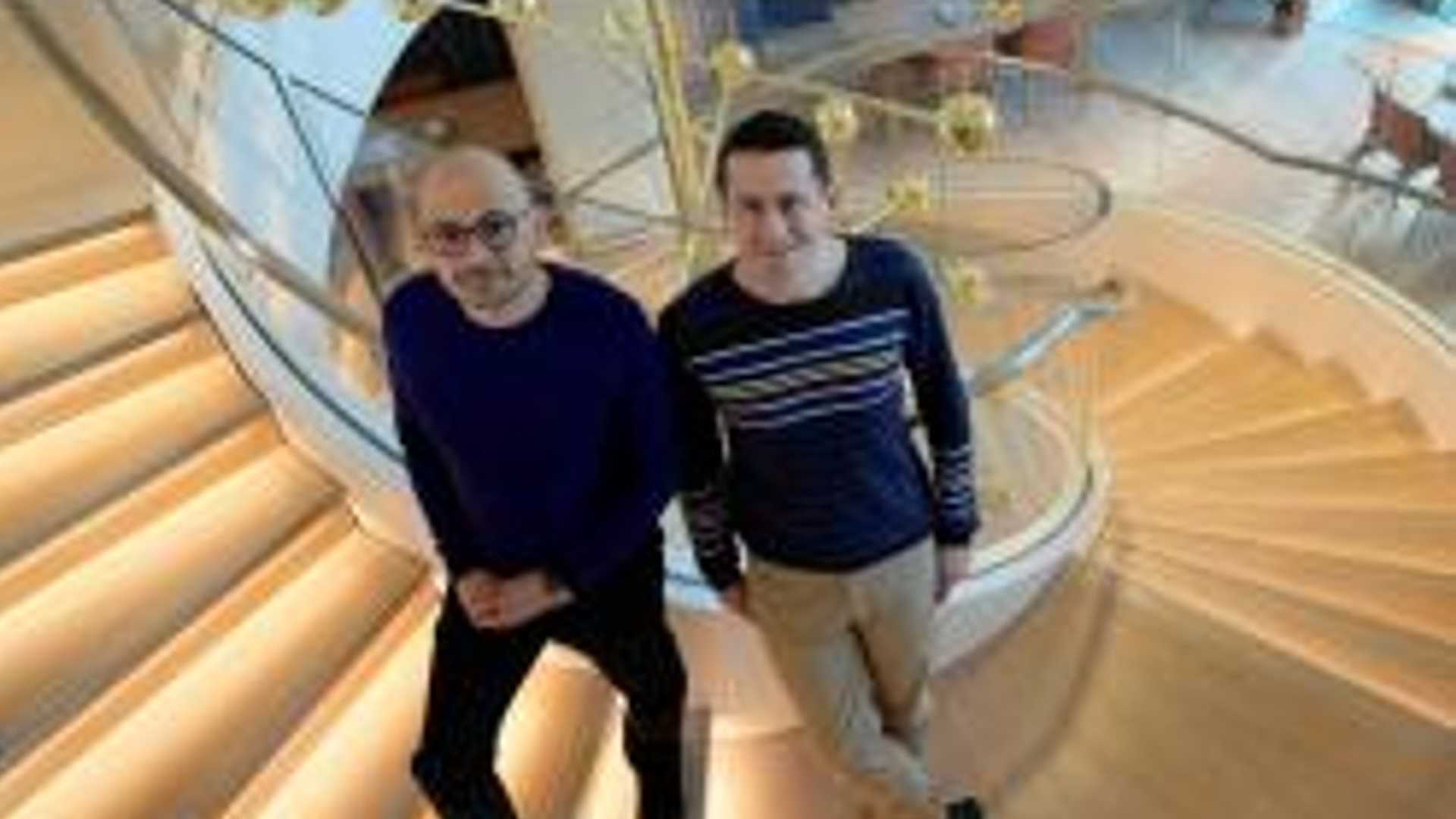
The chemistry Nobel Prize awarded Wednesday went to Demis Hassabis and John Jumper of Google’s London-based DeepMind laboratory along with researcher David Baker at the University of Washington for work that could help discover new medicines.
Hassabis, the CEO and co-founder of DeepMind, which Google acquired in 2014, told the AP in an interview Wednesday his dream was to model his research laboratory on the “incredible storied history” of Bell Labs.
Challenges and Ethical Considerations in AI
Hinton joined Google late in his career and quit last year so he could talk more freely about his concerns about AI’s dangers, particularly what happens if humans lose control of machines that become smarter than us.
Future Prospects of AI Research
Guests included Google executives and another former Hinton student, Ilya Sutskever, a co-founder and former chief scientist and board member at ChatGPT maker OpenAI.
Conflicts are likely to persist in a field where building even a relatively modest AI system requires resources “well beyond those of your typical research university,” said Michael Kearns, a professor of computer science at the University of Pennsylvania.
But Kearns said this week marks a “great victory for interdisciplinary research” that was decades in the making. Hinton is only the second person to win both a Nobel and Turing.
Wing, who met Simon in her early career, said scientists are still just at the tip of finding ways to apply computing’s most powerful capabilities to other fields.