
AI 'gold rush' for chatbot training data could run out of human-written ...
Artificial intelligence systems like ChatGPT could soon run out of what keeps making them smarter — the tens of trillions of words people have written and shared online. A new study released Thursday by research group Epoch AI projects that tech companies will exhaust the supply of publicly available training data for AI language models by roughly the turn of the decade -- sometime between 2026 and 2032.
Comparing it to a "literal gold rush" that depletes finite natural resources, Tamay Besiroglu, an author of the study, said the AI field might face challenges in maintaining its current pace of progress once it drains the reserves of human-generated writing.
Racing for Data Sources
In the short term, tech companies like ChatGPT-maker OpenAI and Google are racing to secure and sometimes pay for high-quality data sources to train their AI large language models – for instance, by signing deals to tap into the steady flow of sentences coming out of Reddit forums and news media outlets.

In the longer term, there won't be enough new blogs, news articles and social media commentary to sustain the current trajectory of AI development, putting pressure on companies to tap into sensitive data now considered private — such as emails or text messages — or relying on less-reliable "synthetic data" spit out by the chatbots themselves.
Challenges Ahead
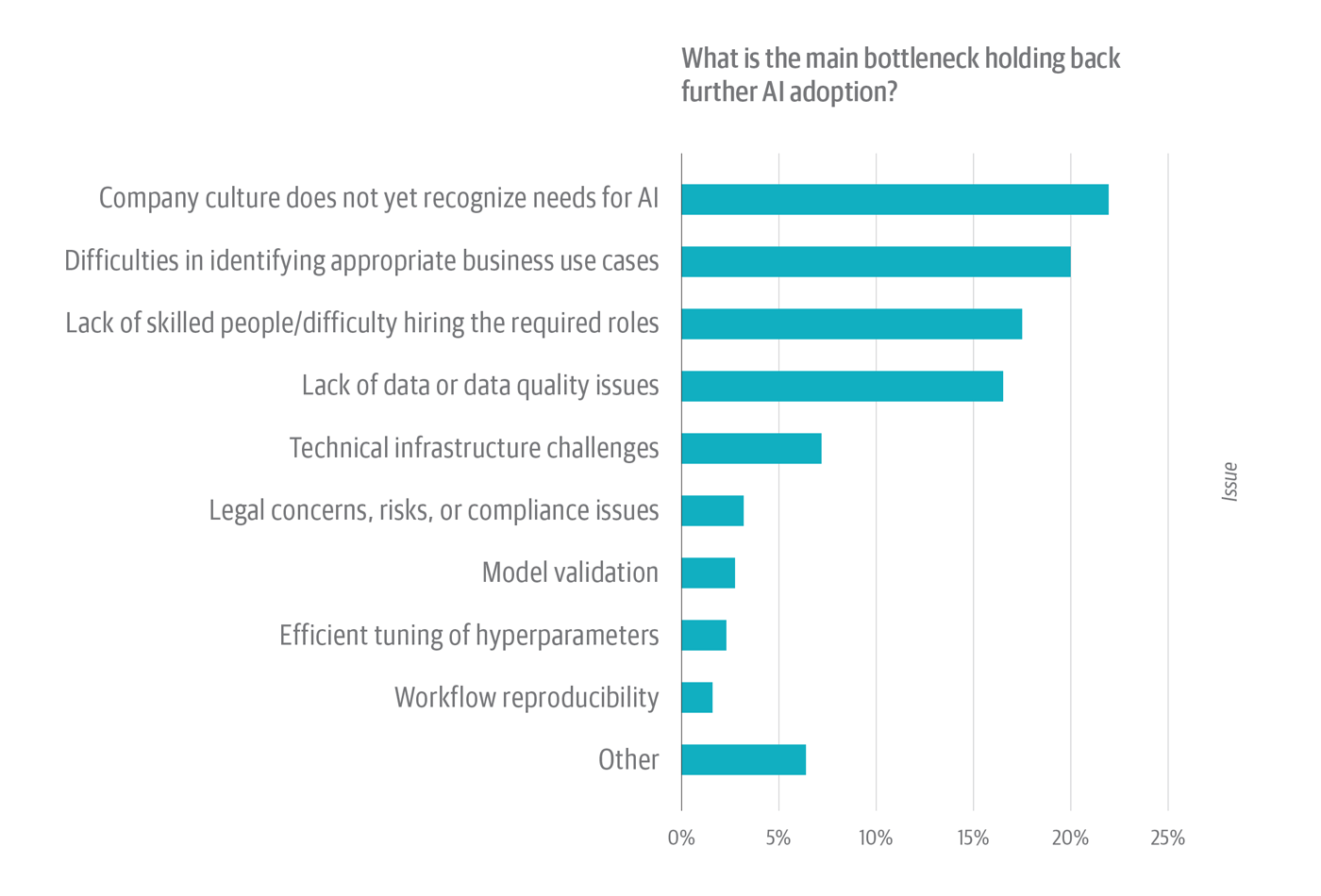
"There is a serious bottleneck here," Besiroglu said. "If you start hitting those constraints about how much data you have, then you can't really scale up your models efficiently anymore. And scaling up models has been probably the most important way of expanding their capabilities and improving the quality of their output."
The researchers first made their projections two years ago — shortly before ChatGPT's debut — in a working paper that forecast a more imminent 2026 cutoff of high-quality text data. But there are limits, and after further research, Epoch now foresees running out of public text data sometime in the next two to eight years.
Debating the Importance
"There is a serious bottleneck here," Besiroglu said. "If you start hitting those constraints about how much data you have, then you can't really scale up your models efficiently anymore. And scaling up models has been probably the most important way of expanding their capabilities and improving the quality of their output."
Papernot, who was not involved in the Epoch study, said building more skilled AI systems can also come from training models that are more specialized for specific tasks. But he has concerns about training generative AI systems on the same outputs they're producing, leading to degraded performance known as "model collapse."
The Role of Human-Crafted Sentences
If real human-crafted sentences remain a critical AI data source, those who are stewards of the most sought-after troves — websites like Reddit and Wikipedia, as well as news and book publishers — have been forced to think hard about how they're being used.
While some have sought to close off their data from AI training — often after it's already been taken without compensation — Wikipedia has placed few restrictions on how AI companies use its volunteer-written entries. Still, Deckelmann said she hopes there continue to be incentives for people to keep contributing, especially as a flood of cheap and automatically generated "garbage content" starts polluting the internet.
Future of AI Development
From the perspective of AI developers, Epoch's study says paying millions of humans to generate the text that AI models will need "is unlikely to be an economical way" to drive better technical performance. As OpenAI begins work on training the next generation of its GPT large language models, CEO Sam Altman told the audience at a United Nations event last month that the company has already experimented with "generating lots of synthetic data" for training.
"I think what you need is high-quality data. There is low-quality synthetic data. There's low-quality human data," Altman said. But he also expressed reservations about relying too heavily on synthetic data over other technical methods to improve AI models.