
Ai's Impact on the Environment, Explained | Snopes.com
In early January 2025, amid the wildfires in Los Angeles, multiple posts about the impact of artificial intelligence (AI) on climate change circulated widely. Social media users claimed ChatGPT and other AI models are "speeding up the climate crisis" and "contributing to climate change while also drying up water resources". One post received over 150,000 likes as of this writing.
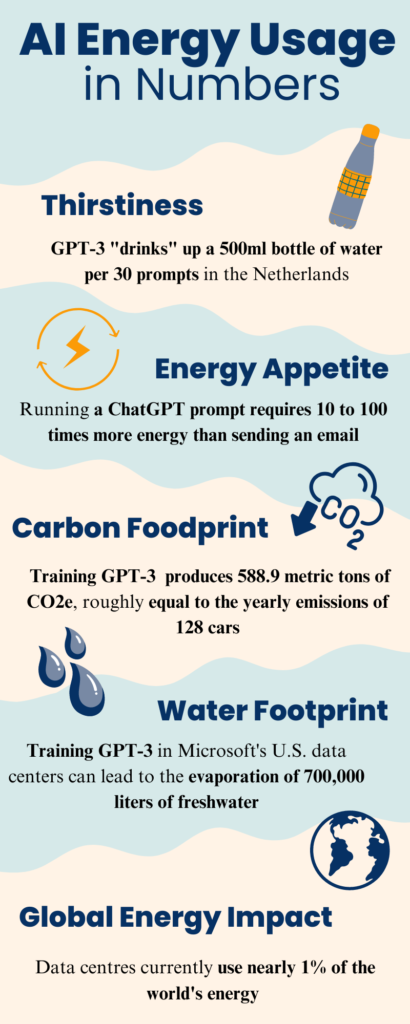
Influential in the debate are the environmental costs of large artificial intelligence language models like ChatGPT. These AI models, trained on vast amounts of data, consume significant electricity, leading to harmful greenhouse gas emissions. It's true that training and using such models contribute to climate change.
Debates over the environmental costs of large artificial intelligence language models — a type of program trained on vast amounts of data that can recognize and generate text — have circulated online since the technology first became widely available to the public. ChatGPT, a commonly used example of this kind of AI, was publicly released on Nov. 30, 2022, and a blog post from December 2022 attempted to estimate the AI model's carbon footprint. It's true that training and using large AI models such as ChatGPT consume large amounts of electricity, resulting in the release of greenhouse gas emissions that are harmful to the environment and contribute to climate change.
Impact of AI Models
AI queries may also consume large amounts of fresh water, which is used to cool down the computer servers that power AI. Scientists and technology companies are also looking at ways of using artificial intelligence to slow or mitigate the effects of climate change. The exact environmental impact of ChatGPT and AI is still unknown, given how rapidly technology is evolving. Different AI models use different amounts of energy, so the carbon emissions produced by a single AI query differs accordingly.
Shaolei Ren, an associate professor of electrical and computer engineering at the University of California Riverside, estimated that GPT-4, a model made by the creators of ChatGPT, generates roughly a quarter to one-half pound of carbon emissions to write a 100-250 word email. The estimate, which is based on his research, only applies to the United States and may differ depending on the energy efficiency of which country you're in, Ren told Snopes.
Energy Consumption and Greenhouse Gas Emissions
Large-scale AI models are powered by data centers, physical places that house computing equipment and related hardware. Data centers and data transmission networks represented 0.9% of energy-related greenhouse gas emissions and 0.6% of total greenhouse gas emissions in 2020, according to the International Energy Agency (IEA). A report from the same organization found that "electricity consumption from data centers, artificial intelligence and the cryptocurrency sector" could double from 2022 to 2026, "roughly equivalent to the electricity consumption of Japan."
Google and Microsoft released sustainability reports in 2024 that also reported significant increases in greenhouse gas emissions, in part due to AI. Google's report said its greenhouse gas emissions rose by 48% from 2019 to 2023. Microsoft reported its emissions rose 29.1% from 2020 to 2023 because it was investing "in infrastructure needed to advance new technologies."
Future Implications and Research
Ren, who studies AI's social and environmental effects, said it's difficult to assign a metric for the long-term climate impact of AI. When calculating a cost-benefit analysis, scientists often use a dollar amount assigned to carbon emissions — but estimates vary widely. Ren said calculating AI's public health impact due to fossil fuels emissions and other pollutants would yield a more concrete metric. A preliminary December 2024 study found that by 2030, the public health impact of U.S. data centers alone will exceed $20 billion a year.
Some supporters of AI note that its use may ultimately lessen the environmental impact of humans overall. Studies have shown that AI writing and illustrating can have lower carbon emissions compared to human activities, but there are additional factors to consider such as social impacts and professional displacement.








