Data analysis has become the cornerstone of modern decision-making processes, enabling businesses, researchers, and professionals to derive meaningful insights from vast amounts of data. With the rise of AI-driven tools, the landscape of data analysis has seen significant advancements, allowing users to leverage sophisticated algorithms to extract patterns, predict outcomes, and make informed decisions. Among the leading AI-driven tools for data analysis are ChatGPT, Claude, and Gemini. Each of these tools offers unique features and capabilities that cater to different aspects of data analysis.
Overview: ChatGPT
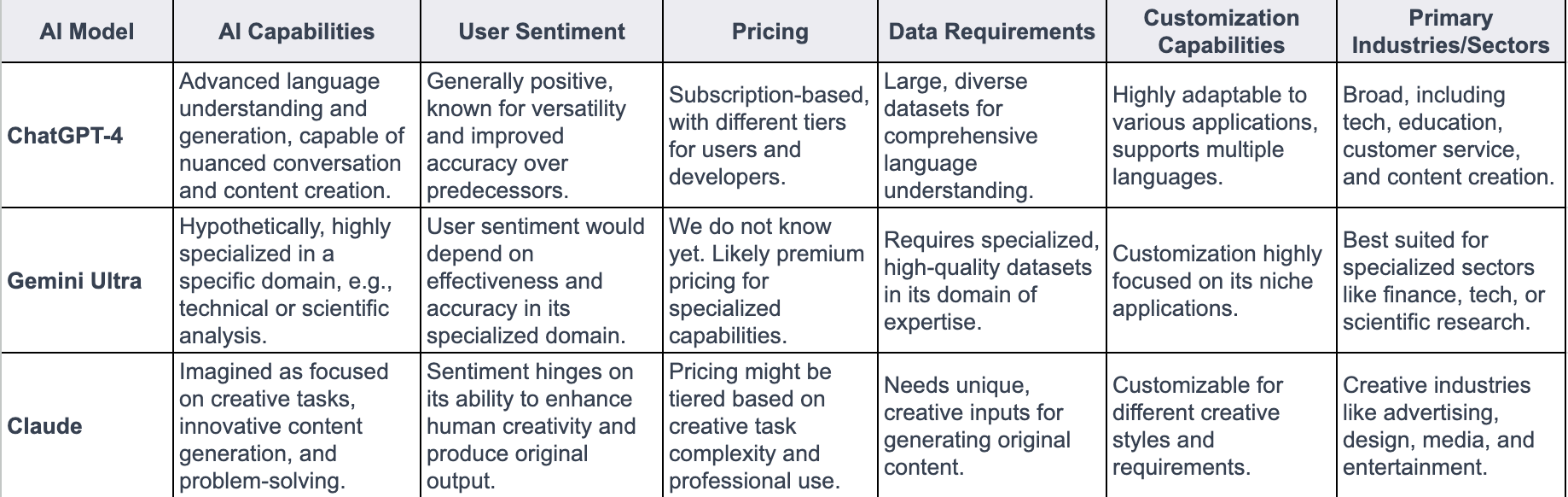
ChatGPT is a conversational AI developed by OpenAI, known for its advanced language generation capabilities. Its core functionality is based on the GPT-4 architecture, which excels at understanding and generating human-like text. ChatGPT can handle many tasks, including data analysis, though it is primarily designed for dialogue and text generation.
Core Features of ChatGPT:
Overview: Claude
Claude is a language model created by Anthropic. Named presumably after Claude Shannon, a pioneer in information theory, Claude focuses on safety and usability in language processing. Claude is engineered to understand and respond to queries in a way that prioritizes clarity and correctness, making it well-suited for tasks requiring detailed explanations and analysis.
Core Features of Claude:
Overview: Gemini
Gemini (formerly known as Bard), developed by Google DeepMind, is designed to integrate Google’s extensive search and language processing capabilities. It is tailored for a range of applications from conversational AI to in-depth data analysis, leveraging Google’s vast data resources and advanced machine learning techniques.
Core Features of Gemini:
In the comparison of ChatGPT, Claude, and Gemini for data analysis, each model brings unique strengths to the table. ChatGPT excels in conversational interactions and narrative generation, Claude focuses on clarity and accuracy, and Gemini leverages advanced data integration and real-time analytics capabilities. Choosing the best model depends on the specific needs of the data analysis task, including the complexity of the data, the need for real-time information, and the desired level of interaction. For complex data analysis tasks, Gemini is likely the best option due to its integration with Google’s extensive data resources and advanced algorithms. Its ability to handle large datasets and real-time information makes it particularly powerful. While ChatGPT can perform basic statistical analysis and generate summaries, it may not be as specialized for detailed statistical tasks compared to other models like Gemini or Claude, which offer more focused capabilities for complex data handling. Claude emphasizes accuracy and safety in its responses. Its design prioritizes providing clear and reliable explanations, making it suitable for tasks where precision is crucial. Yes, Gemini benefits from its integration with Google’s ecosystem, allowing it to work seamlessly with a range of data tools and platforms for enhanced data analysis capabilities. ChatGPT provides an intuitive conversational interface that is well-suited for users who prefer interactive and iterative approaches to data analysis.