
Entry-level job numbers have 'dropped by a third since ChatGPT ...
The number of new entry-level jobs has fallen by nearly a third since ChatGPT was launched in November 2022, as reported by The Times. This decline includes apprenticeships, graduate roles, internships, and junior positions with no degree requirement, which have decreased by 31.9%.
Impact of AI on Entry-Level Job Market
Research by Adzuna reveals that entry-level job openings now constitute only a quarter of the overall job market, down by almost 4% since 2022. Companies are increasingly turning to AI to streamline operations and cut costs, with BT announcing plans to replace 10,000 jobs with artificial intelligence by the end of the decade.
![INFOGRAPHIC] 5 Trends Shaping the Future of Work for Good](https://levertalent.com/hubfs/Infographic%20-%205%20trends%20shaping%20the%20future%20of%20work%20for%20good.png)
AI advancements could potentially lead to further job cuts in various sectors. Dario Amodei of AI start-up Anthropic cautioned that half of all entry-level white-collar positions could be at risk of automation within five years, potentially increasing unemployment rates significantly.
The Role of AI in Job Reduction
James Neave, the head of data science at Adzuna, emphasized AI's significant role in the reduction of entry-level jobs, citing increased efficiency and cost savings as driving factors. Businesses are also grappling with rising costs, including national insurance contributions and the minimum wage, contributing to the decline in entry-level job opportunities.
AI's Impact on Various Job Sectors
Experts predict a future where automation could potentially replace a significant portion of jobs, particularly those involving routine tasks. While AI excels at tasks requiring data analysis and attention to detail, workers believe they still outperform machines in critical thinking, creativity, and emotional intelligence.
AI and future of work in 2025 | DW Observatory
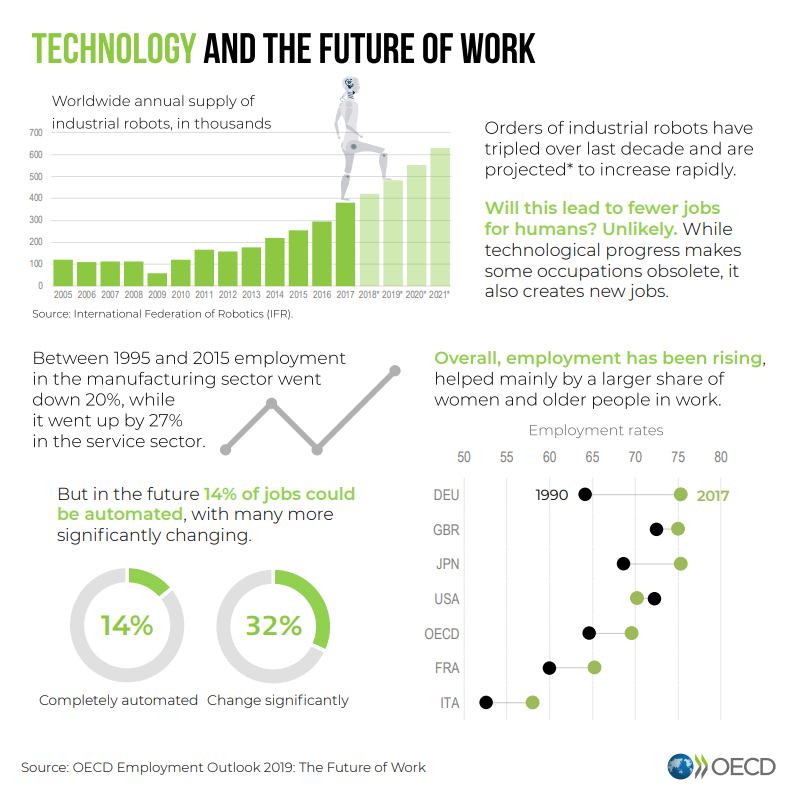
Future Job Market Outlook
Despite concerns about job automation, workers express confidence in their ability to adapt to technological changes. Traditional trades like plumbers, electricians, and decorators are considered less susceptible to automation due to the manual labor and specialized skills involved.
However, the widening use of AI is expected to impact various professions differently, with higher-paid roles potentially benefiting from AI while lower-paid positions face the risk of pay cuts and layoffs.
AI's effects on wealth inequality are a growing concern, as highlighted by studies showing the potential displacement of clerical workers and technical support roles by automation. Professionals such as accountants, consultants, and psychologists are among those at higher risk of being replaced by AI according to research findings.
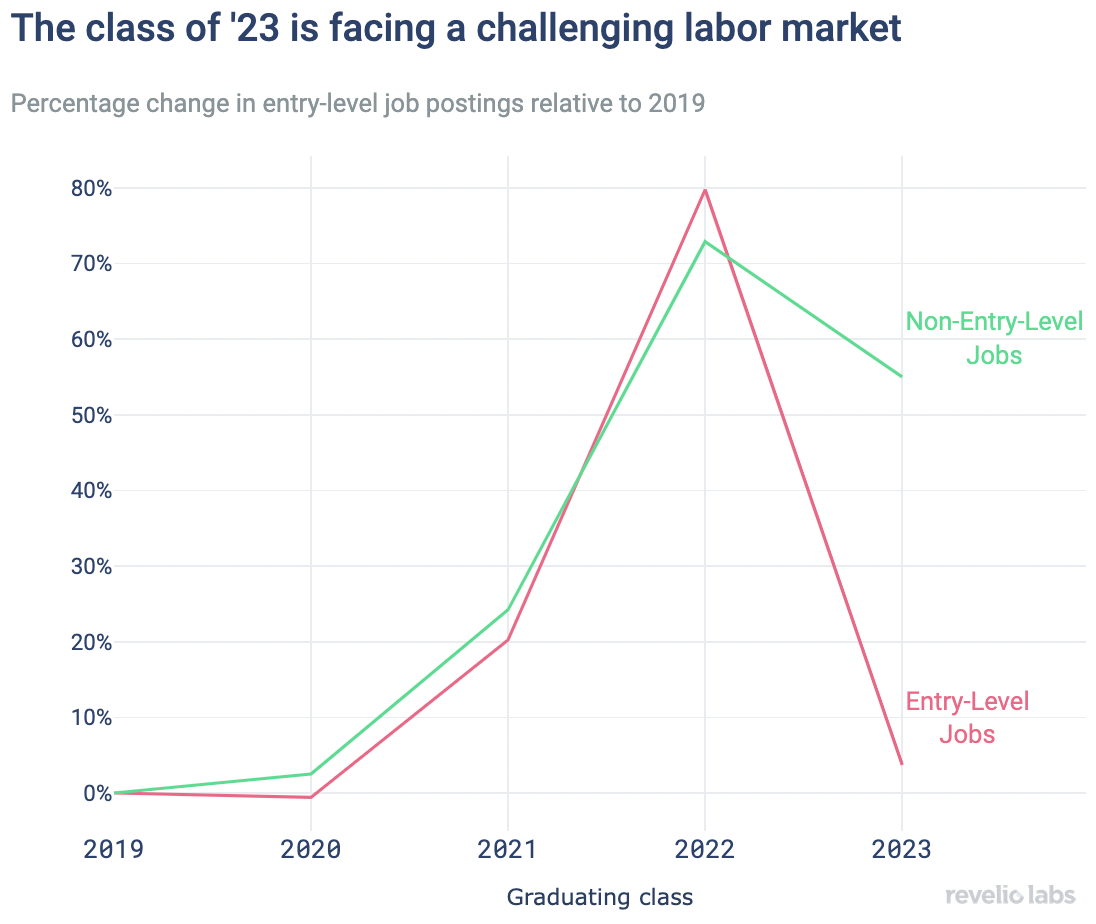
Will the Class of '23 Have a Soft Landing? | Revelio Labs
In conclusion, the increasing integration of AI into various industries poses both challenges and opportunities for the job market, necessitating a proactive approach to adapt to the changing landscape of work.