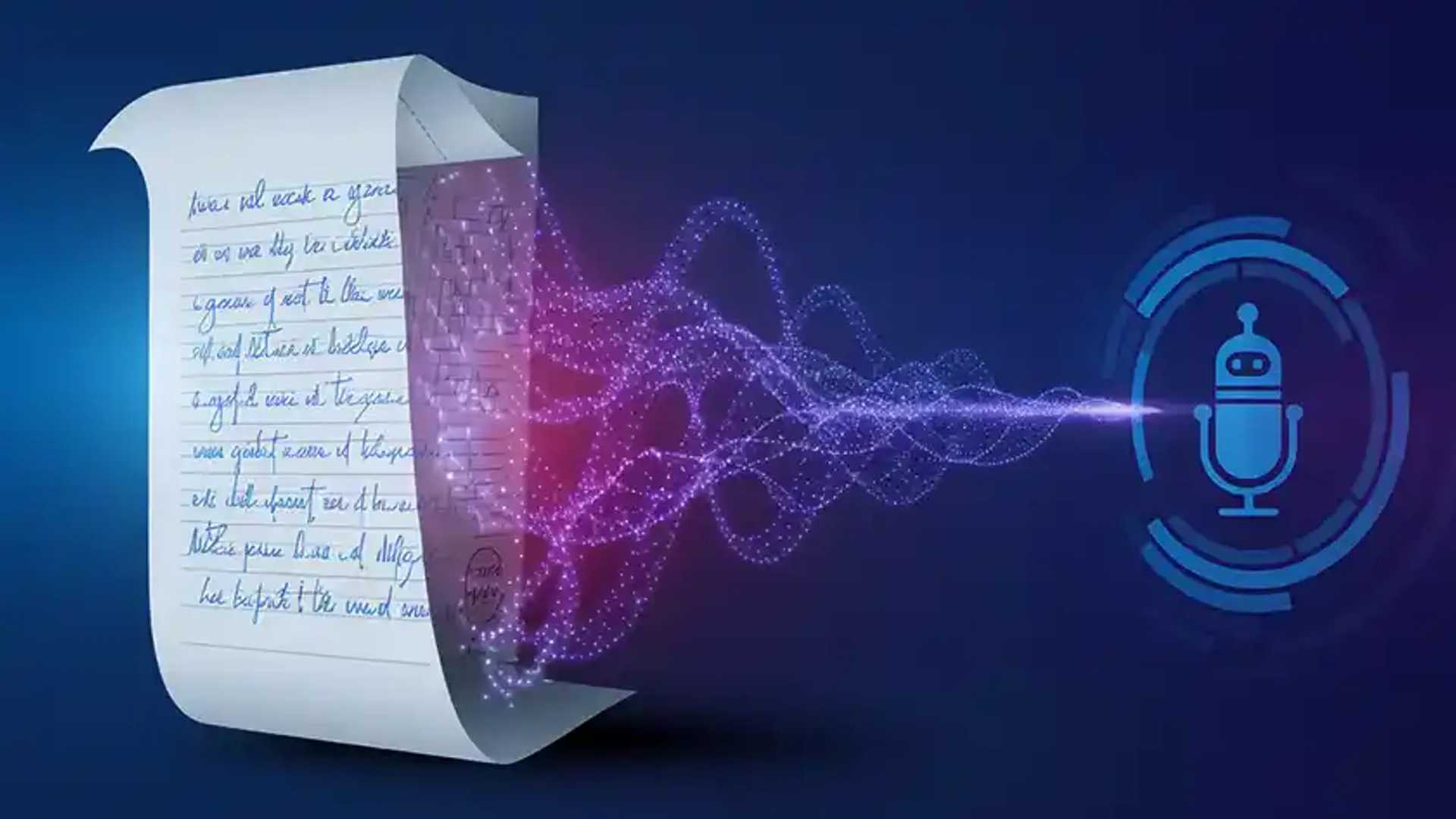
Paper-to-Voice Assistant: AI Agent Using Multimodal Approach
Today, we will delve into the fascinating world of AI agents and their applications, focusing on a cutting-edge technology known as the Paper-to-Voice Assistant. This innovative solution leverages a multimodal approach, combining text and vision models to streamline the process of summarizing research papers.

Revolutionizing Data Wrangling
Imagine a scenario where a complex problem requires the collaborative effort of multiple individuals to solve efficiently. This is where the Paper-to-Voice Assistant shines, breaking down the research paper into digestible steps and sub-steps. Using advanced technologies such as LangGraph and Google Gemini, this AI agent extracts and synthesizes key information, facilitating a comprehensive understanding of the paper.
By employing a map-reduce approach, the agent assigns distinct tasks to individual LLMs, each responsible for analyzing specific sub-problems. These solutions are then consolidated to generate a cohesive output, mimicking the collaborative nature of human problem-solving.
The Power of Generative AI
Recent advancements in generative AI have propelled the capabilities of LLM agents, enabling them to automate tasks and enhance productivity. While some view these agents as end-to-end automation tools, their true value lies in augmenting human efforts, guiding problem-solving processes, and fostering creativity in complex tasks.

From automating mathematical proofs to supporting programming tasks, AI agents like the Paper-to-Voice Assistant exhibit a remarkable capacity for critical thinking and adaptive strategy development. By incorporating feedback loops with human oversight, these agents continuously refine their approaches, delivering nuanced and efficient solutions.
Implementing a Multimodal Approach
In the context of the Paper-to-Voice Assistant, a Multimodal approach is instrumental in converting PDF pages into visual data for the Gemini vision model's analysis. By systematically processing images and structuring the extracted information, the agent can generate insightful conversations based on the research paper content.
Through a series of iterative steps, the agent deciphers complex plans, converts them into structured formats, and synthesizes the findings into actionable insights. By orchestrating a seamless flow of information between nodes, the agent mimics natural dialogue, culminating in a dynamic and engaging podcast format.
Conclusion
In conclusion, the Paper-to-Voice Assistant showcases the transformative potential of AI agents in research and data analysis. While this project serves as a proof of concept, its implications for streamlining information processing and enhancing collaboration are profound. As AI continues to evolve, integrating multimodal approaches and collaborative frameworks will redefine the boundaries of innovation and problem-solving.
For more detailed technical insights, please refer to the GitHub repository.