
The Complete Guide to AI: How Overchat.ai brings together the best AI
In today's rapidly progressing technological circumstances, artificial intelligence has become a must-have tool for businesses and individuals alike. Understanding how to effectively tap AI models and platforms can strikingly impact productivity and innovation. This all-inclusive guide looks into the basics of AI technology and examines how platforms like Overchat.ai are revolutionizing the way we interact with various AI models.
The Evolution of AI Models
At the heart of modern AI systems lies machine learning – the ability for computers to learn and improve from experience without explicit programming. The path from basic algorithms to today's sophisticated language models has been marked by several key developments:
Modern AI models use thorough learning, employing artificial neural networks that mimic human brain structure. These networks process information through multiple layers, each extracting increasingly complex features from the input data. This architecture enables AI to handle tasks like natural language processing, image recognition, and complex problem-solving with striking accuracy.
![Top AI Diffusion Models: Ultimate Comparison & Guide [2024]](https://cdn.prod.website-files.com/645cec60ffb18d5ebb37da4b/65f2b9d306dad77d174e4ab6_Picture3.jpg)
The punch of AI models depends heavily on their training data and approach. Large language models (LLMs) are pre-trained on vast amounts of text data, then fine-tuned for specific applications. This process enables them to understand setting, generate human-like responses, and become acquainted with various tasks while maintaining coherence and relevance.
Leading AI Models

The AI circumstances features several front-running models, each with unique strengths and capabilities:
- OpenAI's ChatGPT
- Anthropic's Claude
- Gemini from Google
- Mistral's models
Real-World Applications
Real-world rollouts demonstrate the reshaping potential of AI:
A marketing agency used multiple AI models through a unified platform to streamline their content creation process. By leveraging different models' strengths – using one for creative ideation, another for technical accuracy, and a third for tone polishing – they reduced content production time by 60% while maintaining high-quality standards.

A software development team merged AI assistance into their workflow, using different models for code generation, documentation, and testing. This multi-model approach helped them identify and fix bugs more quickly, while also improving code quality and consistency.
A mid-sized e-commerce company rolled out AI-powered Customer Service, using various models to handle different types of queries. Technical issues were routed to models specializing in problem-solving, while general inquiries were handled by models fine-tuned for conversational interaction.
Managing Multiple AI Resources
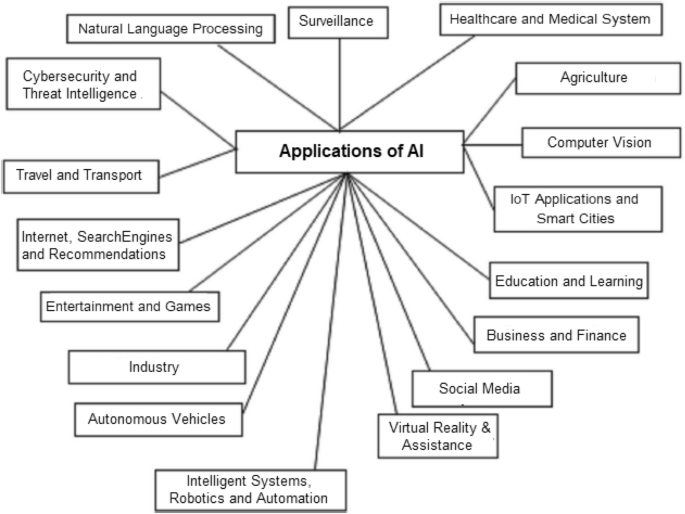 The spread of AI models has created a new challenge: how to effectively manage and use multiple AI resources. Platforms that aggregate various AI models offer several key benefits:
- Unified platforms allow users to access multiple AI models through a single interface, eliminating the need to switch between different services and maintaining consistency in workflows.
- Advanced platforms can automatically direct queries to the most appropriate AI model drawn from the task requirements, optimizing both efficiency and outcome quality.
- By intelligently selecting the most appropriate model for each task, unified platforms can help organizations fine-tune their AI usage and associated costs.
Centralized platforms validate better tracking of AI performance across different models and Use Cases, facilitating continuous improvement and optimization.
Key Principles for AI Integration
To lift the impacts of AI integration, consider these key principles:
- As AI technology continues to grow, unified platforms will play an increasingly necessary role in helping organizations guide you in and tap these advancements.
- The subsequent time ahead of AI integration lies not just in the power of individual models, but in the ability to arrange these capabilities effectively.