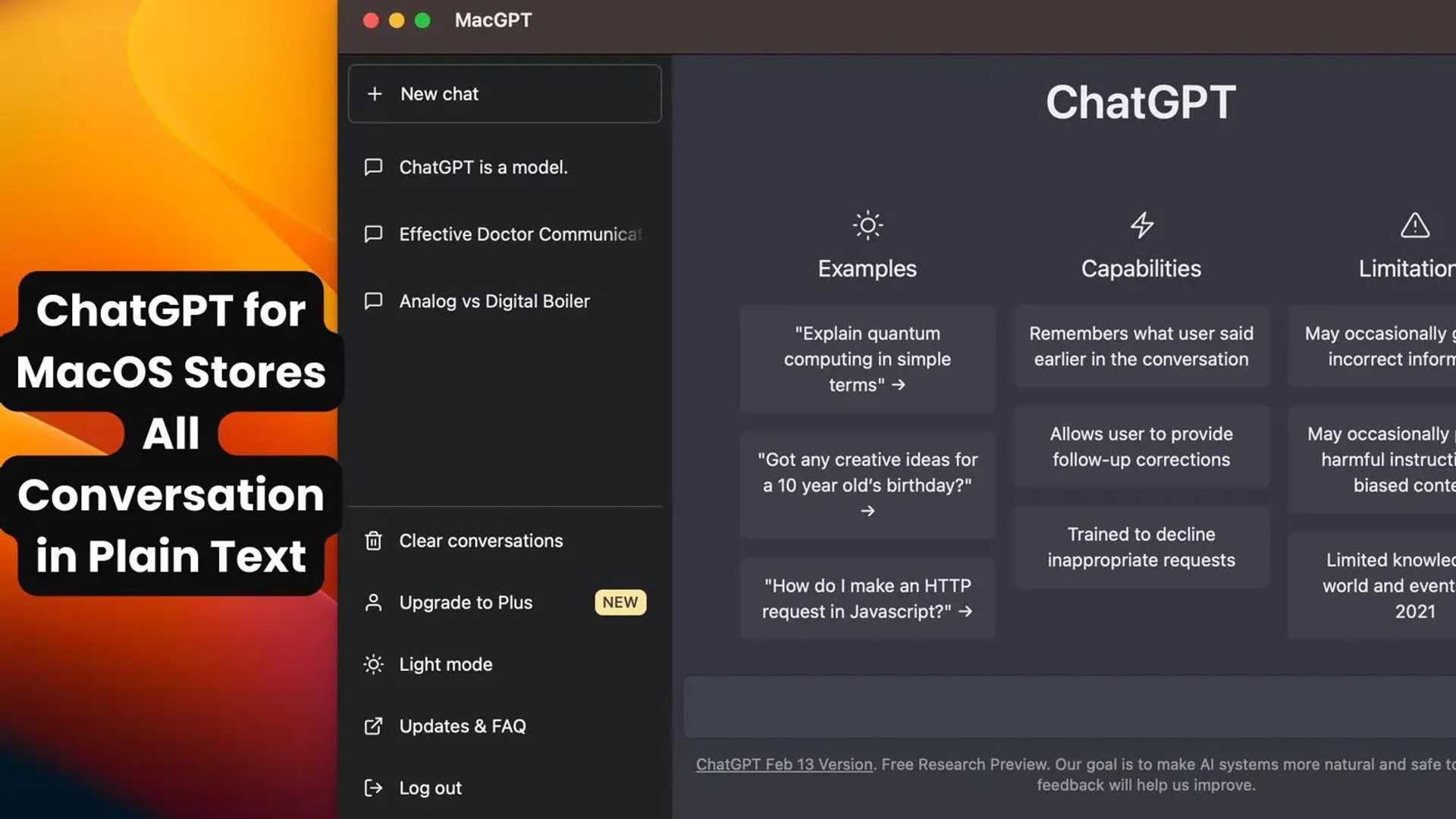
Overview of ChatGPT for MacOS: Storing Conversations in Plain Text
There have been significant discussions surrounding the security implications of the OpenAI ChatGPT application on macOS. Concerns have been raised due to the app's practice of storing user conversations in plain text in an unprotected location. This has raised questions about its compliance with macOS's strict security protocols.
Storage of Conversations
The ChatGPT app on macOS does not operate within a sandboxed environment, leading to the storage of all user conversations in plain text at a specific location: ~/Library/Application Support/com.openai.chat/conve…{uuid}/. This approach has been highlighted by Pedro José Pereira Vieito on Threads.

Security Implications
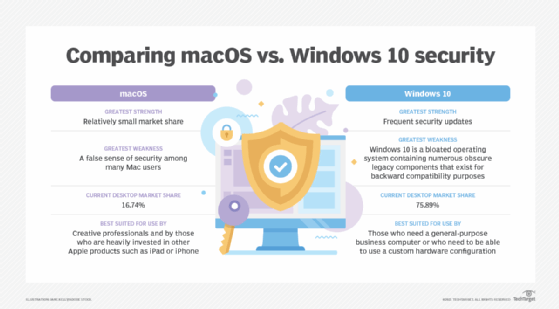
Since the release of macOS Mojave 10.14, Apple has enforced stringent security measures to prevent unauthorized access to sensitive user data. These measures mandate explicit user consent for any application trying to access private information.
Pereira Vieito's investigation into the ChatGPT app revealed that it stores conversations in an unprotected location, allowing potential access by other applications, processes, or malware without user permission.
Response from OpenAI
Despite macOS's security defenses, OpenAI made the decision to bypass the macOS sandbox and store conversations in plain text without protection, thereby circumventing the security precautions in place.

OpenAI has chosen to distribute the ChatGPT macOS app exclusively through its website, avoiding Apple's sandbox requirements for Mac App Store distribution. This decision has raised concerns among users and security experts regarding the exposure of sensitive data.
"We are aware of this issue and have released a new version of the application that encrypts these conversations," stated OpenAI spokesperson Taya Christianson to Cyber Security News.
Call for Action
The revelation has prompted widespread worries among users and security professionals about OpenAI's choice to overlook critical security measures, potentially jeopardizing user information security.
Security experts and technology journalists are closely watching the situation, urging swift action to address these vulnerabilities and emphasizing the essential role of developers in protecting user data.
The ongoing debate underscores the significance of adhering to established security protocols to safeguard user data effectively. Collaboration between platform providers and application developers is crucial to implement robust data protection measures.