Meta AI system designed to decode images from brain activity ...
Meta (NASDAQ: META) says it has reached a new milestone in its ambitious quest to decode images by measuring brain activity using artificial intelligence (AI).

Decoding Images via Brain Activity
In a blog post, Meta disclosed that its attempt at using AI to reconstruct perceived images via brain activity has recorded impressive results “with an unprecedented temporal resolution.” This project aims to help the scientific community better understand how the human brain receives and interprets images. While not yet ready for mainstream use, Meta is optimistic about its potential applications in assisting disabled individuals in communicating their thoughts using generated images.
Technical Process
The process involves magnetoencephalography (MEG), a non-intrusive neuroimaging technique integrated with Meta’s proprietary AI systems. Meta’s approach consists of a three-part process: an image encoder, a brain encoder, and an image decoder, each trained using a set of image modules. The image encoder builds image representations, the brain encoder aligns MEG signals to the embeddings, and the image decoder generates the final image.
While the generated images may not be perfect, Meta’s demonstration shows accurate object categories and a rich set of values, allowing for the deciphering of complex brain representations with millisecond precision.
Future Applications and Concerns
Meta sees potential for non-invasive brain-computer interfaces in a clinical setting to assist individuals who have lost their ability to speak due to brain lesions. However, regulatory limitations and privacy concerns remain unknown, with critics questioning the implications of Meta's technology.
AI in Healthcare
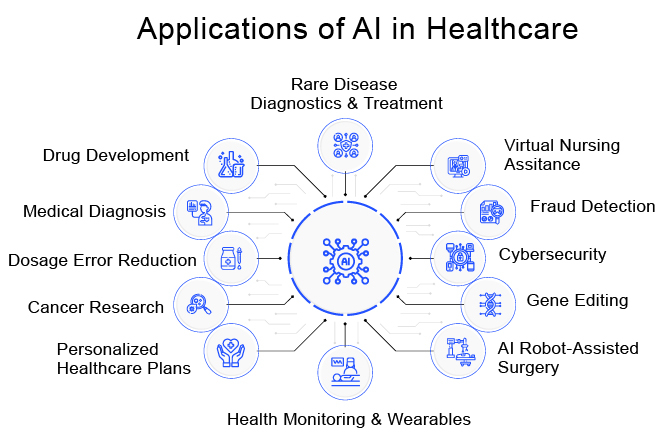
AI, along with other emerging technologies, has various applications in healthcare. For instance, Google’s collaboration with iCAD in using AI for breast cancer detection has yielded positive results.
Meta's Advancements in AI
Meta, though a late entrant in the AI race, has made significant strides in recent months. Launching the open-source AI model Llama 2 for commercial applications and introducing AI chatbots with different personalities demonstrate Meta's commitment to innovation.
Legal Challenges and Ethical Considerations
Despite its progress, Meta faces legal challenges regarding copyright violations in training its AI models. The company insists it does not produce infringing material and is actively defending against such claims.
In order for artificial intelligence (AI) to work right within the law and thrive in the face of growing challenges, it needs to integrate an enterprise blockchain system that ensures data input quality and ownership—allowing it to keep data safe while also guaranteeing the immutability of data. Check out CoinGeek’s coverage on this emerging tech to learn more why Enterprise blockchain will be the backbone of AI.
Watch: Turning AI into ROI
As the first media outlet to report on blockchain-powered applications, CoinGeek offers insights into emerging technological landscapes, including wallets and games. Emphasizing the BSV blockchain's enterprise utility and scalability, CoinGeek maintains a unique perspective on blockchain, AI, and Web3.