Judge dismisses authors' copyright lawsuit against Meta over AI
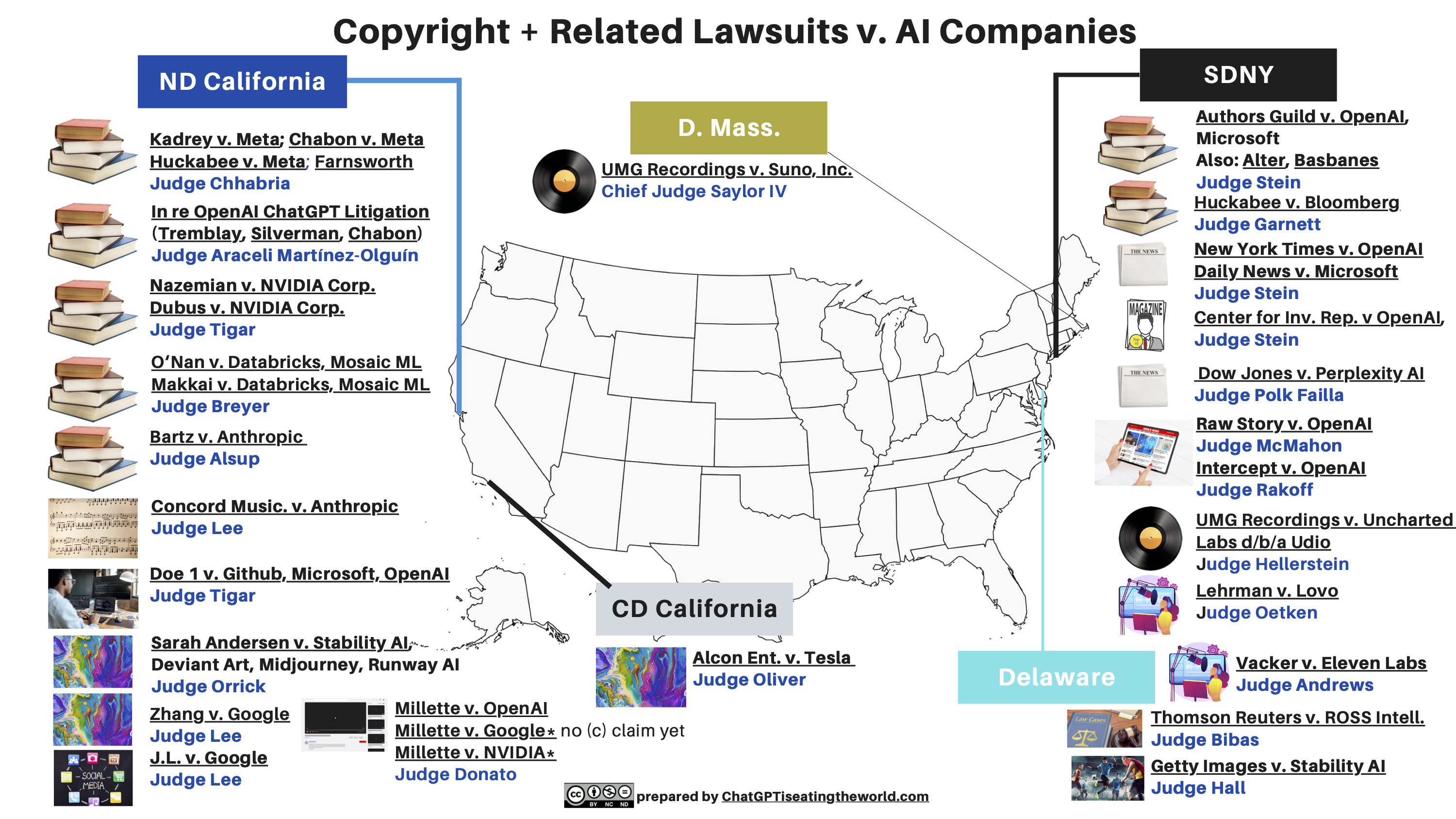
A federal judge sided with Facebook parent Meta Platforms in dismissing a copyright infringement lawsuit from a group of authors who accused the company of stealing their works to train its artificial intelligence technology. The Wednesday ruling from U.S. District Judge Vince Chhabria was the second in a week from San Francisco's federal court to dismiss major copyright claims from book authors against the rapidly developing AI industry.
Authors' Lawsuit Dismissed
Chhabria found that 13 authors who sued Meta “made the wrong arguments” and tossed the case. But the judge also said that the ruling is limited to the authors in the case and does not mean that Meta’s use of copyrighted materials is lawful.
Lawyers for the plaintiffs — a group of well-known writers that includes comedian Sarah Silverman and authors Jacqueline Woodson and Ta-Nehisi Coates — didn't immediately respond to a request for comment Wednesday. Meta also didn't immediately respond to a request for comment.
“This ruling does not stand for the proposition that Meta’s use of copyrighted materials to train its language models is lawful,” Chhabria wrote. “It stands only for the proposition that these plaintiffs made the wrong arguments and failed to develop a record in support of the right one.”
Court's Perspective
Although Meta prevailed in its request to dismiss the case, it could turn out to be a pyrrhic victory. In his 40-page ruling, Chhabria repeatedly indicated reasons to believe that Meta and other AI companies have turned into serial copyright infringers as they train their technology on books and other works created by humans, and seemed to be inviting other authors to bring cases to his court presented in a manner that would allow them to proceed to trial.
Implications of the Ruling
Chhabria reiterated “in many circumstances, it will be illegal to copy copyright-protected works to train generative AI models without permission. Which means that the companies, to avoid liability for copyright infringement, will generally need to pay copyright holders for the right to use their materials.”
The judge also scoffed at arguments that requiring AI companies to adhere to decades-old copyright laws would slow down advances in a crucial technology at a pivotal time.
Legal Precedents
On Monday, from the same courthouse, U.S. District Judge William Alsup ruled that AI company Anthropic didn’t break the law by training its chatbot Claude on millions of copyrighted books, but the company must still go to trial for illicitly acquiring those books from pirate websites instead of buying them.
But the actual process of an AI system distilling from thousands of written works to be able to produce its own passages of text qualified as “fair use” under U.S. copyright law because it was “quintessentially transformative,” Alsup wrote.
Meta's Defense
The authors had argued in court filings that Meta is “liable for massive copyright infringement” by taking their books from online repositories of pirated works and feeding them into Meta's flagship generative AI system Llama. Meta countered in court filings that U.S. copyright law “allows the unauthorized copying of a work to transform it into something new” and that the new, AI-generated expression that comes out of its chatbots is fundamentally different from the books it was trained on.
Accused of pulling those books from online “shadow libraries," Meta has also argued that the methods it used have “no bearing on the nature and purpose of its use” and it would have been the same result if the company instead struck a deal with real libraries.
Conclusion
After nearly two years of litigation, there still is no evidence that anyone has ever used Llama as a substitute for reading Plaintiffs’ books, or that they even could,” Meta's attorneys argued.
The authors' case against Meta forced CEO Mark Zuckerberg to be deposed, and has disclosed internal conversations at the company over the ethics of tapping into pirated databases that have long attracted scrutiny.