
Two cutting-edge platforms at CAMH and Western University aim to accelerate AI-driven brain research and global data sharing
TORONTO, June 20, 2025 /CNW/ – Brain Canada is pleased to announce an investment of more than $7.7 million to support two innovative research platforms based in Ontario that will drive forward brain health discovery, data sharing, and open science collaboration.
Funded through the Canada Brain Research Fund (CBRF), a visionary partnership between Brain Canada and the Government of Canada, these two projects will provide Canadian and international researchers with the tools and infrastructure they need to transform how brain disorders are studied, understood, and treated.

Government Support for Research Initiatives
“Through the Canada Brain Research Fund, the Government of Canada is pleased to support these two essential and innovative research initiatives, which will help drive new discoveries and improve care for people affected by neurological conditions,” said the Honourable Marjorie Michel, Minister of Health.
About the Brain Health Data Challenge Platform
Tristan Glatard, Centre for Addiction and Mental Health (CAMH) (Grant total: $4.9M)
With vast amounts of brain health data now available, artificial intelligence is revolutionizing how we understand, diagnose, and treat neurological conditions. However, data privacy regulations often prevent this information from being used in open AI challenges—a key method that has already accelerated innovation in fields like cancer and medical imaging.

The BHDC platform will create a secure, privacy-compliant framework to enable AI competitions using Canadian brain health data. By unlocking these datasets for responsible and collaborative use, the platform will foster the development of reproducible and equitable AI models, helping clinicians tailor treatments and improve care for people living with brain disorders.
The Mesoscopic Integrated Neuroimaging Data (MIND) Platform
Ali Khan, Western University (Grant total: $2.9 million)
The MIND Platform combines ultra-powerful MRI and lightsheet microscopy, which enables researchers to see the brain’s structure and activity in unprecedented detail. By linking images of living brains with detailed microscopy of brain tissue, scientists can gain deeper insights into how diseases like Alzheimer’s or Parkinson’s progress, affect brain circuits, and can be treated.
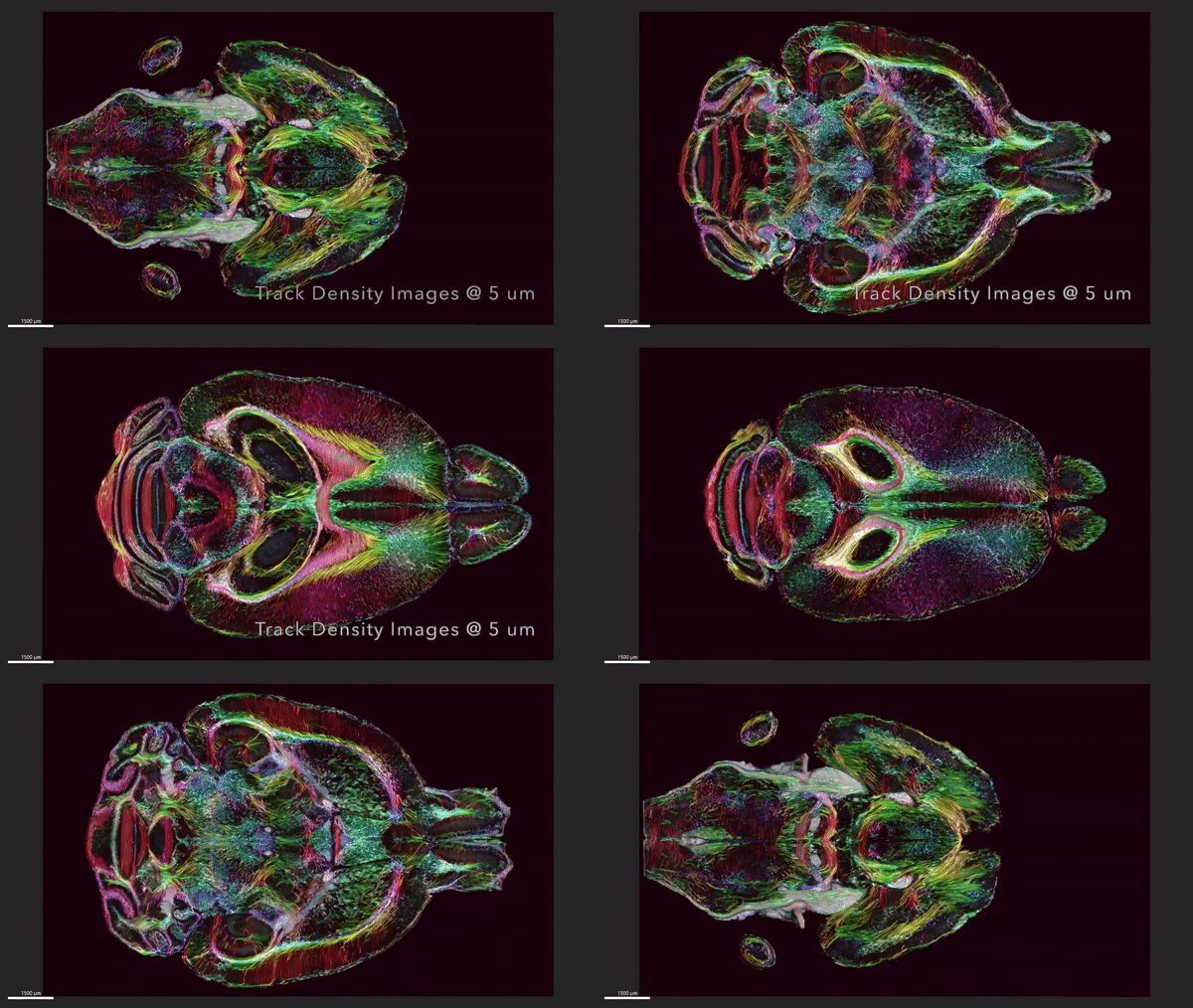
The MIND Platform builds on two internationally recognized imaging facilities at Western University to create a centralized, standardized repository for high-resolution brain tissue data. Through a user-friendly online portal, researchers around the world will be able to send brain tissue for imaging and access powerful tools to analyze the data—without requiring advanced infrastructure at every site.
Conclusion
Together, these platforms mark a major step forward in Canada’s leadership in brain research, making it easier for scientists to share knowledge, build on each other’s work, and transform brain health through open, data-driven innovation.

SOURCE Brain Canada