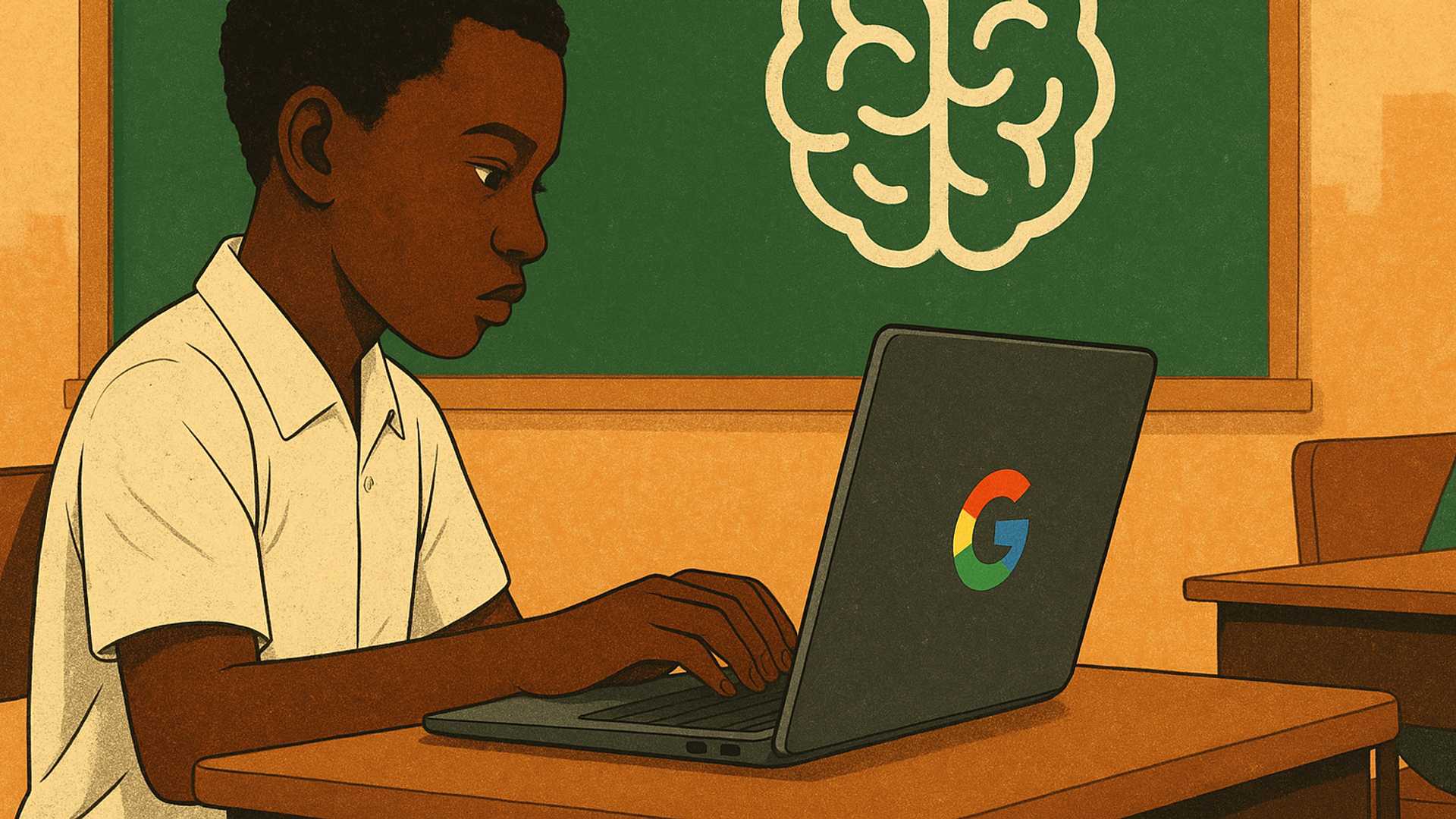
Google Expands Gemini AI for Classrooms. But is Africa in the Room?
Google made an announcement on Monday unveiling a series of updates aimed at incorporating its Gemini AI more extensively into educational settings. The company introduced over 30 new AI-powered tools for teachers at the ISTE edtech conference, along with a specialized version of its Gemini app for educational purposes and enhanced access to its collaborative video creation tool, Google Vids. These updates are part of Google's broader strategy to integrate AI across its range of education products, such as Chromebooks and Google Workspace for Education.
Impact of Generative AI on Learning Environments
Educators globally are currently grappling with the impact of generative AI on learning environments. Technologies like ChatGPT and the emergence of startups offering ways for students to bypass traditional learning methods have raised concerns about academic integrity and the essence of meaningful learning in schools. Many students now rely on AI models for homework aid or even generating complete assignments, reducing their dependence on conventional classroom teachings. Additionally, higher education institutions are yet to ascertain the effectiveness of existing plagiarism detection tools in identifying AI-generated content.

Google's Rapid Integration of AI in Education
Google is swiftly incorporating AI as a fundamental tool in classrooms. The company emphasizes its approach to "responsible AI," aiming to enrich teacher-led instruction by providing more personalized and engaging learning experiences. Since initially announcing plans to introduce Gemini to educational settings in 2023, Google has now made the AI suite accessible to all Google Workspace for Education users at no cost. This platform offers tools for teachers to create lesson plans, brainstorm ideas, and customize learning materials for individual students.

Enhancements in AI-Powered Educational Tools
Google also revealed the real-time integration of its Read Along feature with Classroom, offering students personalized AI-driven reading support. Additionally, the company expanded access to Google Vids, enabling both teachers and students to create instructional or assignment-oriented videos using AI. Other updates include tools for monitoring student progress, analyzing engagement, safeguarding user data, managing access to Gemini and Notebook LM, as well as overseeing features like Meet waiting rooms.

Challenges and Opportunities for Africa
While Google's AI-focused educational initiatives have a global reach, their success hinges on local infrastructure. In regions like Ghana, where educational institutions face challenges such as unreliable internet access, inadequate teacher training in digital tools, and shortages of devices, the potential of AI-driven personalization remains largely unrealized.
The availability of the Gemini suite at no cost assumes prerequisites like high-speed internet, consistent power supply, and a basic level of digital literacy among educators. Without substantial investments from governments and the private sector in these areas, the gap between AI-enabled schools and others may widen, perpetuating digital disparities instead of addressing them.
For African policymakers and edtech startups, the task involves adapting curriculum and training frameworks to effectively integrate AI without displacing traditional pedagogy, as well as ensuring inclusive access to AI-enhanced learning opportunities. Google's tools are already operational; the question now is whether African education systems will actively engage or risk lagging behind as standards and methodologies are standardized elsewhere.
By shaping decisions around access, infrastructure, and local content development, African learners can either be molded by the education system or contribute to shaping it. The landscape of edtech is evolving, and the narrative is currently unfolding in Mountain View rather than in cities like Accra, Lagos, or Nairobi.








