
Google drops pledge on AI use for weapons
Google's parent company Alphabet has decided to lift a longstanding ban on the use of artificial intelligence (AI) for the development of weapons and surveillance tools. This decision has raised concerns among human rights groups. The company has revised its guidelines on AI usage, eliminating a section that previously prohibited applications that could potentially cause harm.
Human Rights Watch has criticized this move, stating that AI has the potential to complicate accountability for battlefield decisions that may have life-threatening consequences. In a blog post, Google defended its decision by emphasizing the need for collaboration between businesses and democratic governments in developing AI that supports national security.
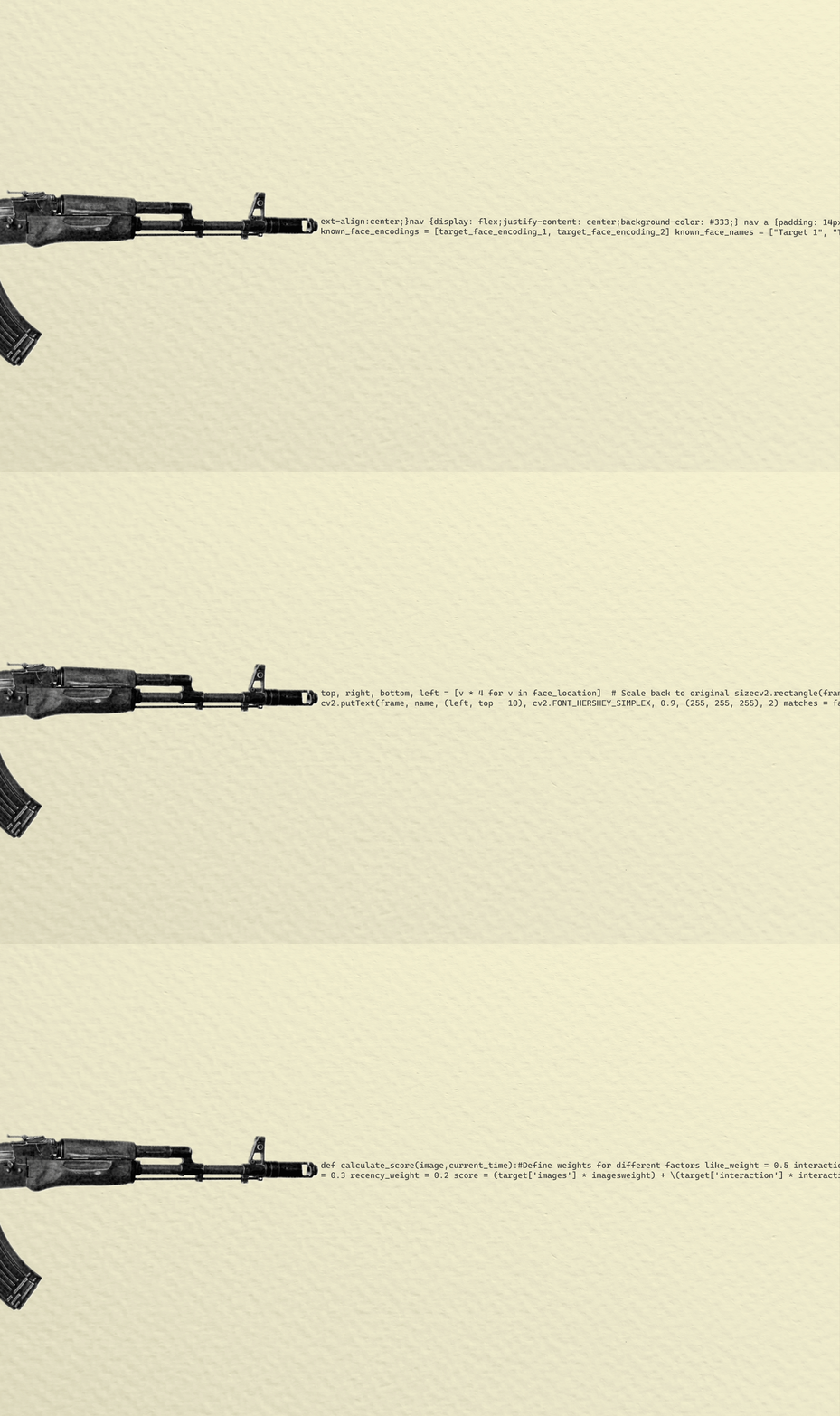
Concerns Over AI in Warfare
Experts warn that AI could be extensively deployed on the battlefield, raising fears about the use of autonomous weapons systems. Human Rights Watch's senior AI researcher, Anna Bacciarelli, expressed apprehension over the abandonment of self-imposed red lines by a global industry leader. She highlighted the importance of responsible leadership in the field of AI.
Alphabet emphasized the significance of democratic nations taking the lead in AI development, guided by core values such as freedom, equality, and respect for human rights. The company reiterated the need for entities sharing these values to collaborate in creating AI that safeguards individuals, fosters global growth, and bolsters national security.
In recent years, there has been a growing recognition of the military applications of AI. The conflict in Ukraine was cited as an example where AI technology provided a significant military advantage. As AI continues to advance, it is expected to revolutionize defense operations, impacting everything from administrative tasks to frontline combat.

Rising Awareness of AI's Military Potential
However, alongside the excitement surrounding AI's capabilities, there is a parallel debate on how to regulate its use, especially in warfare and surveillance. The prospect of AI-powered weapons capable of autonomous lethal actions has sparked concerns among advocates, underscoring the urgent need for comprehensive controls.
Google's Ethical Evolution
Originally known for its motto "don't be evil," Google underwent a transformation when it restructured into Alphabet Inc. in 2015, adopting the principle of "Do the right thing." Despite internal pushback from employees, Google decided not to renew a contract for AI work with the US Pentagon in 2018, amidst fears that the project could lead to the militarization of AI.
In a bid to align with evolving technology, Alphabet updated its AI principles, signaling a shift in its ethical stance by removing restrictions on the use of AI in weapons and surveillance. The company's increased focus on AI projects is reflected in its substantial investments in AI research and infrastructure.
As the debate on AI ethics continues to unfold, it remains crucial for industry leaders and policymakers to navigate the ethical complexities of AI technology, ensuring that advancements in AI are used responsibly and ethically.