How GSuite Defeated the Unbundlers and What It Means
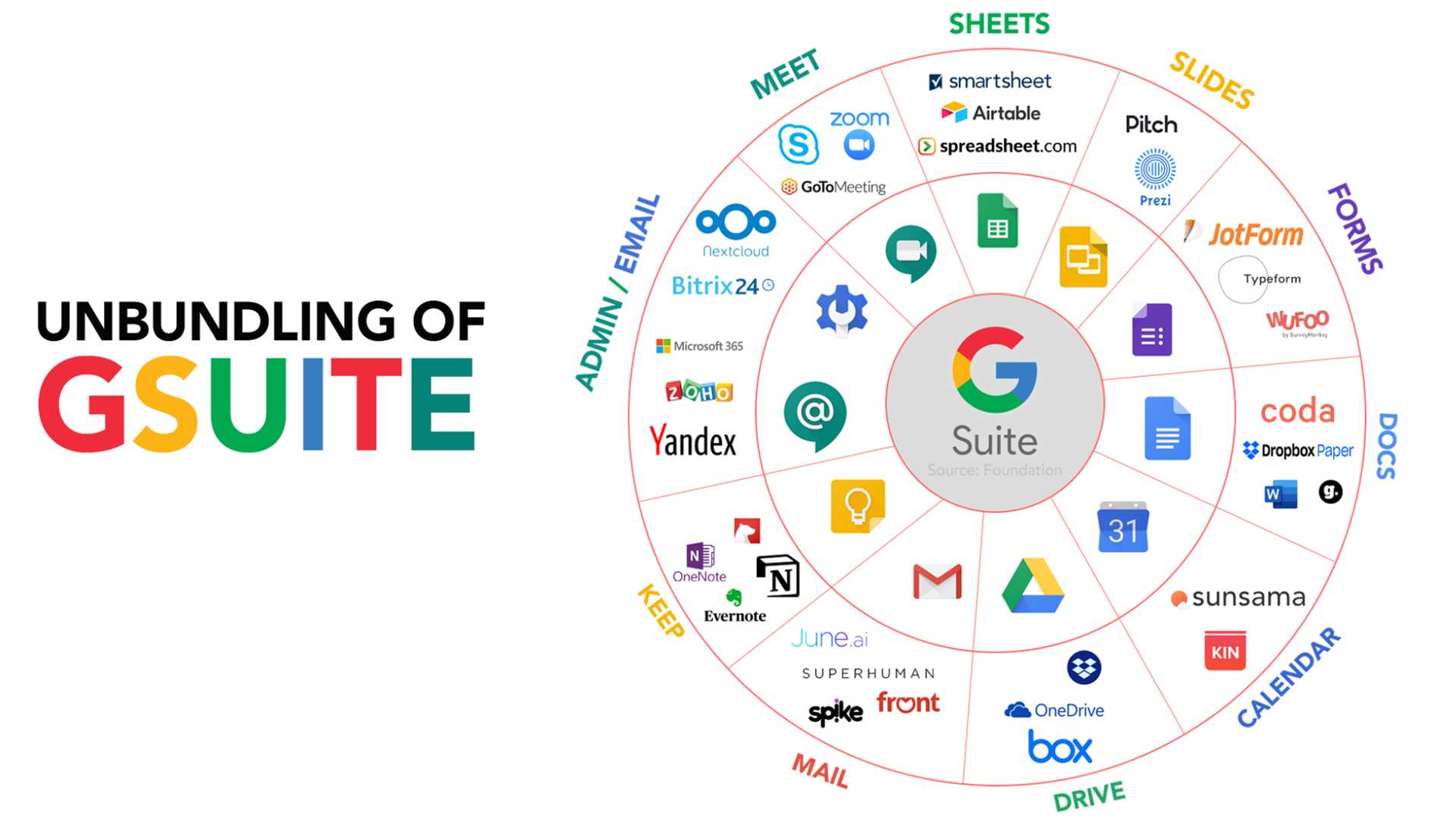
Four years ago, we saw that Google was in a war on dozens of fronts. Zoom stepped up and grabbed an opportunity where Google Meet had failed. But Google is finally coming out ahead. Despite intelligent and even innovative opposition from fantastic products, Google’s “weapons” continue to keep its pace just a few steps ahead, and they are:
Let’s explore how Google’s GSuite (now called Google Workspace) outpaced the pack — and what all SaaS businesses can learn from their example.
The last time we checked in, we saw that Google Meet had missed a massive opportunity in 2020. Instead, Zoom exploded, launching onto millions of computers and changing the way we talk to each other.
So, what’s happened with Zoom since then? Well, they were doing great — until they weren’t. Zoom’s growth, initially meteoric, started to level off. This flattening momentum isn’t just a temporary dip but a sign of reaching a saturation point. In other words, the explosive adoption Zoom experienced during the pandemic cooled off, and the competition intensified. Ultimately, this combination of factors made it challenging for Zoom to sustain its earlier momentum.
In contrast, Google Cloud (the part of Google where the company reports its revenue from GSuite) growth continues to soar, reflecting positively on Google Workspace. Google Cloud has consistently reported robust financial results, showcasing a solid upward trajectory in its market share and customer base. 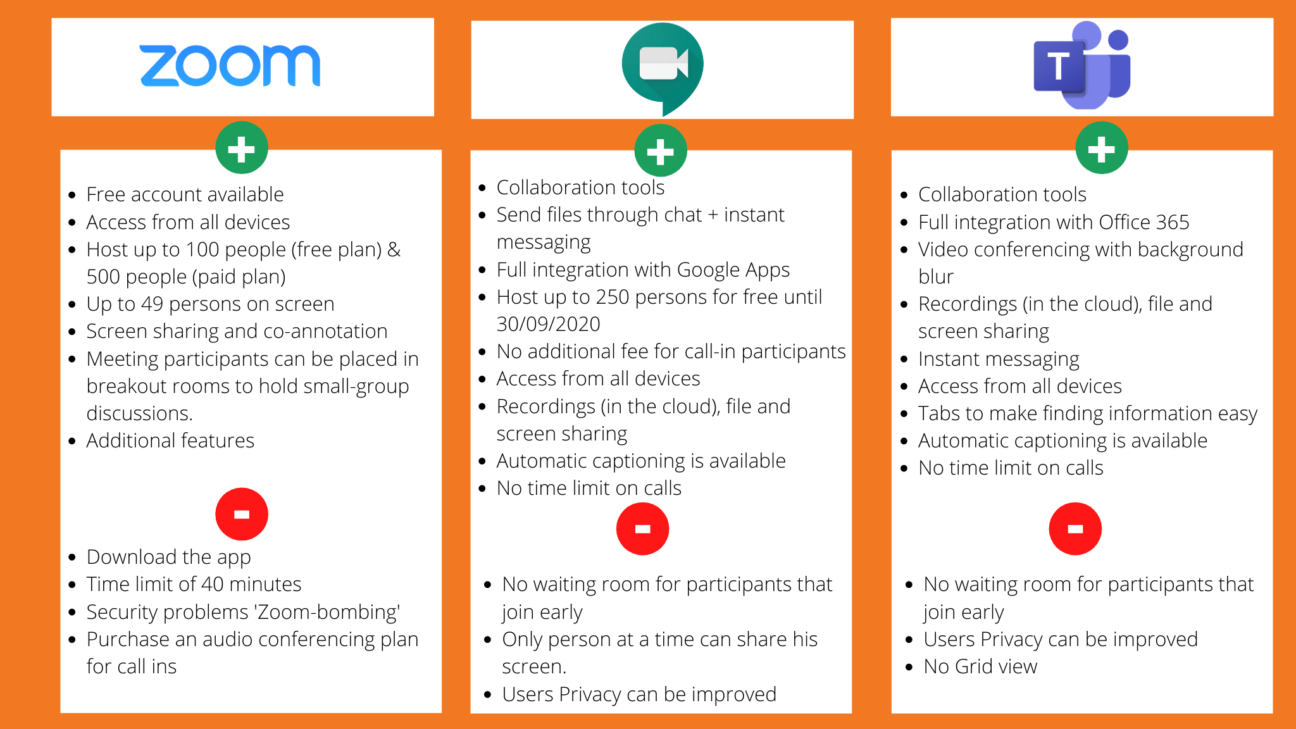
This sustained growth indicates that Google’s strategy of bundling and integrating its services under the Google Workspace umbrella is paying off. With over 9 million paying organizations, GSuite’s evolution to Google Workspace is Exhibit A when it comes to proving the sheer ingenuity of Google’s holistic approach.
By creating an ecosystem that businesses find invaluable, Google’s strategic play was to ensure widespread adoption and deep entrenchment. In other words, businesses find the full arsenal of digital tools valuable enough to be embedded into the daily operations of millions of users worldwide.
Let’s break down what helped Google stay on top and how its stack of tools compares to the competitors that have sprung up to try and unbundle it.
At the heart of Google Workspace’s success is the way its tools connect for a vibrant range of functionality designed to support almost any business format, across every industry, at any growth stage, and operational complexity.
This means, for GSuite, strength is in numbers. While individual apps like Google Docs or Gmail still have competitors, the “bundled” approach makes every tool essential for users who need their apps to “talk” to one another without needing to integrate manually or connect through third-party APIs.
The benefits are real — and obvious. It’s easier for people to get work done without jumping between different apps or platforms.
In a world where teamwork and remote operations are the norm, not the exception, seamlessly switching between tools isn’t just an “advantage”—it’s a dire necessity.
Consider how simple and effortless it is for users to harness Docs, Sheets, and Meet during a work meeting. It could work something like this:
The best part is that it all feels so native and fluid. The user experience is consistent and virtually invisible as users switch between three separate and standalone apps woven or bundled together. 
Another benefit of having everything bundled under Google Workspace is how it simplifies essential business needs. For example, companies can use just one platform for most of their needs instead of managing different vendors and software licenses.
This also makes things more secure. With a single login for all tools, Google can apply stronger security measures, like multi-factor authentication, to protect user data without any additional user effort.
Google Workspace also makes collaboration easier, especially for teams spread across different locations. Real-time collaboration features—like multiple people editing a document at the same time or quickly starting a video call from a calendar event—keep everyone connected and projects moving forward. As an increasing number of companies adopt hybrid work models, it’s only going to become more critical to successful operations.
This highlights the core advantage: not just the individual features of each app, but the power of the entire suite working together. By offering a fully integrated set of tools, Google Workspace provides a streamlined, secure, and collaborative experience that keeps users and businesses returning. 
And that’s how you take a collection of apps and re-style them into a complete solution for getting work done.
Not ever content to be left behind, new AI integrations are the latest addition to Workspace tools. Google is working to make AI feel more like an integral part of those tools instead of an add-on. If implemented well, integrated AI for Workspace promises to help users work smarter and more efficiently. It can suggest new ideas, identify trends, and even automate routine tasks, freeing up time for more strategic work.
Broadly speaking, these integrations normally work through Google Gemini, an AI model that rivals other language models like ChatGPT. One of Gemini’s key advantages is its larger context window, which means it can process and understand more information simultaneously, in contrast to its competitors.
This larger context window allows Gemini to provide more accurate and relevant responses, especially when dealing with complex tasks that require understanding multiple pieces of information simultaneously.
In a business context, this could mean easily analyzing a long thread of emails or a detailed project plan and offering concise summaries or more insightful suggestions for improvement.
Take the “Help me write” feature in Gmail and Google Docs. Here’s a quick snapshot of how it works:
The same applies across the rest of the suite. Whether the built-in AI supports the ability to generate data insights in Google Sheets, offer smarter meeting summaries in Google Meet, or enhance search results in Google Drive, Gemini’s capabilities ultimately make every part of the workday more efficient.
This deep integration of AI across Google Workspace is a key differentiator that sets it apart from competitors who may offer AI features but don’t have the same level of seamless integration.