Meet the women from India's villages supporting the country's AI boom
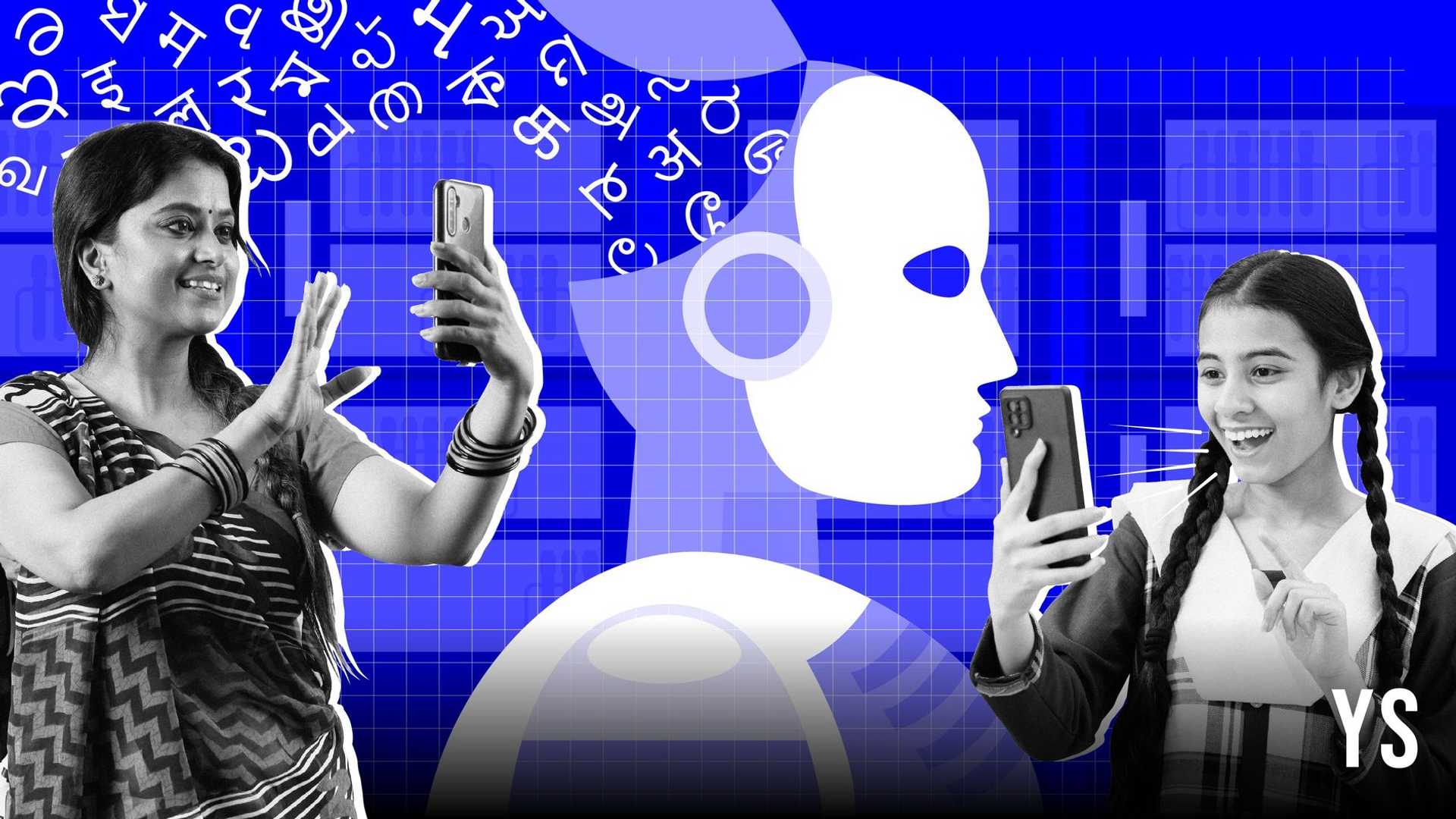
Sitting on the small steps of her home in a village of Odisha, 18-year old Chandrama smiles as she stares at her mobile phone, which is playing back her own voice spoken in Odia, her mother tongue. She lives in Raghurajpur, the home of Pattachitra painters. Despite the widespread fame of her village’s cultural heritage, many families, including hers, earn less than Rs 996 a month on average from the art form. However, Chandrama is an exception. She earns Rs 4,980 a week, just by reading text aloud in her native language.
“My family is going through a lot of pain to pay for me to go to college. When I finish my studies, I want to return that favour. I want to support them. I hope others can also get assistance from such a project,” Chandrama tells YourStory.
AI boom in India's Villages
The project she is referring to is one among the several catalysing the AI boom in India. While models like OpenAI’s ChatGPT and Google’s Gemini are undeniably well-known names by now, startups in India are going a step further to build more localised solutions to solve real-world problems. Bigger tech companies are relying on datasets consisting of voice and text, signalling a huge demand to build AI applications. But India in particular holds a very powerful asset: Indic languages.
AI models built in Indic languages have never been more prominently in the spotlight than in recent years. Two years ago, Meta AI built a single AI model, NLLB-200, which translates across 200 different languages. But where is this data sourced from, and how can a nation like India, being home to over 1,600 languages and dialects, effectively leverage this asset?
Support from Rural India
Chandrama works for Bengaluru-based non-profit organisation , which calls itself ‘the world’s first ethical data company’ and helps in creating datasets in native languages. By partnering with other NGOs, it identifies and trains workers from Tier II and Tier III cities. The startup claims to pay 20 times more than the minimum wage for data collection and annotation.
Everyday, she wakes up at 4 am to start her digitising tasks before heading to school. Evenings are spent managing both her rural duties and her digital tasks.
"I currently don’t have a job. I was able to pay the bills for my home. This work takes less time and energy than manual work, and the pay is much better. I now feel that I am capable of doing any new work. I didn’t feel like that before," Moumita tells YourStory.
With the recent upsurge in hiring for roles focused on training AI models, thousands of people from rural India are stepping ahead to stir the next wave of AI revolution in the country. Both Chandrama and Moumita are part of this growing movement, making datasets in native language a crucial resource.
Promoting Rural Employment

“We [Karya] train workers in rural India to become subject matter experts. Our experts undertake a range of activities that include building multimodal Indic language speech datasets, performing human-in-the-loop tasks, mitigating bias and conducting culturally-sensitive LLM (Large Language Model) evaluations, and overall contributing to the development of AI models in range of regional languages across India,” Manu Chopra, CEO of Karya, tells YourStory.
To join, the criteria is quite simple—workers must possess a smartphone and basic tech skills, with no requirement of advanced education. The initiative specifically targets those who are excluded from traditional job markets due to limited digital skills, socio-economic constraints, or geographic isolation.
Online labour platforms—sometimes referred to as online outsourcing, crowdwork, or gig platforms.