ChatGPT can now read your Google Drive, OneDrive and Dropbox
The recent announcement by OpenAI marks a significant advancement in the capabilities of their AI assistant, ChatGPT. The company has introduced new features to enhance ChatGPT's utility for business users, including a voice recording tool and the ability to integrate with popular cloud storage services like Google Drive, OneDrive, and Dropbox.

New Features
One of the key additions is the "record mode" which enables users to transcribe meetings, brainstorming sessions, and personal reflections using their voice. This feature, available to ChatGPT Team users, Enterprise, or Edu plans, automatically generates structured notes, timestamps, and action items from the conversation, resulting in a searchable and organized summary of the recorded content.
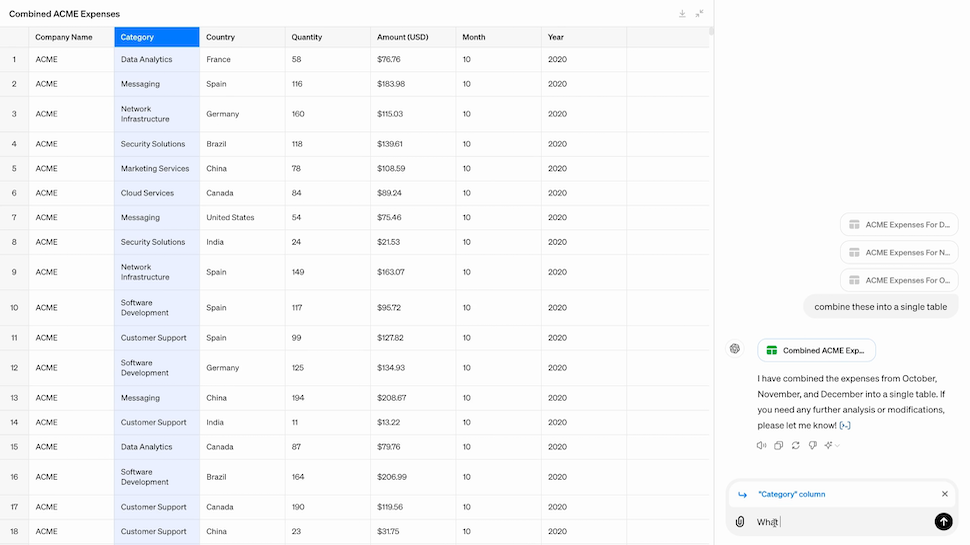
In addition to the record mode, OpenAI has integrated support for various cloud platforms such as Google Drive, Dropbox, Box, SharePoint, and OneDrive. Users can now access and summarize specific information from their connected files, like company revenue data or travel history, with proper citations, using ChatGPT.
Data Security
OpenAI ensures the safety of user data by respecting existing user-level permissions to safeguard sensitive content. According to OpenAI, ChatGPT organizes and presents data clearly while upholding the user-level permissions set by the organization. The AI only accesses the data shared with it temporarily and with the user's explicit permission, terminating access once the session concludes or upon disconnecting.

The pricing for the Team subscription starts at $25 (Sh. 3,231.06) per user per month, with a minimum of two users on an annual plan. Since the launch of ChatGPT Enterprise in 2023, OpenAI has garnered significant corporate clients, including Canva, Block, PwC, and Estée Lauder Companies.
Future Outlook
With the introduction of ChatGPT Team in January 2024, OpenAI aims to provide a more accessible solution for small and mid-sized teams. The company's business model now competes with tech giants like Google, Microsoft, and Amazon, as well as emerging players like Anthropic, all striving for a share of the anticipated $1 trillion generative AI market by 2032.