10+ Large Language Model Examples - Benchmark & Use Cases
We have used open-source benchmarks to compare top proprietary and open-source large language model (LLM) examples. You can choose your use case to find the right model for it. We have created a model scoring system using 3 metrics: User preference, coding, and reliability. You can also see the price graph with respect to the final score of the model. You can adjust the criterion weights by using the sliders on top of the graph according to your needs:
User Preference:
This metric is based on the Elo score. Elo score is a widely used technique in various areas that need ranking. It originates from chess, and when a player outranks the other, they gain more scores. We have obtained this data from Chatbot Arena, which includes many users. 1
Coding:
The coding metric indicates the code generation abilities of the LLM rated by users of OpenLM.ai. 2
Reliability:
The reliability metric refers to the hallucination scores of the study conducted by Vectera. They use the Hughes Hallucination Model Evaluation to find out how often a model introduces hallucinations when summarizing a document. 3
API Cost
API cost is given for 1000000 input and output tokens per API call for 1 API call. You can see our methodology and further information on evaluation. Here are key use cases of LLM models with examples. To learn more about generative AI, see Generative AI applications.
Large language models are deep-learning neural networks that can produce human language by being trained on massive amounts of text. LLMs are categorized as foundation models that process language data and produce synthetic output. They use natural language processing (NLP), a domain of artificial intelligence aimed at understanding, interpreting, and generating natural language. During training, LLMs are fed data (billions of words) to learn patterns and relationships within the language. The language model aims to predict the likelihood of the next word based on the words that came before it. The model receives a prompt and generates a response using the probabilities (parameters) it learned during training.
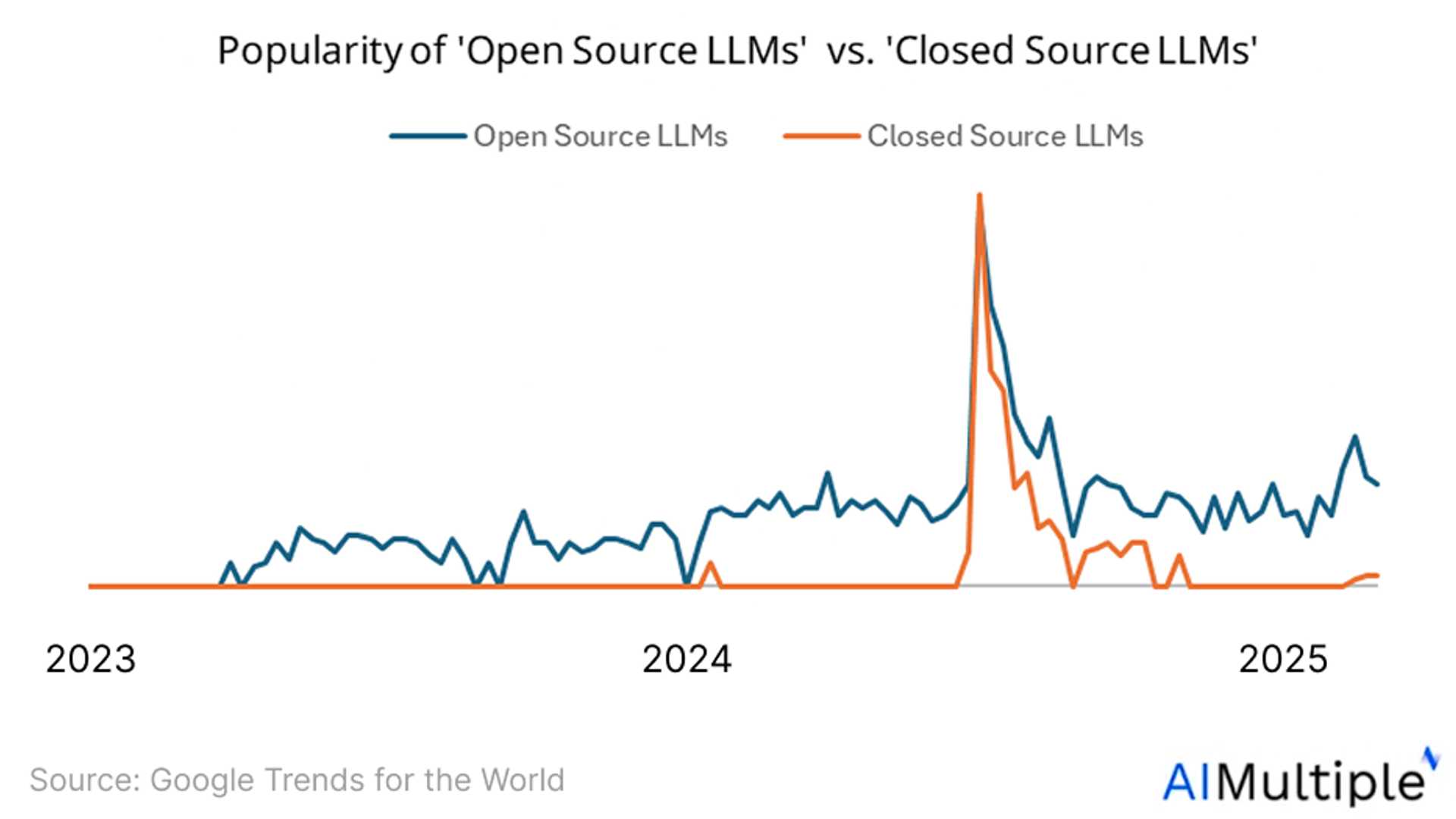
If you are new to large language models, check our "Large Language Models: Complete Guide" article. Some of the leading proprietary LLMs include models like Gemini 2.0 Flash (Google), Claude 3.5 Sonnet (Anthropic), and o3-mini (OpenAI). Examples of open-source LLMs include DeepSeek-R1 (DeepSeek), Qwen2.5-Max (Alibaba), and Llama 3.3 (Meta). These models excel in tasks like reasoning, translation, and language understanding and specific applications like coding and content generation.
Large Language Model Meta refers to the metadata, parameters, and evaluation metrics used to compare different models. It helps in assessing the strengths and weaknesses of various LLMs in tasks like text generation, artificial intelligence applications, and natural language processing tasks.
Your email address will not be published. All fields are required.