20 ChatGPT Interview Questions with Answers
ChatGPT has become a ubiquitous tool in various industries, making it essential to understand how to work with it effectively. Below are some common ChatGPT interview questions along with their answers:
Q1: What is ChatGPT, and how does it work?
ChatGPT is a large language model developed by OpenAI that uses a transformer-based neural network to generate human-like text based on learned patterns from vast datasets.
Q2: How does ChatGPT differ from Google Search?
While Google Search retrieves links to posted information on the internet, ChatGPT generates responses in natural language based on its training data, making it a generative tool.
Q3: What are tokens, and why do they matter in ChatGPT?
Tokens are text chunks that affect how much text ChatGPT can process at once. GPT-4, for example, can handle up to 128k tokens in a single query, influencing the input and generated text limits.
Q4: Can ChatGPT browse the internet?
By default, ChatGPT cannot browse the internet. However, with plugins or tools like GPT-4o, it can access online resources.
Q5: What’s the difference between GPT-3.5, GPT-4, and GPT-4o?
GPT-3.5 is faster but less accurate, GPT-4 is an improved version with better reasoning capabilities, and GPT-4o is multimodal and cost-effective.
Q6: Have you used ChatGPT to improve your productivity? Give an example.
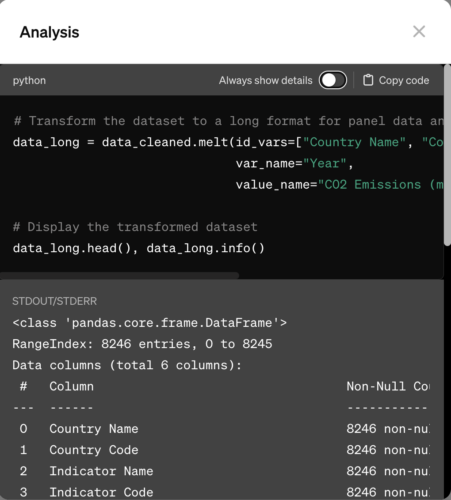
ChatGPT can be used for tasks like summarizing documents, machine translation, code generation, and automating routine processes.
Q7: What prompt engineering techniques do you use regularly?
Role prompting, few-shot prompting, and chain-of-thought reasoning are some of the prompt engineering methods utilized to guide ChatGPT's responses effectively.
Q8: Can you show how you’d use ChatGPT to write a marketing plan/SQL query/cover letter?
ChatGPT can help write various content types by providing context and requesting a first draft. For instance, in writing a cover letter, one can paste the job description and prompt ChatGPT to focus on analytics and campaign results.

Q9: What are your favorite ChatGPT plugins or extensions?
Plugins like WebPilot, AskYourPDF, Wolfram Alpha, and Zapier enhance ChatGPT's functionalities for different tasks.
Q10: How do you validate the accuracy of ChatGPT’s responses?
Validating responses involves cross-checking key facts with reliable sources, especially for technical or legal content. Fact-checking and refraining from using ChatGPT for critical tasks are crucial for accuracy.
Q11: Would you use ChatGPT to write reports or do assignments at work? Where’s the line?
While ChatGPT can assist in drafting content and generating ideas, it is essential to edit and verify the output before submission, as it serves as a tool rather than a definitive source.
Q12: Do you think ChatGPT is a threat to your role or an opportunity?
ChatGPT is perceived as an opportunity as it automates repetitive tasks, allowing individuals to focus on more strategic responsibilities.
Q13: How would you explain ChatGPT to a 5-year-old or your grandparents?
ChatGPT is like a computer that learned to talk by reading extensively, now answering questions and providing information like a knowledgeable friend.
Q14: Have you ever caught ChatGPT making a serious mistake? How did you handle it?
If an error occurs, manual fact-checking is essential to rectify any inaccuracies before reporting and providing feedback for improvement.
Q15: What industries will ChatGPT disrupt the most in the next 5 years?
Industries such as education, customer support, legal research, marketing, documentation, and content creation are expected to undergo significant transformations due to advancements in technologies like ChatGPT.
Q16: As a [designer/product manager/salesperson], how would you use ChatGPT daily?
For example, as a product manager, tasks like writing PRDs, summarizing feedback, generating user stories, and exploring edge cases could be facilitated using ChatGPT.
Q17: Can ChatGPT help you write better code? How would you use it to debug?
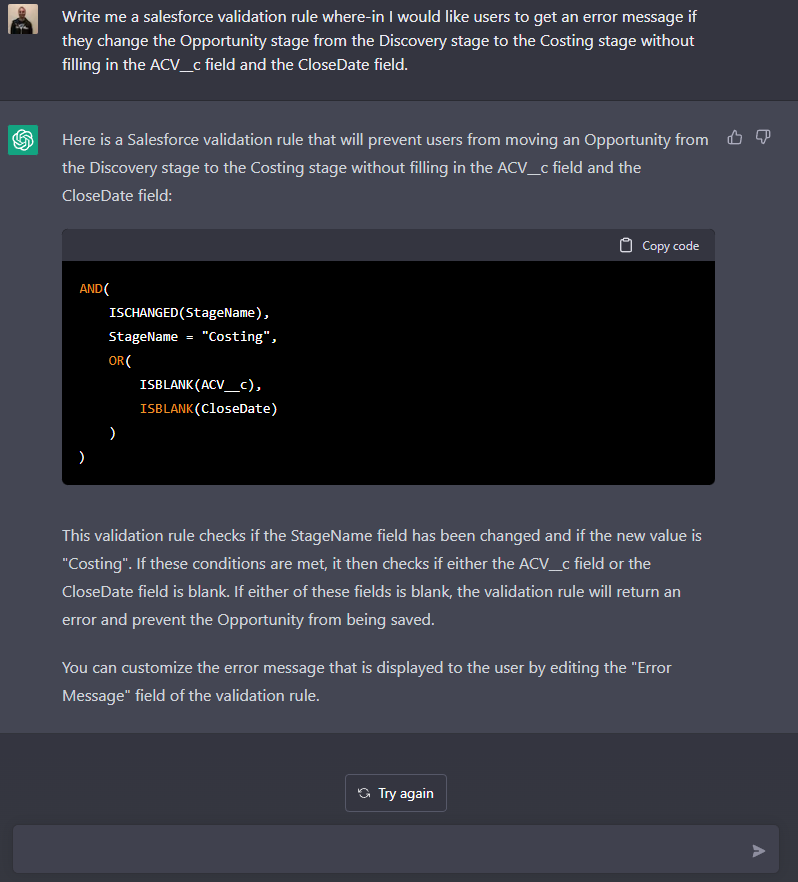
ChatGPT can aid in understanding error messages, refactoring code, and suggesting alternative logic paths to enhance coding capabilities.
Q18: How would you integrate ChatGPT into a customer service workflow?
Integrating ChatGPT into customer service involves auto-replies, summarizing tickets, drafting responses for agents, and analyzing customer sentiment for improved service quality.
Q19: Can you build or fine-tune a custom GPT for your team? What would it do?
Developing a custom GPT trained on internal data can help answer queries related to HR, processes, or policies using retrieval-augmented generation techniques.
Q20: What AI skills are you actively learning right now?
Actively learning prompt engineering and ethical AI development can enhance proficiency in the latest AI technologies while ensuring accountability in their application.

By mastering these 20 ChatGPT interview questions, individuals can showcase their readiness to work effectively with AI technologies and stand out in interviews and professional settings.