Introduction
Power dispatch is crucial for providing stable, cost-effective, and environmentally friendly electricity to society. As power systems become larger and more complex, traditional methods face challenges in multitasking, quick problem-solving, and human-machine collaboration. To address these issues, the Grid Artificial Intelligent Assistant (GAIA) has been developed as a Large Language Model (LLM) to assist in various operational tasks within power systems.
Enhancing Power Dispatch Operations with GAIA
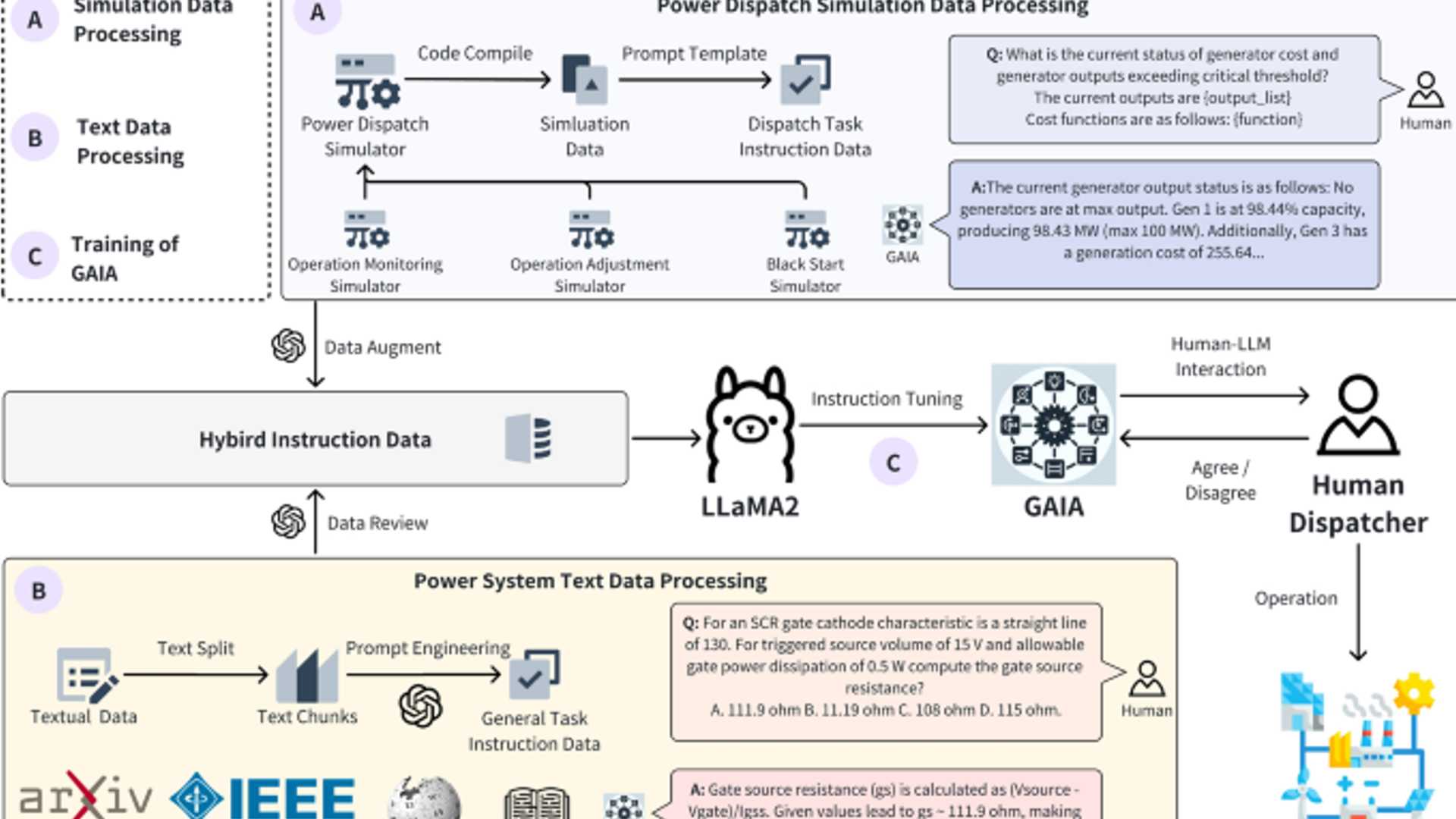
GAIA is designed to handle operation adjustment, operation monitoring, and black start scenarios in the power system. By utilizing a unique dataset construction technique that combines data from various sources, GAIA is fine-tuned for optimal performance in power system management. This streamlined approach to LLM training allows for the integration of multidimensional data seamlessly, improving operational efficiency.
Specialized prompt strategies have been crafted to enhance GAIA's input-output efficiency in dispatch scenarios. When tested on the ElecBench benchmark, GAIA outperformed the baseline model Large Language Model Meta AI-2 (LLaMA2) across multiple metrics. In practical applications, GAIA has proven to enhance decision-making, improve operational efficiency, and facilitate better human-machine interactions in power dispatch operations.
Challenges in Power Dispatch
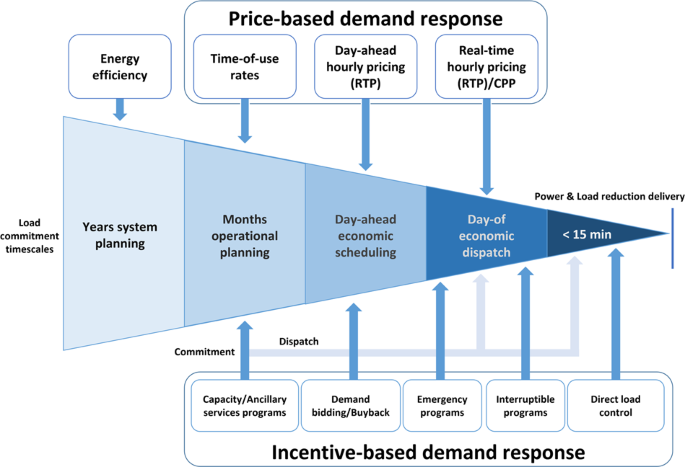
Ensuring power system stability and economic efficiency relies on effective power dispatch processes. System operators must carefully balance generating unit outputs and load distribution while adapting to dynamic shifts in power supply and demand caused by various factors such as human activities, weather changes, and emergencies. Economic Dispatch (ED) and Unit Commitment (UC) problems are directly related to the decision process in power dispatch, while other tasks like automated question and answer systems and operation monitoring support decision-making and execution by human dispatchers.
The integration of renewable energy sources and advancements in HVDC technology add complexity to dispatch operations, requiring more advanced optimization methods. Traditional optimization algorithms like linear and nonlinear programming are effective for specific power dispatch problems but may struggle with operational uncertainties. Recent advancements focusing on renewable integration and frameworks like reinforcement learning offer adaptability but face deployment challenges due to computational latency and lack of natural language interfaces.
Power of Large Language Models in Power Dispatch
Recent breakthroughs in Large Language Models (LLMs) have transformed their capabilities in understanding complex instructions and context. Models like Transformer, LLaMA, and ChatGPT have excelled in language comprehension through pre-training, enabling them to perform tasks at or above human levels when properly tuned. Prompt engineering further enhances their adaptability, allowing them to tackle new tasks without extensive retraining.
Despite LLMs' success in various domains, there has been a lack of dedicated LLMs for power dispatch. Existing general-purpose LLMs or fine-tuned LLMs for specific fields cannot adequately address the challenges in power dispatch due to the lack of domain-specific datasets and tailored training.
GAIA bridges this gap by combining domain-specific knowledge engineering with LLM-based natural language processing, providing a solution that ensures computational efficiency, scenario adaptability, and human-centric interaction. By leveraging the robust natural language processing capabilities of LLMs, GAIA showcases the potential for widespread application in power dispatch operations.