
Canadian news publishers suing ChatGPT developer OpenAI over copyright infringement
A coalition of Canadian news publishers has taken legal action against OpenAI, the developer of ChatGPT, for alleged copyright violations. The publishers claim that OpenAI used news content from various media websites without permission to train its generative artificial intelligence system.
Legal Battle Unfolds
The coalition, which includes prominent Canadian news outlets such as The Canadian Press, Torstar, The Globe and Mail, Postmedia, and CBC/Radio-Canada, accused OpenAI of scraping substantial amounts of content in violation of copyright laws. According to the publishers, their significant investments in journalism deserve protection under copyright laws.

In a statement, the coalition emphasized the importance of following the law and ensuring that intellectual property is used on fair terms, especially in the rapidly evolving technological landscape.
OpenAI's Response
OpenAI defended its practices, stating that its AI models are trained on publicly available data and adhere to fair use and international copyright principles. The company highlighted its collaboration with news publishers, offering options for attribution and opt-out mechanisms for content usage in ChatGPT.
Publisher's Allegations
Paul Deegan, the president of News Media Canada, criticized AI companies for exploiting journalism without proper authorization, referring to it as "strip-mining journalism." He expressed concerns that AI companies benefit from proprietary content created by news publishers without fair compensation.
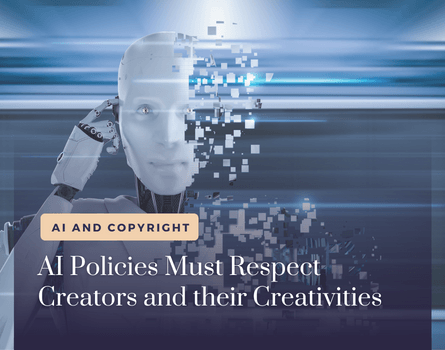
The lawsuit filed by the publishers seeks damages to be determined at trial, proposing statutory damages per work and an injunction to halt OpenAI's use of their news content. The legal action represents a significant development in the ongoing debate over intellectual property rights in the era of artificial intelligence.
Implications for the Industry
Legal experts, including Lisa Macklem from King’s University College, view the lawsuit as a pivotal moment that could shape future regulations on AI and copyright. The case has broader implications for how generative AI technologies collect and utilize data, prompting discussions on the need for updated copyright laws in Canada.
Government Action
While the Canadian government has passed legislation like the Online News Act to regulate tech giants' compensation to news publishers, the debate around AI and copyright continues to evolve. Industry representatives urge policymakers to expedite the implementation of laws that address the intersection of AI and intellectual property rights.
As the legal battle unfolds in Canada, the outcome of this case could set a precedent for how AI companies interact with news content and the obligations they have towards content creators.

This report by The Canadian Press was first published on Nov. 29, 2024.








