
Writing is thinking: do students who use ChatGPT learn less?
When Jocelyn Leitzinger had her university students write about times in their lives they had witnessed discrimination, she noticed that a woman named Sally was the victim in many of the stories. "It was very clear that ChatGPT had decided this is a common woman’s name," said Leitzinger, who teaches an undergraduate class on business and society at the University of Illinois in Chicago. "They weren’t even coming up with their own anecdotal stories about their own lives," she told AFP.
Leitzinger estimated that around half of her 180 students used ChatGPT inappropriately at some point last semester — including when writing about the ethics of artificial intelligence (AI), which she called both "ironic" and "mind-boggling".
Study Findings
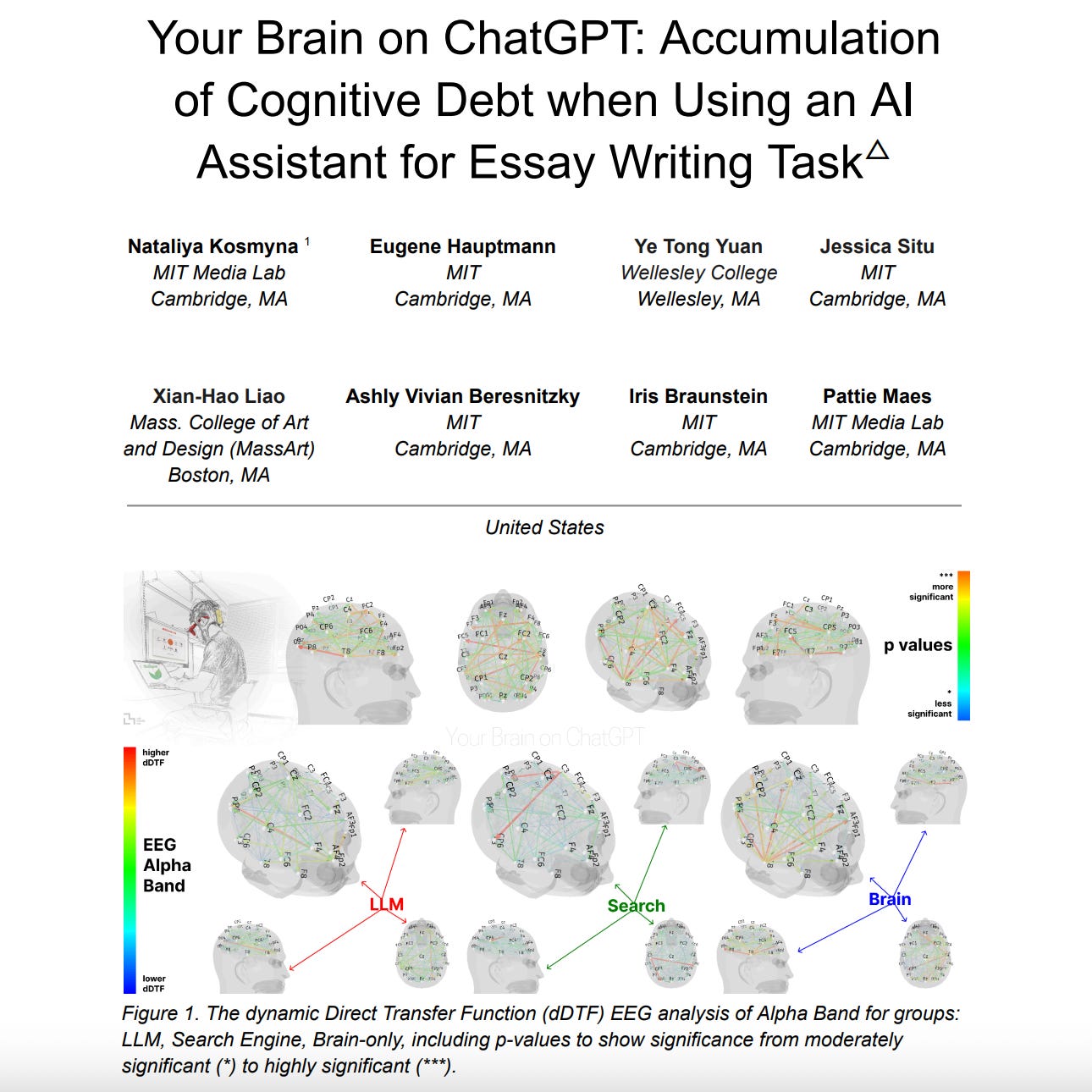
So she was not surprised by recent research which suggested that students who use ChatGPT to write essays engage in less critical thinking. The preprint study, which has not been peer-reviewed, was shared widely online and clearly struck a chord with some frustrated educators.
The team of MIT researchers behind the paper have received more than 3,000 emails from teachers of all stripes since it was published online last month, lead author Nataliya Kosmyna told AFP.
Results of the Study
For the small study, 54 adult students from the greater Boston area were split into three groups. One group used ChatGPT to write 20-minute essays, one used a search engine, and the final group had to make do with only their brains. The researchers used EEG devices to measure the brain activity of the students, and two teachers marked the essays.

The ChatGPT users scored significantly worse than the brain-only group on all levels. The EEG showed that different areas of their brains connected to each other less often. And more than 80 percent of the ChatGPT group could not quote anything from the essay they had just written, compared to around 10 percent of the other two groups.
By the third session, the ChatGPT group appeared to be mostly focused on copying and pasting. The teachers said they could easily spot the "soulless" ChatGPT essays because they had good grammar and structure but lacked creativity, personality and insight.
Expert Opinion
Ashley Juavinett, a neuroscientist at the University of California San Diego who was not involved in the research, criticised some "offbase" headlines that wrongly extrapolated from the preprint. "This paper does not contain enough evidence nor the methodological rigour to make any claims about the neural impact of using LLMs (large language models such as ChatGPT) on our brains," she told AFP.
Impact on Learning
Leitzinger said the research reflected how she had seen student essays change since ChatGPT was released in 2022, as both spelling errors and authentic insight became less common. Sometimes students do not even change the font when they copy and paste from ChatGPT, she said.
Conclusion
"Writing is thinking, thinking is writing, and when we eliminate that process, what does that mean for thinking?" Leitzinger asked.

Source: FOX28 Spokane