SaaS LLMs vs. Self-Hosted Models: Should You Use ChatGPT, Claude ...
The rise of top-tier SaaS tools like ChatGPT, Claude, and Gemini has made powerful AI accessible to the masses. At the same time, enterprises with deeper pockets and stricter governance needs are exploring how to host large language models (LLMs) in-house. The real question that many organizations are now asking is: Should we use ChatGPT as a service, or should we host GPT-like models ourselves, either on physical servers or virtual machines in the cloud?
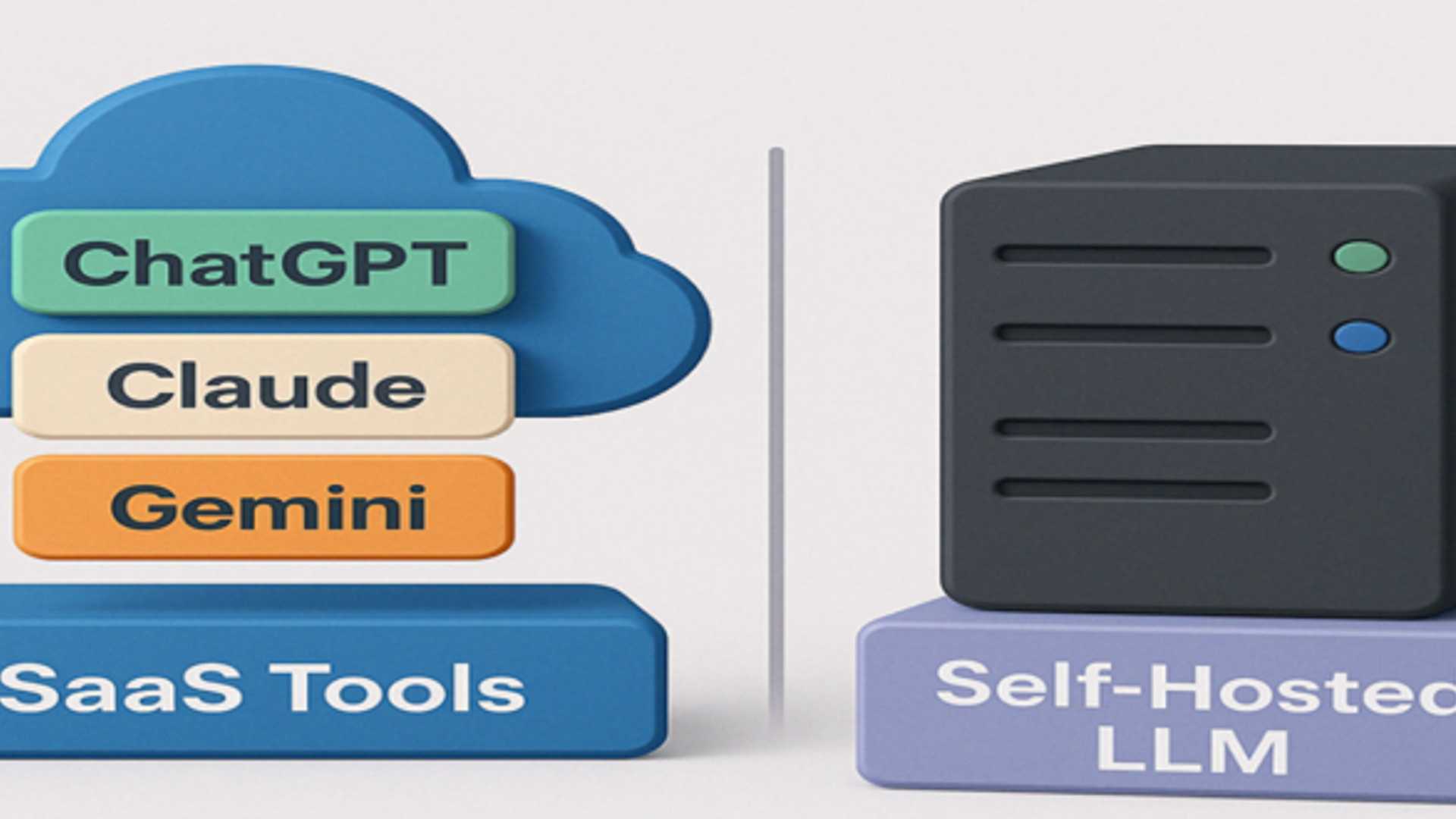
SaaS Tools
ChatGPT (OpenAI), Claude (Anthropic), and Gemini (Google) are among the most advanced SaaS tools that provide access to LLMs via user-friendly interfaces and APIs. They’re plug-and-play, managed by the vendor, and continuously updated.
- Fastest Time-to-Value: You can integrate or experiment with ChatGPT immediately—no provisioning, no setup, just log in or call an API.
- Zero Maintenance: Model training, scaling, and security patches are handled entirely by the provider.
- Built-in Compliance and Security: Major SaaS vendors offer robust security measures and regulatory certifications like SOC 2, ISO 27001, and GDPR compliance. But trust in vendor governance is key.
- High Scalability: SaaS services are built to handle millions of queries seamlessly with elastic backend infrastructure.
- Innovation on Autopilot: SaaS tools deliver frequent model updates, new features, and performance boosts without user intervention.
- Limited Customization: Most SaaS tools don’t let you fine-tune the underlying model or train on your proprietary data.
- Recurring Cost: Pricing is often usage-based (per token or seat), which can become expensive at scale.

Self-Hosting LLMs
To self-host is to run an LLM like Llama, GPT-J, or even a licensed version of GPT-4 within one’s own infrastructure—on-premises or in a cloud environment they control.
- Total Data Control: No third-party API means no external data exposure. The business retains full control over sensitive customer data and intellectual property.
- Regulatory Alignment: For industries like healthcare, finance, and government, self-hosting makes it easier to ensure full compliance with data residency laws and regulatory frameworks such as GDPR or HIPAA.
- Custom Model Behavior: Want your LLM to understand legal terms, internal jargon, or proprietary code? Self-hosting lets you fine-tune models to your exact business context.
- Security Customization: Define your encryption, access, and audit protocols. Unlike SaaS platforms, you’re not bound by shared responsibility models.
- Cost Efficiency at Scale: For high-volume usage, self-hosting can become more cost-effective over time compared to paying per token or per user.
- Operational Overhead: However, self-hosting requires DevOps, MLOps, and security resources—plus compute-heavy infrastructure.
Blending Both Models
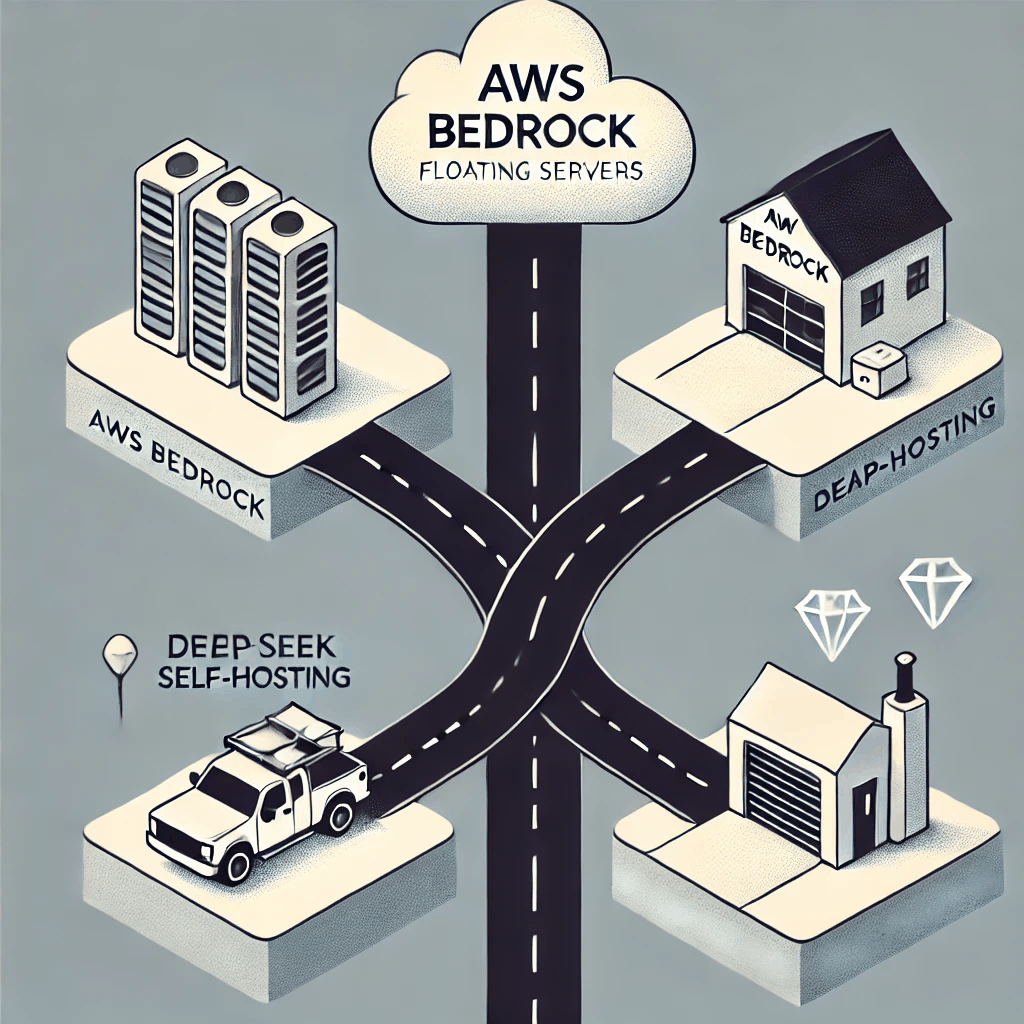
Many modern organizations blend both models. For general productivity tasks—like answering internal queries or content drafting—SaaS tools like ChatGPT are ideal. For critical workloads that require privacy, custom training, or integration with proprietary systems, self-hosting makes more sense.
For example, a fintech company might use SaaS LLMs like ChatGPT or Claude for internal brainstorming while hosting a fine-tuned LLM for analyzing client documents under strict regulatory controls.
Factors to Consider
| Self-Hosted LLM | SaaS Tools (e.g., ChatGPT, Claude, Gemini) | |
|---|---|---|
| Data Privacy | Full control over data | Depends on provider’s policies |
| Compliance | Easier to align with strict regulations | Certified providers, but limited control |
| Customization | Full access to model weights, fine-tuning | Minimal or no fine-tuning |
| Cost (Long-Term) | Cost-effective at scale | Predictable but may rise with usage |
| Deployment Time | Weeks to months | Immediate |
| Technical Expertise | High (MLOps, DevOps, AI engineering) | Low to moderate |
| Maintenance | Fully owned by internal teams | Fully managed by vendor |
Your decision depends on what you’re building and who your users are. SaaS tools like ChatGPT deliver speed, simplicity, and innovation out-of-the-box—ideal for marketing teams, startups, and internal prototypes. By contrast, self-hosted LLMs demand more investment but pay off in control, privacy, and customization and are best for enterprise AI products or sensitive domains.
You don’t have to pick any one. A strategic blend of the two delivers the most value: SaaS where ease matters, self-hosting where control is key.
References: