ChatGPT, will it replace your job or be a productivity tool? Tsinghua Study Reveals
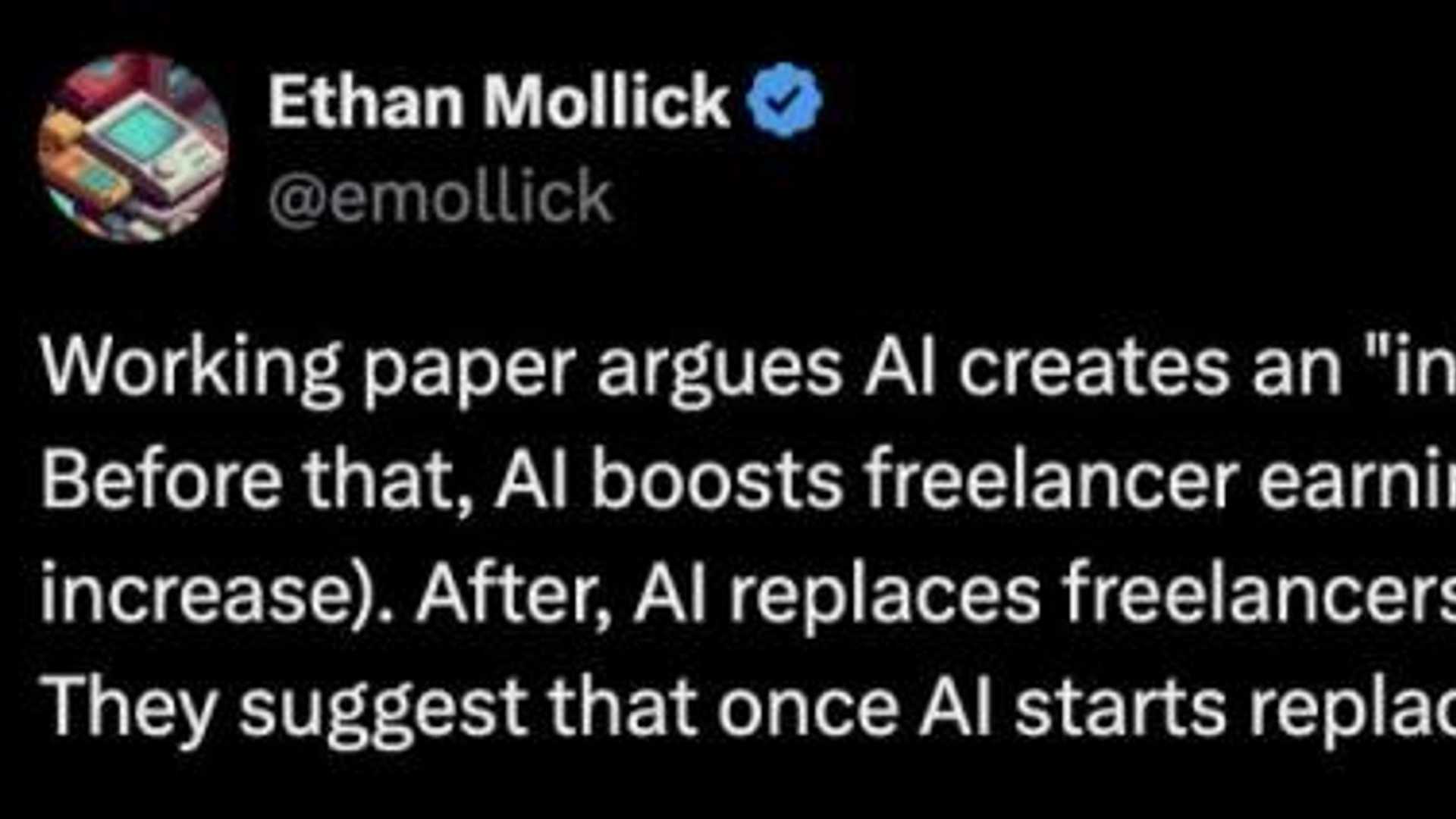
The empirical study conducted on online labor platforms focusing on translation, and web development has shed light on the dual impact of AI - the replacement effect and productivity effect. Utilizing the Cournot competition model and making specific assumptions, the study introduces the "tipping point conjecture". This theory suggests that with the continuous enhancement of AI capabilities, there is an initial increase in the number of positions and level of remuneration, known as the productivity effect. However, once AI surpasses a certain threshold, there is an irreversible decline in the number of positions and remuneration, termed as the replacement effect.
Analysis and Findings
According to the study, when AI capability exceeds the tipping point, there is an inevitable replacement effect. Interestingly, positions related to writing, consulting, programming, operations, and creativity show a weakening replacement effect of AI in a progressive order. For instance, recent research indicates that web developers utilizing GitHub Copilot experienced a 55.8% increase in the speed of implementing HTTP web pages.
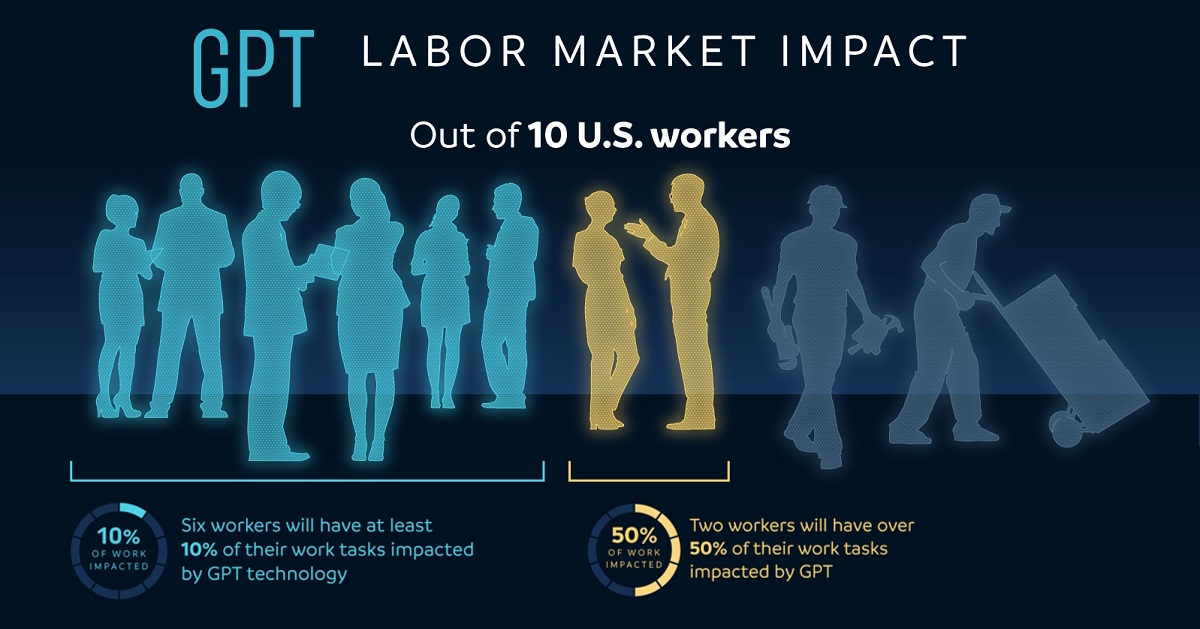
Web development tasks encompass a wide array of responsibilities, demanding skills such as programming expertise and system planning. While ChatGPT may not autonomously handle all tasks, it does provide valuable support to human programmers, particularly in debugging code and identifying functionality.
Impact on Labor Markets

The author selected the web development OLM for further analysis due to its significance in the study. Conversely, the architectural design OLM was chosen as a control group since it's considered one of the least affected industries by ChatGPT. Integrating ChatGPT into architectural design software like 3D Max is still in the conceptual stage, with AI currently unable to independently execute actual projects.
The study incorporated the AI Occupational Exposure Index (AIOE) and Google Search Volume Index (SVI) to evaluate the influence of ChatGPT on the three markets. Mapping the markets to the AIOE index and examining SVI results revealed varying impacts, with the architectural design OLM showing less susceptibility to ChatGPT compared to the web development and translation and localization OLMs.
Evaluation and Methodology
To understand the effects of AI on freelancers, the author employed fixed-effects difference-in-differences (DiD) model for identification. Additionally, the Propensity Score Matching (PSM) method was utilized to ensure the comparability of workers in treatment and control groups based on various factors like experience and work quality.

The research highlighted the substantial substitution effect of ChatGPT on the translation and localization OLM, leading to a decrease in core work accepted by workers and income. In contrast, web developers experienced an increase in transaction volume and income post the adoption of ChatGPT. This suggests that while ChatGPT enhances productivity in web development, it doesn't fully automate the process.
Understanding the Impact
To delve deeper into the differential impacts of AI across occupational markets, the author developed a micro-model based on a Cournot competition model. This model explores the role of AI in various contexts, emphasizing the percentage of tasks AI can successfully complete and its impact on market dynamics.
As AI advancements continue, employers are more inclined to substitute human labor with AI for tasks AI can efficiently perform. The market demand for services decreases as AI adoption increases, leading to potential shifts in employer preferences and market dynamics.