OpenAI's Latest Developments
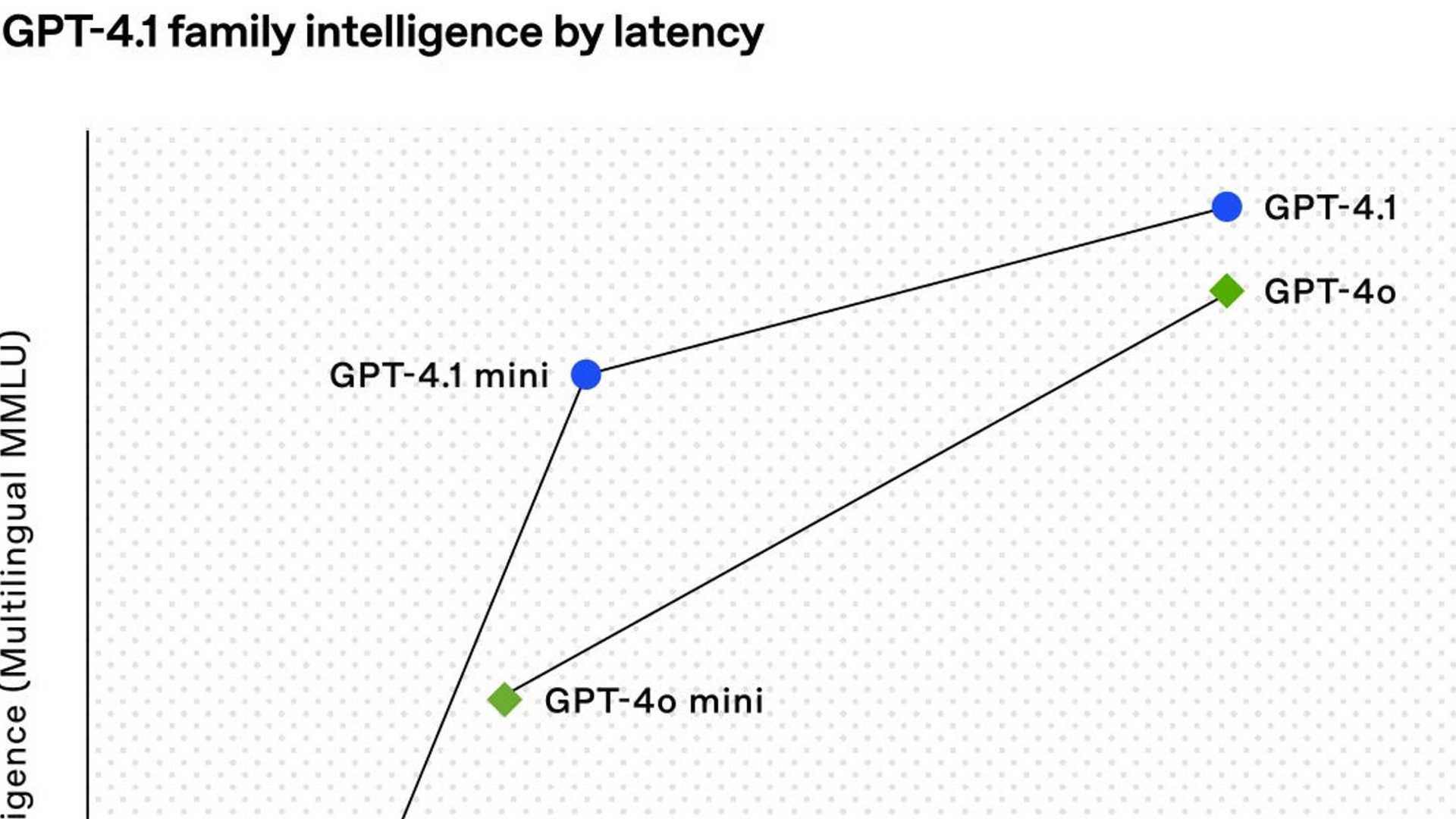
OpenAI has recently introduced a new family of AI models known as GPT-4.1. This family includes GPT-4.1, GPT-4.1 mini, and GPT-4.1 nano, all tailored to excel in coding and instruction following tasks. These models boast a 1-million-token context window, enabling them to process around 750,000 words at a time. OpenAI's goal with these models is to create AI coding models capable of handling complex software engineering tasks, such as programming entire applications from start to finish. The GPT-4.1 models have been fine-tuned for real-world applications, with enhancements in areas like frontend coding, format adherence, and tool consistency.
The Introduction of o3 and o4-mini Models
Aside from the GPT-4.1 family, OpenAI has also launched two new AI reasoning models, namely o3 and o4-mini. The o3 model stands out as OpenAI's most advanced reasoning model, showcasing superior performance in various tests measuring math, coding, reasoning, science, and visual comprehension capabilities. On the other hand, the o4-mini model strikes a balance between cost, speed, and efficiency. Both models can generate responses using tools like web browsing, Python code execution, image processing, and image generation within ChatGPT. Subscribers to OpenAI's Pro, Plus, and Team plans now have access to these models, including a variant of o4-mini called "o4-mini-high," for utilization.
Google's Gemini 2.5 Flash and Veo 2
Google is preparing to launch Gemini 2.5 Flash, its new AI model, on the Vertex AI platform. This model focuses on efficiency and dynamic computing, allowing developers to adjust processing time based on query complexity. Similar to OpenAI's o3-mini and DeepSeek's R1, Gemini 2.5 Flash is a reasoning model that invests time in fact-checking before responding to questions. It is particularly suitable for high-volume and real-time applications such as customer service and document parsing. Google intends to extend Gemini models like 2.5 Flash to on-premises settings in Q3, including availability on Google Distributed Cloud (GDC) in partnership with Nvidia.

Furthermore, Google has unveiled Veo 2, an advanced text-to-video AI model, exclusive to Gemini Advanced subscribers. Veo 2 can generate high-resolution, eight-second videos in 720p from a text prompt, with a monthly cap on video creation. These videos, supplied in MP4 format, can be promptly uploaded to platforms like TikTok and YouTube via mobile devices. Google emphasizes Veo 2's enhanced grasp of real-world physics and human motion, resulting in more realistic scenes and fluid character movements.