We saw ten major GenAI developments in the month of December ...
The latter half of December witnessed a flurry of groundbreaking announcements despite the holiday season, highlighting a Generative AI industry that cannot afford a pause, given the rapid developments and high costs for those who fall behind.

Google raised the bar with Gemini 2.0
Google’s launch of Gemini 2.0 is a full-fledged base model upgrade from the 1.5 series. Such upgrades, even in half-step increments, represent substantial architectural advancements. It’s crucial to acknowledge Google’s dominant position in the AI landscape. Its models consistently rank at the top of most Western performance benchmarks. Read more about it here.
Gemini 2.0 Flash—Your phone’s 2025 AI brain
It was more than a base model change with Gemini 2.0 Flash, a specialized model built for speed and efficiency. Imagine this: your phone integrates AI into everything you do. Flash makes this possible. Need to identify a landmark in a photo quickly? Done. Want real-time translation during a conversation with someone speaking a different language? No problem. Flash’s speed and multimodal capabilities mean AI can understand any text, image, or audio clip, turning our phones into knowledgeable assistants. Read more about it here.
Instant copiability—The AI arms race heated up
A day after Gemini Flash, OpenAI showcased almost identical capabilities. Its model can process a live camera, turning your phone into an AI-powered ‘eye.’ The simultaneous announcements of similar features might be accidental, but it underscores the intensity of AI competition and the speed of this technology’s evolution.
Google Whisk—The ‘point-and-shoot’ revolution reached image editing

Google’s Whisk, a preliminary lab product, showcases the future of image editing. It allows users to edit images using other images as prompts, essentially remixing visuals innovatively. While AI tools won’t replace expert tools, they’re akin to the arrival of point-and-shoot cameras in the early 2000s, democratizing features previously exclusive to experts. AI rapidly changes how we interact with digital content, posing risks for all established players and processes.
Quantum leaps—Progress is exciting but patience is key
December saw a flurry of quantum-related announcements, from Google’s demonstration of ‘time crystals’ to IBM’s roadmap for the release of its largest quantum computer in 2025. We also witnessed quantum energy teleportation. While these advancements are significant, their practical applications are far away. Patience will be key, as their true impact may unfold over decades, not months.
Collaborative AI—OpenAI’s Projects and Google’s Canvas have reimagined teamwork
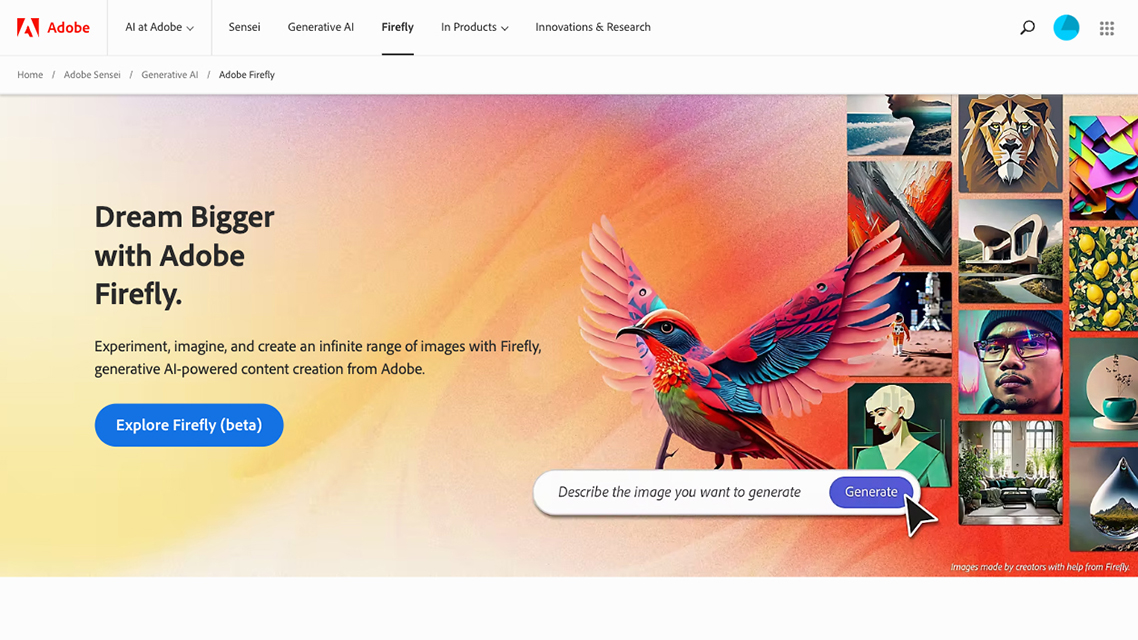
OpenAI and Google both launched platforms for collaborative AI projects. OpenAI’s Projects allow users to create shared workspaces. Google’s Canvas enables AI-powered collaborative brainstorming. They signal a shift towards AI-augmented teamwork. Imagine brainstorming sessions with AI generating ideas or writing projects and providing real-time feedback. This can revolutionize software development, design, and research.
O3: The code whisperer—AI transformed programming again
Built on ‘chain of thought’ reasoning, O3 can break down complex coding into logical steps, enabling it to generate entire code blocks from simple prompts, debug intricate code-bases and even optimize algorithms for better performance. O3 can also re-factor existing code for clarity and scalability. This has profound implications for software development, empowering junior developers and freeing up senior programmers to focus on higher-level design.
O3 is redefining the limits of artificial general intelligence (AGI)

It made waves by exceeding human performance on the abstraction and reasoning corpus (ARC) benchmark for AGI. While not true AGI, it demonstrates AI’s remarkable progress in tackling complex tasks once considered exclusive to humans. As models like O3 push boundaries, we can expect them to tackle increasingly complex challenges that may appear unsurmountable now. While AGI may remain a distant goal, AI models keep knocking down the challenges we pose.
Robotics LLMs—The dawn of truly intelligent robots
A team of researchers unveiled language models for robots. These allow robots to respond to complex instructions in natural language. Imagine telling a robot to “tidy up the living room" and it knows exactly what needs to be done. Companies like Nvidia and OpenAI, with their ongoing research, are likely to incorporate LLMs into robotics development.
Usage costs—A seismic shift in the AI landscape
In 2024, we saw AI usage costs tank by over 90%. An expert showed that today’s cost of processing tens of thousands of photos is already below $2. A Chinese developer unveiled a further game-changer: DeepSeek-V3 rivals the performance of leading LLMs, but its training cost just $6 million. As a result, it can offer token or usage pricing at less than 10% of an already cheap rate. This dramatic cost reduction is a powerful catalyst for mass adoption of GenAI.
The AI tsunami
The AI wave has gained an intensity rarely seen. It’s a multifront revolution, with progress in every direction. On what it can achieve, the message is clear: buckle up, because the AI wave is turning into a tsunami.