Breaking Barriers with LLaMA 3.1: A New Era of Open-Source AI
Despite its name “Open” in OpenAI, not all of OpenAI’s models have been truly open to the public — many remained proprietary, accessible only to a select few. But in a refreshing twist, LLaMA 3 breaks this trend. Meta has boldly made this powerful AI model fully open-source, allowing developers, researchers, and innovators to explore and build on its cutting-edge capabilities. And LLaMA 3 is not just one model but a herd — a herd of models that makes up the LLaMA 3 collection.

Exploring LLaMA 3
Explore the groundbreaking impact of LLaMA 3, an open-source model that’s truly redefining the AI landscape. In a field where transparency often feels like a buzzword, LLaMA 3 brings genuine change. Whether you’re a tech professional, a developer eager to innovate, or just curious about AI’s future, this blog offers crucial insights into how LLaMA 3 is setting new standards for accessibility, versatility, and efficiency. By the end, you’ll not only know how to use LLaMA 3 but also see how it can boost your productivity and unlock new creative possibilities.
So, what makes LLaMA 3.1 so special? First, it’s important to understand that LLaMA 3.1 is part of a “herd” of models, each with different parameter sizes. Parameters are essentially the building blocks of an AI model — the more parameters, the more complex and capable the model is. LLaMA 3.1 offers a range of models, from smaller, more efficient ones to the massive 405 billion parameter model. This flexibility allows developers to choose the right model for their needs, whether it’s for a lightweight application or a task that requires the full power of a frontier-level AI.
LLaMA 3.1 isn’t just about raw power. It’s designed with a deep focus on versatility and usability. For example, the model supports a context length of up to 128K tokens. (A token in an LLM is the smallest unit of text that the model processes). This means LLaMA 3.1 can handle much longer inputs and conversations than many other models, making it ideal for complex tasks like summarising lengthy documents or engaging in detailed multi-turn conversations.
Have you ever wondered how machines can understand and generate human language? Remember when you first encountered ChatGPT? The ability of a machine to hold a coherent conversation is mind-boggling. LLaMA 3 takes this technology to new heights.
AI has made remarkable strides, particularly in Natural Language Processing (NLP). At the forefront of this revolution are Large Language Models (LLMs).
Development of LLaMA 3.1
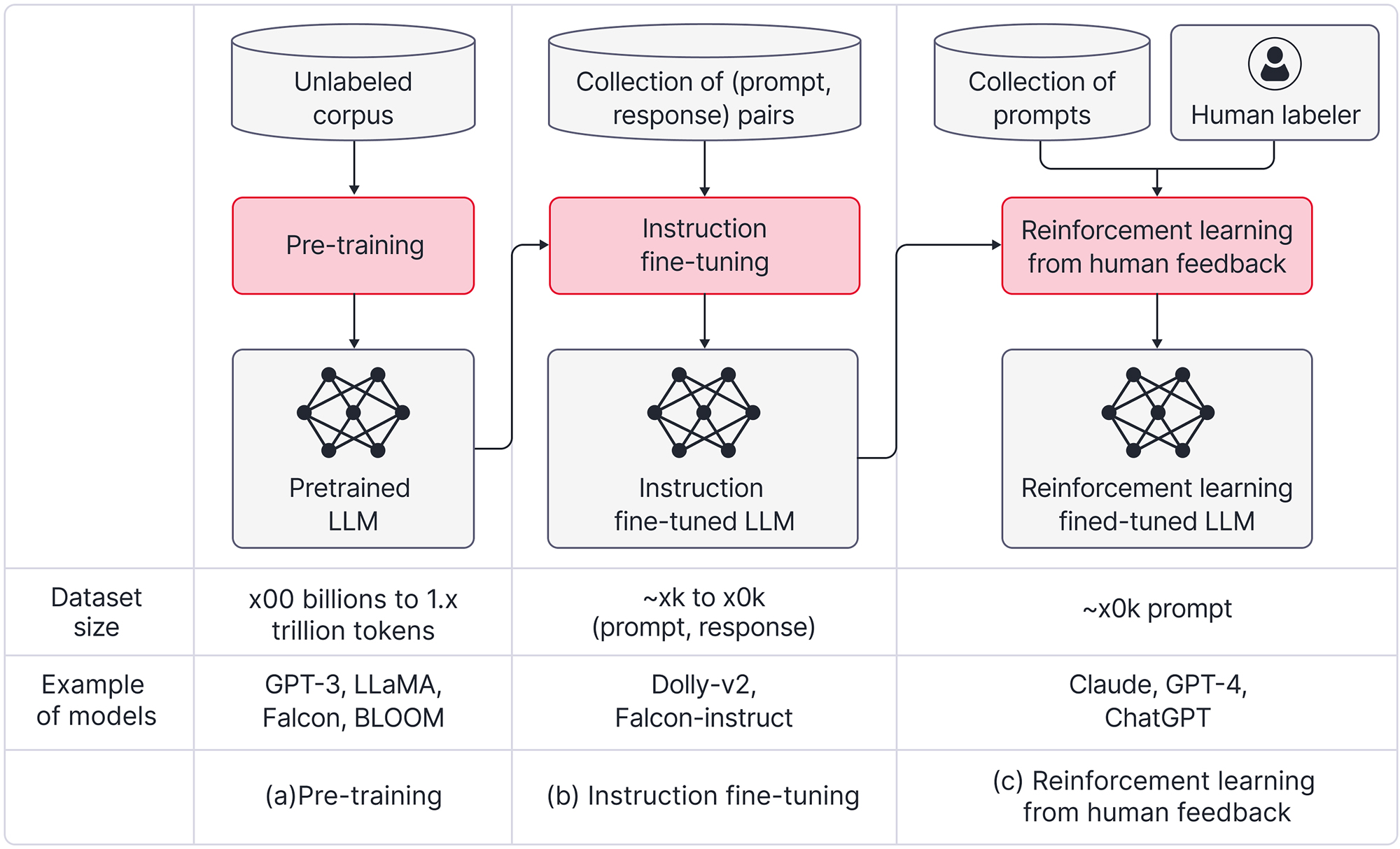
LLaMA stands for Large Language Model Meta AI. LLMs, like LLaMA 3, are advanced AI models designed to understand and generate human language. They learn by processing vast amounts of text and recognizing patterns. LLaMA 3 breaks down sentences into tokens (smaller pieces of text) to understand them better and relies on transformers to focus on different parts of the text for deeper comprehension.
LLaMA 3.1 showcases impressive engineering with its 405 billion parameters, trained using over 16,000 H100 GPUs and 15 trillion tokens. A notable advancement is the use of synthetic data generation for fine-tuning, which enhances the model’s precision in tasks like coding and language translation. Additionally, the model undergoes a rigorous post-training process with multiple rounds of alignment and optimization, ensuring high-quality and reliable outputs.