AutoGPT: The Promise and Potential of AI Agents
The AI world is abuzz with talk of AI agents, and the catalyst for this is AutoGPT, currently the number one project on GitHub. With AutoGPT, you can transform GPT-4 into a prototype version of a self-directed agent. Recently, a paper was published outlining a simple virtual world populated by LLMs wrapped in code designed to make them simple agents. The AI inhabitants interacted, formed and executed plans, and it all seemed like the beginnings of a living and dynamic world. In this article, we explore the potential of AutoGPT and AI agents.
What is AutoGPT?
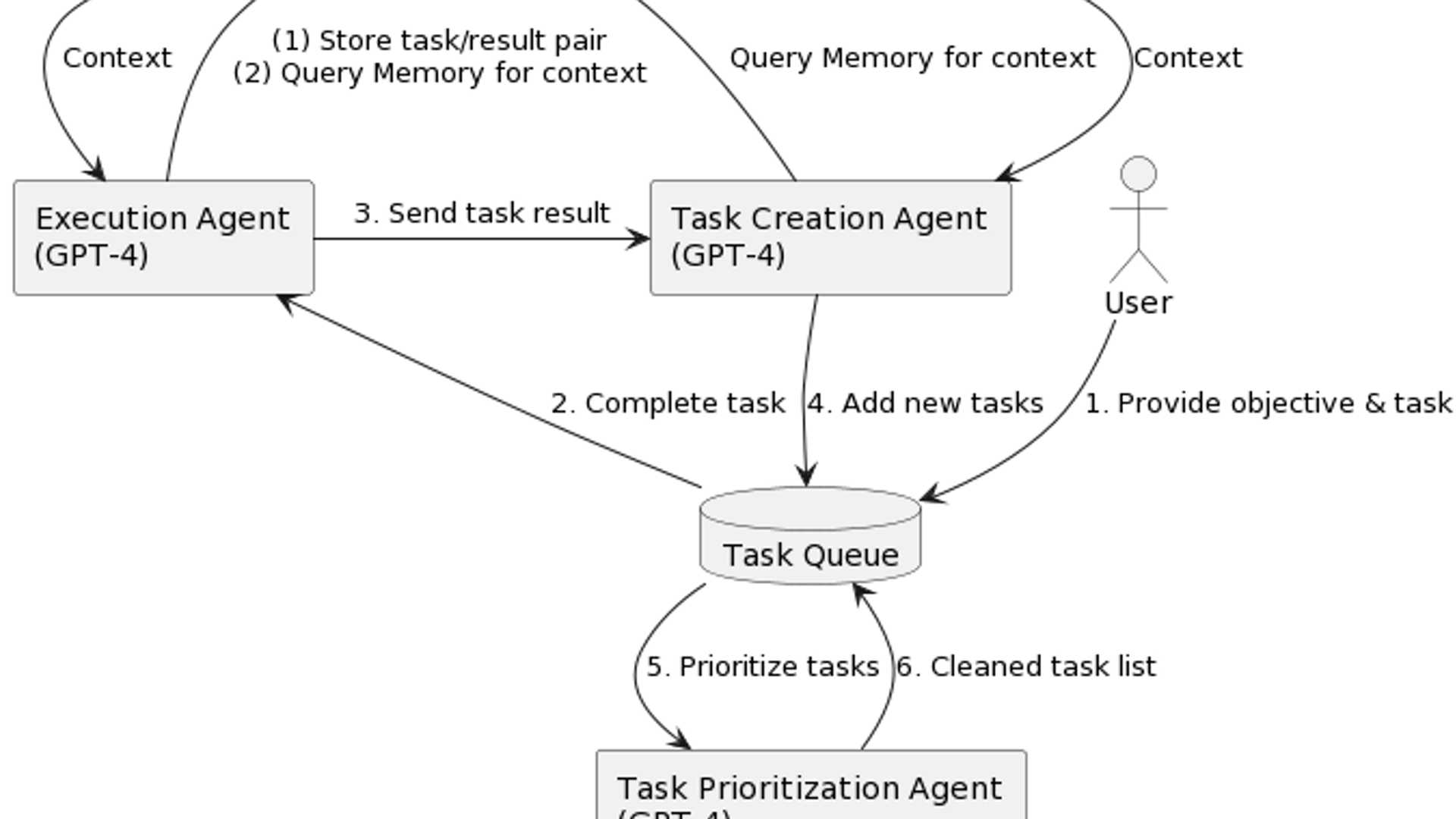
AutoGPT is the brainchild of game designer Toran Bruce Richards. It uses GPT-4 to generate, prioritize and execute tasks, using plug-ins for internet browsing and other access. AutoGPT uses outside memory to keep track of what it is doing and provide context, which lets it evaluate its situation, generate new tasks or self-correct, and add new tasks to the queue, which it then prioritizes.
The result is the creation of AI agents that offer a very obvious promise, both in terms of mundane utility via being able to create and execute multi-step plans to do your market research and anything else you might want, and in terms of potentially being a path to AGI and getting us all killed, either with GPT-4 or a future model.
Potential of AutoGPT and AI agents
AutoGPT and AI agents offer many possibilities, and some of them are already being explored. For instance, AutoGPT has been useful as a way of generating market research, and it is faster than using the traditional GPT-4 or Bing interfaces. According to some reports, it can have ‘complex conversations with customers,’ or a few other vague similar claims that weren’t backed up by ‘we are totally actually doing this now.’
However, AutoGPT has its limitations. It has a tendency to get distracted or confused or caught in a loop, to leave things half-finished, to not be that robust of an agent, and other issues like that. Positive reports seem limited to things GPT-4 or Bing can essentially do anyway, with the agent wrapper perhaps cutting down somewhat on how often you have to poke the interface with a stick to keep it pointed in a reasonable direction.
Despite these limitations, AutoGPT's list of real accomplishments won’t stay non-existent for long. Most everyone is still in the ‘wrap head around it’ stage or the basic setup and tool building stages. The UIs are terrible, many basic tools don’t yet exist, many basic improvements haven’t been made. What exists today is much worse than what will exist in two weeks, let alone two months or two years.
Conclusion
AutoGPT and AI agents offer a lot of possibilities, but we should be careful about how we approach them. We will likely see rapid improvements over time, both in terms of usability and underlying capabilities. We can expect to see a number of large step-jumps in capability for such systems as various parts improve. However, we must also be aware of the limitations of AutoGPT and AI agents, and work to mitigate them.
As with all AI developments, we should expect both positive and negative outcomes. However, with careful and responsible development, we can make the most of AutoGPT and AI agents without worrying about any potential downsides. Don't worry about the vase, focus on the promise and potential of AutoGPT and AI agents.