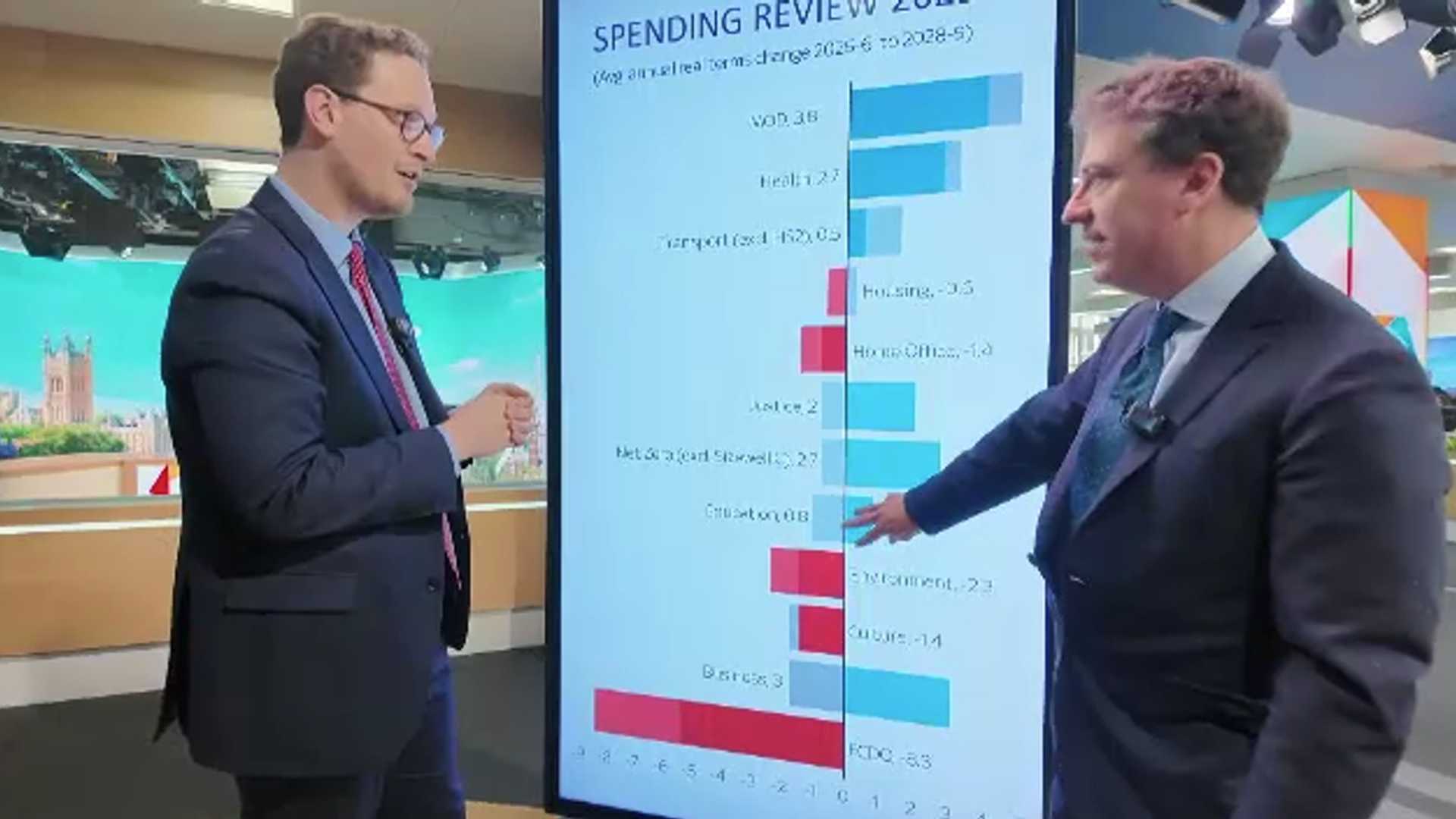
Did ChatGPT get the spending review right? Treasury minister gives his thoughts
Darren Jones recently compared the real spending review, delivered by Rachel Reeves, with the Sky News AI (artificial intelligence) projection from last week. The chief secretary to the Treasury has praised the Sky News-Chat GPT spending review projection, calling it "pretty good" and giving it a score of 70%.
The Comparison
Sky News utilized various sources including the Treasury's spring statement, past spending reviews, 'main estimates' from the Treasury website, and projections from the Institute for Fiscal Studies to create an AI projection using ChatGPT. This projection was done prior to the actual review, based on public documents, and highlighted winners and losers in the spending review.

The Sky News-AI projection correctly identified defence and health as the biggest winners, the Foreign Office as the biggest loser, and pointed out that many departments would face cuts in real terms. While it underestimated the education budget, it accurately highlighted challenges for departments like the Home Office and environment.
Author's Feedback
After reviewing the AI-generated spending review, the author of the real spending review commended the use of AI, stating it was "pretty, pretty good". He even humorously mentioned the possibility of being replaced by AI in the next review cycle due to the challenging process he had to undergo.
Treasury Minister's Response
When asked to rate the AI projection, Mr. Jones gave it a score of 70%. He emphasized that the government uses its own AI, HMT GPT, to consolidate information across departments for making informed decisions.
Conclusion
The use of AI in predicting spending review outcomes presents both opportunities and challenges. While AI can provide valuable insights and efficiency gains, human judgment and adaptability remain essential in interpreting results and addressing unexpected changes.