Google's AMIE AI outperforms doctors in visual diagnostics ...
Google’s AMIE, an advanced diagnostic AI combining visual and textual medical data, has surpassed human physicians in simulated exams by interpreting images and patient information with higher accuracy and empathy, signalling new potential in AI-assisted healthcare.
Advancements in Diagnostic AI
Google has recently enhanced its diagnostic AI capabilities through a project known as AMIE (Articulate Medical Intelligence Explorer). The initiative focuses on enabling the AI to understand and interpret visual medical information, expanding its functionality beyond traditional text-based interactions.

Previous research by Google showed that effective medical practice heavily depends on visual assessments such as skin conditions, ECG printouts, and lab reports. Google emphasized the significance of integrating verbal and visual data for a more comprehensive diagnostic approach.
Development of AMIE
To improve AMIE's diagnostic capabilities, Google integrated the Gemini 2.0 Flash model with a "state-aware reasoning framework." This enhancement allows the AI to adjust its interactions based on ongoing inputs, similar to human clinicians who analyze patient histories and visual evidence to make diagnoses.
By incorporating a realistic simulation environment, Google created authentic patient cases using data from established medical repositories like the PTB-XL ECG database and the SCIN dermatology image set. Through these simulations, AMIE engaged in dialogues with virtual patients to evaluate diagnostic accuracy and minimize errors.
Evaluation and Results
In a simulated Objective Structured Clinical Examination (OSCE) setup, AMIE interacted with real actors portraying patients alongside human primary care physicians. The assessment revealed that AMIE often outperformed human physicians in interpreting multimodal data and generating differential diagnosis lists.
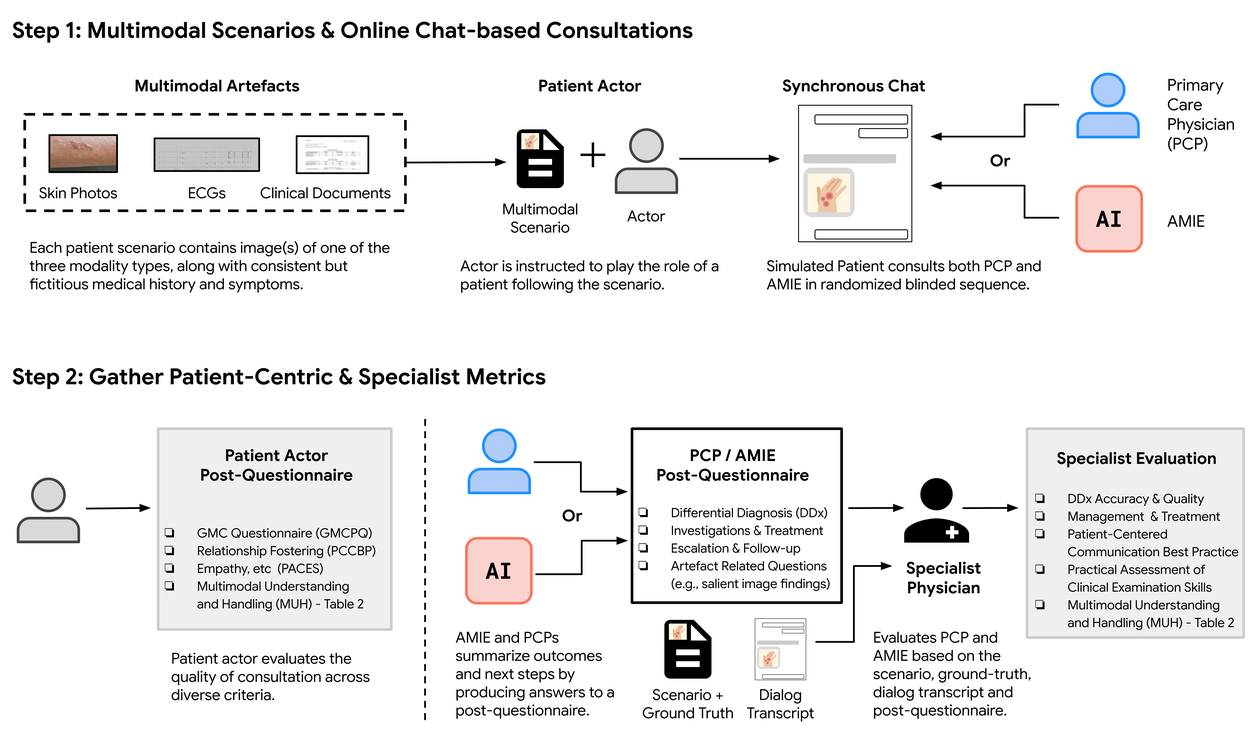
Specialist doctors praised AMIE for its accurate image interpretation and management recommendations. Patients also viewed the AI as more empathetic and reliable when compared to human doctors.
Future Implications
While the study demonstrated AMIE's promising capabilities, Google acknowledged its limitations in replicating real-world healthcare complexities. Future plans include collaborating with medical centers to evaluate AMIE in clinical settings and expanding its capabilities to include real-time video and audio interactions.
The integration of visual interpretation in diagnostic AI presents a significant advancement in supporting healthcare professionals and patients. However, the transition from research outcomes to practical healthcare tools requires thorough validation.
Source: Noah Wire Services








