How Artificial Intelligence is Transforming the notion of Creativity ...
Creative Art is recognized everywhere in human societies, exhibiting an evidently infinite variety of expression, and thus is an important aspect of inter-social and cultural exploration (Kivy, 1978). Often visual art is regarded as a window reflection of human perception and thinking, poured onto a canvas.
Today with the advancement of technology represented by the explosive growth of artificial intelligence in diverse creative fields like art and design, there still exist challenges to the continuous evolution of the conceptualization of art (Torre, 2023). Art creation is becoming constantly substantial, and the content expression is getting more sophisticated, interactive, and data-driven, bringing the interaction between technology, art, and human closer together; creating opportunities for the development of new interaction.

The Impact of Artificial Intelligence on Creativity
This research paper unfolds the creative side of Artificial Intelligence and addresses the transformative nature of future technology. Moreover, the paper also examines the limitations of Artificially generated images in the field of creativity.
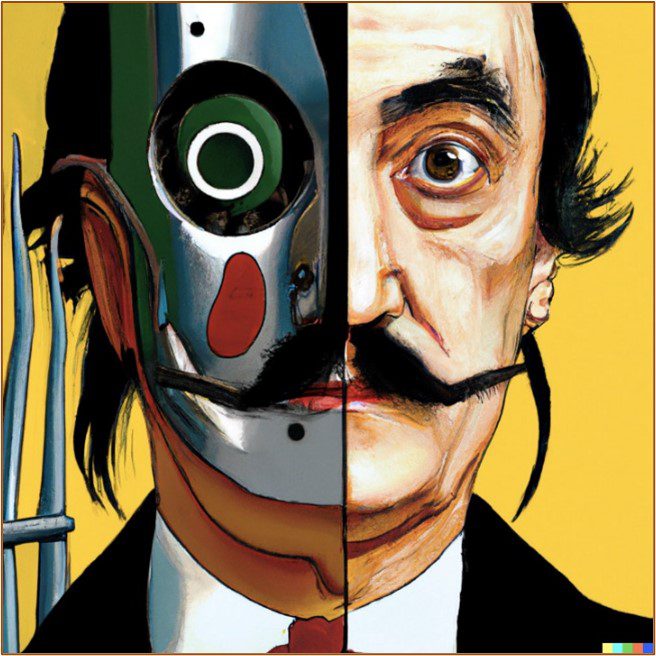
For this research paper, we will be mainly focusing on two of the most powerful generative artificial intelligence tools, DALL-E, named after Disney’s famous animated character DALL-E, and Midjourney to understand the creative capacities of these models and understand the true potentials these models could offer into our inventive tendencies.
Challenges and Opportunities
The paper also evaluates the key issues that arise on copyrights and authorization of generative images and shares some ongoing cases in the court. Artificial Intelligence is not only adversely impacting the creative field but also is reforming the job role for the upcoming talented youth.
Creativity is often seen as a distinctly unique human fingerprint of imagination. Creativity in itself is a blend of memories, emotions, and the world around us. Combination of these distinct disparities forms something entirely new - is creativity for sapiens. Creativity relies on different factors such as the source of inspiration, originality, and intentions with a specific goal in mind.
The Role of Generative Art
For Artificial intelligence, creativity is algorithms and data patterns that develop a whole new output. These data act like human perception of things and are stored similar to a pattern creating library for generative images. Traditionally creativity entails the combination of existing concepts in a more valuable way and relies solely on the artist’s personal interest. Generative art operates through algorithms lacking inherent purpose for generating art pieces. Douglas Hofstadter, an American cognitive science scholar, suggests, “Creativity is not necessarily about conscious intention; it’s about the unexpected, the surprising, the new” (Douglas, 1998).
The lens of the audience plays a crucial role in this debate. Whether it’s a Van Gogh painting or an AI-generated Van Gogh Inspired images of art, human emotions and interpretations define its creative merit for that piece of art. Margaret Boden emphasizes the transformative power of artificial intelligence mimicking human capabilities in various artistic domains is captivating and surpassing human tendencies but is not about replacing human creativity, but about expanding the definition of what art can be (Boden, 2013).
The Future of Creativity with AI
This transformative growth of artificial intelligence brings both challenges and opportunities. On the one hand, generative tools democratize art creation, making it more accessible to everyone who is privileged to internet resources. These tools also encourage collaborations allowing many artistic creators of distinct jobs to use generative artificial intelligence to push the frontiers of artistic expression. However, on the contrary, generative images also bring ethical concerns about authority, ownership, creativity to be more formulaic and be devoid of human touch.
DALL-E and Midjourney are new cutting-edge artificial intelligence tools, redefining the line between human creation and generative image. DALL-E was first introduced by OpenAI in a research paper in January 2021, on the other hand, Midjourney became accessible publicly in July 2022. Currently, these two generative tools are the most google search website and on average have generated more than 2 million generative images to date. These tools collect text input from users which is termed as “prompt”. The text received by the user is stored as input data. These input data are mapped together to numerous text and images from the internet, and a library is created.
Artificial Intelligence and Creative Work
Isaac Kauvar, a Stanford Ph.D. graduate, points out the analogies between the way DALL-E generates its images and how creative human artists make their art. DALL-E is built around a software architecture known as a neural network that mimics human cognition and thereby forms meaningful patterns of association. He also points out a key difference between the way DALL-E works and the way humans do. For him, a creative process by humans is iterative which never knows the end goal, but on the other hand, it takes seconds for DALL-E to go straight to reach the end goal to generate an image. DALL-E and Midjourney are not the only generative image tools that generate images by text guide; they have been advancing since the inception of generative adversarial networks (GANs) in 2014 and Google’s Deep Dream in 2015. Midjourney uses algorithms and utilizes user inputs to generate output within seconds.

Kren Cheng, founder and CEO of Karenxcheng Inc., created the first artificial intelligence-generated magazine cover by DALL-E. Karen refined the right set of text prompts, phrases, and keywords to get the best cover magazine for a cosmopolitan cover. Cheng also shares her initial hesitation to work with Artificial intelligence, but she got comfortable with the ease of the new medium (Liu).
The Ethical Debates
A generated Artwork created by creative machine, “A Recent Entrance to Paradise” 2012 portrayed pixelated train tracks with surroundings filled with greenery and vibrant color. Dr. Stephan Thaler, a computer scientist, proposed a copyright request to the United Nations Federal court. But the court of appeals for the federal circuit rejected Thaler’s bid to secure copyright authority for an artwork created by generative artificial intelligence (United States Court of Appeals for the Federal Circuit).
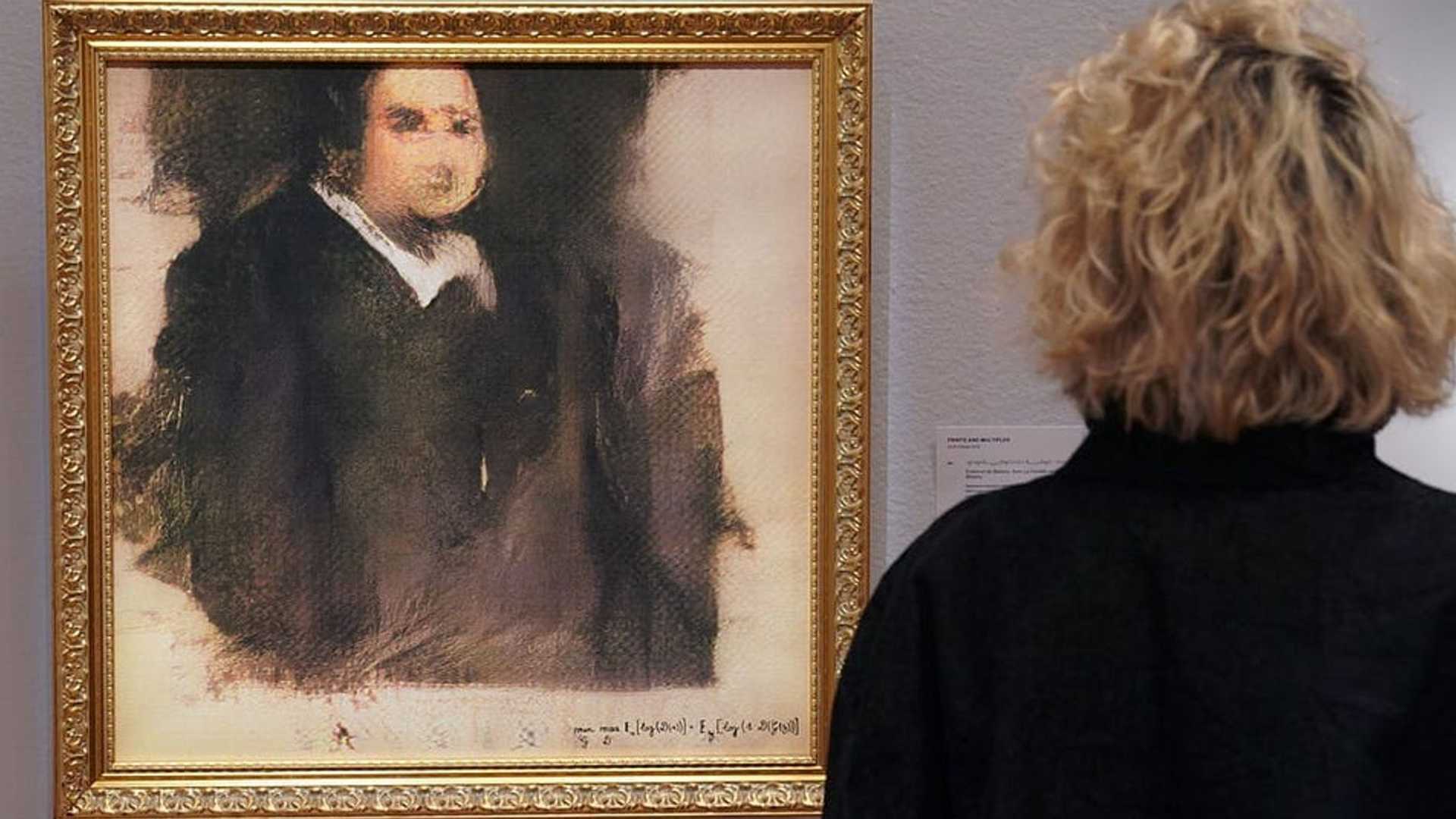
Creativity is subjective to one’s personal notion of thoughts and perception. It is difficult to get a state of ownership on generative pieces of art as computer algorithms autonomously create one without knowing the real author of art. From an ethical point of view, generative work poses a great challenge to determine anticipation as one sits at one extreme and Artificial intelligence sits on the other. In an article published by Epstein, he shared the example of a painting which is generated by a machine algorithm. “Edmond De Bellamy” auctioned for $432,500 in 2018. The painting could not have been made into reality with the human behind the code. A study conducted by Pfeitter Report in 2018 shared how artists were responding to advances in artificial intelligence technology. The report found more than 110 creative professionals and recorded their response about their attitude towards artificial intelligence. 63% of the total respondents recorded by Pfeitter said they are not afraid Artificial Intelligence will threaten their jobs. The remaining volume of respondents was afraid of losing their means of livelihood as they needed to compete with technology. “Artificial Intelligence will have an impact, but on productivity,” Sherri Morris, chief of marketing, creative, and brand strategy at Blackhawk Marketing said in the report (“Creativity and Technology in the Age of AI”).