What is generative AI? Everything you need to know | Tom's Guide
Any idea what the ‘G’ in ChatGPT stands for? Full marks if you answered ‘Generative’.
OpenAI’s flagship artificial intelligence chatbot — along with the best ChatGPT alternatives like Google Gemini, Microsoft Copilot, and Anthropic’s Claude — are all examples of generative AI models. Using generative AI technology has become an integral part of many people’s personal and professional lives.
Understanding Generative AI 
Generative AI is a type of artificial intelligence that creates new content—such as text, images, music, or code—by learning patterns from existing data. It uses models like GANs and transformers to produce realistic, human-like outputs, enabling creative applications in art, design, writing, and other fields.
Although usage of the expression ‘generative AI’ is relatively recent, the concept has been around for around three-quarters of a century. Generative AI as we know it made significant advancements a decade ago, thanks to the development of Generative Adversarial Networks (GANs) by engineer Ian Goodfellow.

In 2017, scientists at Google introduced ‘transformer architecture’, which is the base for the generative AI tools that are most commonly used today.
Applications of Generative AI
Generative AI has a wide range of applications, from harmless fun like creating original poems and songs to professional tasks like designing product prototypes and strategizing. It is also used in potentially lifesaving areas such as drug discovery.
Many social media trends are a product of generative AI, including visualizing your very own action figure or turning your dog into a human.
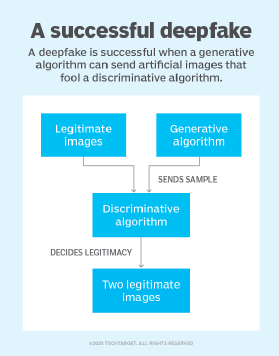
However, generative AI has also been utilized for more malicious purposes, such as creating deepfakes for spreading misinformation or sextortion scams.
How Generative AI Works
Generative AI models learn patterns from massive sets of data through a process known as ‘training’. They then apply this training to generate new content. For example, when you ask ChatGPT to plan your next vacation, it uses its acquired data to compose a response.
Generative AI tools work on a word-by-word basis for written responses and use transformer-based models for images to create content that fits the input criteria.
While chatbots like ChatGPT, Copilot, and Gemini fall under the umbrella of AI, they are specifically categorized as generative AI models.