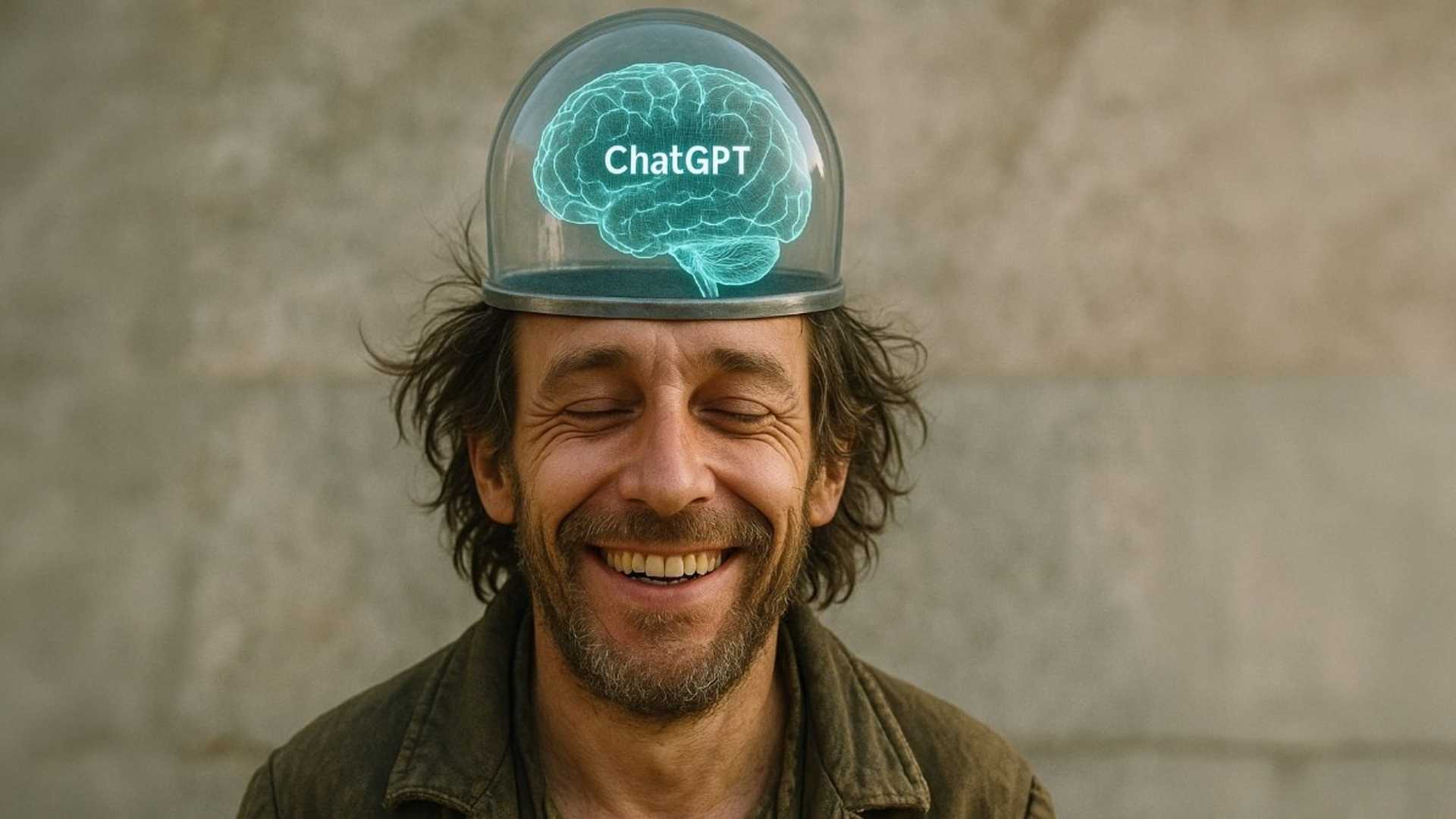
Is ChatGPT making your brain lazy and dumb? Here's what MIT's Study Revealed
A recent study conducted by MIT has brought to light the potential negative impact of using AI tools like ChatGPT on our cognitive abilities. The research suggests that relying on generative AI for tasks such as essay writing not only influences the content produced but also alters the functioning of our brains, and not for the better.
The study, carried out at MIT's Media Lab, involved tracking brain activity using EEG sensors on 54 participants who were divided into three groups. One group used ChatGPT, another used Google Search, and the third group relied solely on their own cognitive abilities.
The results of the study were alarming. Participants who utilized only their brains exhibited higher levels of memory recall, creativity, and overall engagement. Their essays were described as unique and thought-provoking. However, those who used ChatGPT produced writing that was remarkably similar, lacking creativity, and heavily plagiarized. English teachers reviewing the work even labeled it as "soulless."
Furthermore, brain scans revealed that individuals using ChatGPT had reduced neural connectivity, especially in areas associated with critical thinking and memory. As time passed, their engagement levels continued to decline, with some participants eventually resorting to simply inputting the essay prompt into ChatGPT and pasting the generated response without much thought.
Long-Term Effects
Subsequent tests showed that participants who initially worked without AI tools maintained high brain activity, even when later introduced to ChatGPT. On the other hand, those who started with AI displayed lower cognitive engagement even when asked to work without its assistance, indicating potential lasting effects on cognitive abilities.

While the study is still in the preprint stage and awaits peer review, it adds to the growing concerns regarding the negative consequences of excessive reliance on generative AI, particularly among young individuals. MIT's previous research from the Media Lab also highlighted a correlation between increased AI interactions and feelings of loneliness.
These findings beg the question: Is ChatGPT stifling curiosity and creativity? If the results of this study are any indication, the answer may lean towards the affirmative.
For unparalleled coverage of India's businesses and economy, subscribe to Business Today Magazine.