ChatGPT and I Get Serious About My Future (The Career Counselor Perspective)
If you've ever been to one of my talks or know me personally, you know replacement is a big fear of mine. I've lost a job before, and it's no fun. Even so, I've gotten further than I thought I would in life by merely asking the question, "How can I be replaced" far enough in advance to stay ahead of things.
Like many of you, I feel like AI is starting to catch up. The tech is relatively new, but it has advanced at breathtaking speeds. And with this week's 2027 superintelligence study showing a quicker timeline for agentic AI's job replacement capabilities, I feel like the gap (noose?) is tightening.
Exploring Career Strategies in the AI Era
With this in mind, I decided it was finally time for ChatGPT and I to have a real heart-to-heart about my future. First, I’m going to give you the prompt you can copy and adapt. (Spoiler alert: I suggest everyone with 20 or more years left in the workforce to put this to use immediately.) Now, to see it in action, here’s what I filled in those gaps with, just so you can see how deep I go with it.
Look, I get a lot of the same advice on what I need to do to stay relevant in the 21st Century with rapid AI advancement. Some of it may be correct but it just doesn't feel specific enough to me in my situation. I have skills in copywriting and journalism that I honed over a 10-year period when I worked for myself and for a local business journal. In my role at the Police Department, I became an on-camera personality as needed, wrote press releases, managed the Department's social media pages (Facebook, X), and learned to play politics as needed with a variety of egos and personalities internally. From 2010, I started following AI writers. Starting in late 2022, I got into AI's advanced capabilities, but most of my knowledge is self-taught. I started a newsletter in June 2023 that has grown to just under 500 members. I do not pay for marketing, it's all through consistency, content, and in-person AI talks with business professionals. That's a basic summation of me. Now, I need you to delve into other recent sources about the rise of AI, how agentic AI could be replacing people with my background in just two years, and I need you to map out viable career moves that I can or should be making to position myself as employable assuming the worst happens and every single thing I've told you can be replicated by an AI in the next two years.

NOTE: I used the logic and coding model, o3-mini-high, with Search turned on so I’d have access to the latest available research online. I know this is available to Plus users; not sure about the Free account. If not, that’s okay. You can still get good results from 4o as long as Search is turned on.
Strategies for Career Transition in the Age of AI
Rise and Capabilities:
Recent studies and industry reports show that agentic AI—a form of AI that acts almost autonomously—has been rapidly evolving. These systems are moving beyond merely generating content (as seen with ChatGPT and similar models) to handling multi-step, decision-making processes in enterprises. Sources such as Reuters, Forbes, and LinkedIn publications highlight a shift from traditional generative AI to agentic AI that can optimize workflows, support decision-making, and even assist in strategic tasks in areas such as PR, journalism, and content marketing.
linkedin.comJob Vulnerability:
Your skills in copywriting, journalism, and public affairs—while uniquely human in terms of empathy, strategic insight, and brand storytelling—face significant exposure as current AI systems improve. Research indicates that while many tasks (e.g., generating routine content, repetitive copy edits, and simple press releases) can be substantially automated, higher-order functions like nuanced storytelling and ethical decision-making still require human oversight. However, advanced AI tools are beginning to encroach into the space of creative judgment and strategic planning, suggesting that within two years, even many higher-level tasks could be partly agent-automated.
theguardian.comLearn to Build an AI Strategy for Your Business | Gartner
Actions to Future-Proof Your Career
Upskill in AI Integration and Data Literacy:
Learn AI Tools:
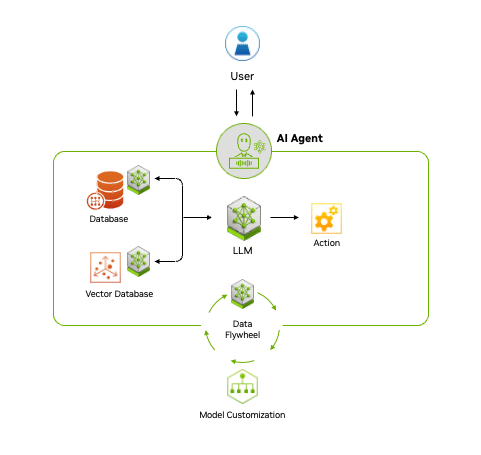
Become proficient in using AI-driven platforms (e.g., ChatGPT, Jasper, and emerging agentic AI systems) to complement your work rather than fear them as replacements. This includes learning how to input precise prompts, curate outputs, and edit AI-generated copy to refine tone and accuracy.
Data Analytics Skills:
Develop skills in data interpretation to analyze campaign performance and media analytics. This will enhance your ability to integrate AI outputs into actionable insights for communications strategies.
Diversify and Specialize:
Niche Expertise:
Leverage your depth in areas where human insight is critical—such as on-camera personality roles, strategic public affairs, and storytelling that requires deep institutional knowledge (for example, nuances in local community communications). This may include specializing further in niche industries or developing a signature voice that is hard to replicate with AI.
AI Content Strategy:
Position yourself as an AI content strategist—a role that involves not just generating content but developing integrated content strategies and training teams to use AI efficiently.
Amazon.com: Future-Proofing Your Career: Thriving in the age of AI ...
Expand into Advisory and Ethics Roles:
Ethical Oversight:
As media and journalism face ethical dilemmas with AI-generated content, there is growing demand for roles such as AI ethics managers and fact-checking specialists. Your background in public affairs could serve as the foundation for advising organizations on maintaining editorial integrity while adopting AI.
...While agentic AI continues to advance and may automate many tasks traditionally performed by content creators, your unique combination of skills in journalism, public affairs, and copywriting remains invaluable—especially in contexts demanding human creativity, ethics, and strategic insight. By proactively upskilling, diversifying your expertise, and exploring hybrid roles (along with advisory positions), you can mitigate the risks of AI disruption and maintain your employability in an increasingly automated future.
This detailed mapping of the landscape, as reflected in multiple recent sources and industry predictions, should offer you a clear path forward in preparing for the rapid evolution expected in the next two years.
If you’ve read this far, chances are you're not just casually curious—you’re concerned. Same here. I’ve seen what AI can do. I’ve also seen what it can’t do—at least, not yet. That’s where we still have leverage. The truth is, no one knows exactly when or how the tipping point will come. But we do know it’s coming. And the people who prepare today—by asking the hard questions, testing strategies, and adjusting course—are going to be the ones still standing tomorrow.
If this hit close to home, then don’t stop here. I share real prompts, fresh tools, emerging research, and no-fluff advice like this in my newsletter four times a week. It’s built for people who want to adapt without losing themselves. Sign up today to get new studies, tool spotlights, AI news, and tactical prompts delivered straight to your inbox. You don’t have to navigate this alone.