Google, the search engine that's forgotten how to search
Is Elie Berreby the Search Engine Marketing King? Is he a cybersecurity researcher? Could he be a senior SEO n00b as his official Linkedin title suggests? Nobody knows except the Fortune 500 companies and European groups he advises regarding enterprise and global SEO. My guess? He is a n00b! [email protected]
If you work in the SEO industry, you may be blinded by the lights. The noise can be deafening. You may trust most of Google’s official statements. Many in the search community blindly believe Google but I’m glad not everyone does.
The Decline in Google's Search Quality
I've been increasingly critical of Google Search in the past years but I’m not alone: many technically unsophisticated people using Google have also noticed the decreasing quality of organic results. Ordinary users have noticed the quality of organic results going down. They’ve noticed how hard it has become to find useful and deep content without ulterior commercial motives.
I’ll show you why ordinary people are unhappy with Google Search, Google Ads, and YouTube Search, using their own words. I’ll explain where I found the less biased conversations. Senior people at Google have blocked me but I don’t have a personal vendetta against Google. It is actually quite the opposite. I used to love Google. I just hate the many dumb self-destructing mistakes the company keeps making. This is my warning for 2025.
Issues with Google Search
Alphabet, Google’s parent company, is navigating one of the most perilous periods in its history. The primary issue? Artificial intelligence, right? No, the problem is natural stupidity. The danger isn’t AI, it is a disconnect between Google’s lack of vision and the quality expectations of its users. Not only is Google not improving, the quality of results is going down — fast!
But there’s more. Google secretly performed the greatest scrapping experience of all time. The end result is stolen content and stolen engagement, thanks to AI overviews. And there’s another problem impacting those who continue to publish content (content they know will be “stolen”). The directionless nature of Google’s Core Algorithm Updates has left many companies and web publishers relying on organic traffic wondering: “Is this really worth it?”
:max_bytes(150000):strip_icc()/GooglePatents-1-5724018e3df78ced1fde1085.png)
Google's Impact on Users
Google Search has decimated the livelihoods of numerous legitimate businesses worldwide that depended solely on organic traffic. If you ask me, Google has repeatedly set quality guidelines that it then fails to uphold itself. But let’s not focus on publishers. Let’s focus on users. The people who search. As you’ll see, publishers aren’t the only ones looking for alternatives. Users are also quickly turning to different platforms.
I wanted to look at the everyday experience of ordinary users. But I didn’t want to put words in their mouths, so I took screenshots of what people actually posted.
Observations from Different Platforms
Where could I observe real users exchanging freely in their natural habitat? Twitter has a dynamic SEO community but precisely because of this, the discussions would be biased. Most statements would be from relatively skilled individuals.
Linkedin is by far the most respectable social platform. There is a small but vibrant SEO community. I therefore faced the same problem and another “issue”: on LI people use their real identities! This seems great but it would lead to a bias because who wants to criticize companies publicly?

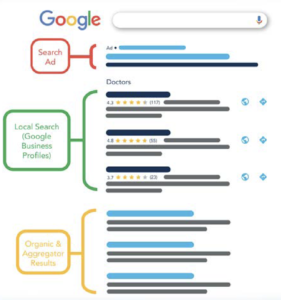
Google's Local Search Challenges
Unknowingly, this user would rather use Bing Search than Google Search. Yahoo Search is a search engine owned and operated by Yahoo but it uses Bing, Microsoft’s search engine, to power its organic results. Yahoo simply could not keep up with Google.
This partnership with Microsoft means that when you perform a search on Yahoo, the organic results you see are provided by Bing’s search engine algorithms —and they rely on Bing’s index.
Issues with Google's Advertising
The issues go well beyond local search. There are accuracy problems, serious issues with AI-generated content and layout problems. But that’s not all because people who do not use ad blockers are completely fed up with the aggressive ads pushing down organic results.
Even if you’ve decided to ignore every ad displayed by Google, having to scroll down and having to make an intentional effort to identify actual organic results increases your cognitive load.
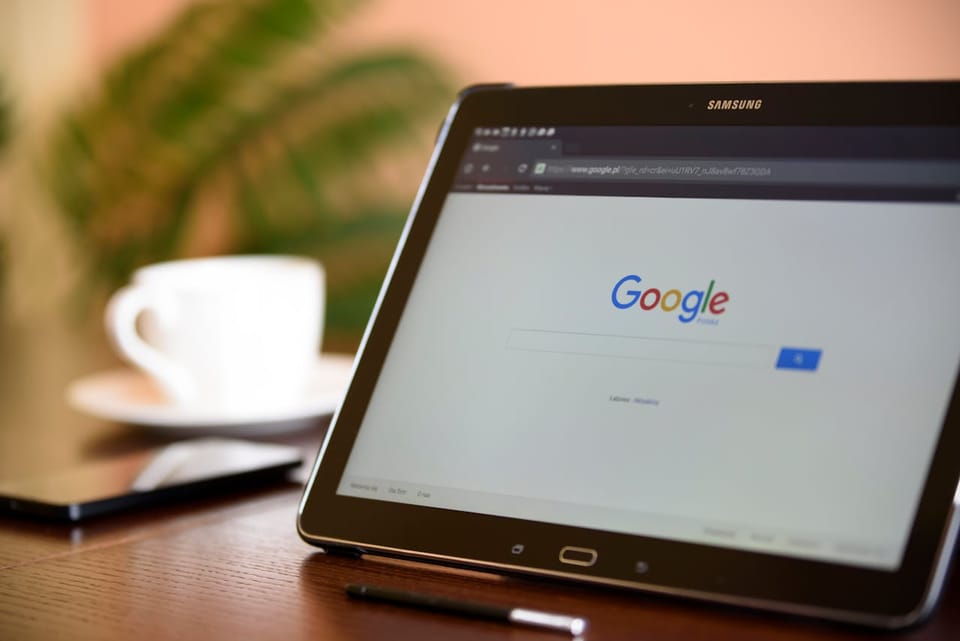
That’s because Google decided to blend ads into the organic search results. Smart users have noticed that Google focuses on monetization and that the search engine has become careless. Who could deny that the quality has deteriorated?
I tend to agree that traffic is more concentrated than ever before and social and video platforms seem to be the winners. But it isn’t that simple and I’ll soon show you how unhappy YouTube users are with the quality of the results and the abusive ads.
Conclusion
Clearly, people are dissatisfied with Google’s organic search results. And you may have noticed a recent feature called “AI overviews”. If you wonder why this happened, allow me to explain.
Google scraped what content creators spent years creating and included it in their dataset to power their multi-modal large language model named Gemini. To simplify, Google stole the text, images and video content that humans created and used it to power their generative AI chatbot.
Months ago, when this was still named SGE within Google, I explained that the only way from preventing this from happening is to forbid access to your content to Googlebot.








