Can ChatGPT Replace Google Search? ChatGPT vs Google Search
Criteria
ChatGPT (with Browsing)
Google Search
Core Function
Generates conversational answers based on training data and live web sources (if browsing)
Retrieves and ranks indexed pages using search algorithms
Data Freshness
Static without browsing; semi-real-time with browsing
Real-time updates via APIs, live crawls, news feeds
Interface Style
Narrative answer in a single block of text
List of ranked links, snippets, and sometimes featured content
Source Visibility
Partial (mentions or general domains, not always clickable)
Full source visibility with direct links to each result
Citation Precision
Varies by response; not always traceable to specific claim
Transparent—user controls which source to explore
Complex Question Handling
Strong—responds with structured reasoning, layered insight
Moderate—requires piecing together multiple results manually
Multi-turn Conversation Support
Yes—remembers context within a session
No—each query is independent unless manually repeated
Summarization Ability
High—capable of summarizing long content into key points
Low—requires reading external links for summarization
Conceptual Explanation Clarity
High—uses plain language and educational tone
Varies—depends on source site readability
Personalization (General)
Limited—no history or location data unless provided in prompt
High—uses user data, past behavior, and context to refine results
Personalization (Local/Maps)
Minimal—requires user to provide location manually
High—integrated with Maps, location, device, and intent cues
Live Data (e.g., stock, weather)
Moderate—via browsing (may be delayed or generalized)
Strong—real-time values shown in rich cards
Product and Price Search
Basic—summarizes from articles or retailers
Advanced—shows reviews, sellers, filters, ratings
Best Use Cases
Concept breakdown, brainstorming, summarizing content, layered Q&A
Fact-checking, product research, news, real-time queries, finding sources
User Experience
Conversational, passive interface
Interactive, link-driven exploration
Ad Experience
Ad-free
Ads present (often multiple formats)
Comparison Between ChatGPT and Google Search
Introduction
ChatGPT is a conversational AI developed by OpenAI, based on a large language model (LLM) architecture called GPT (Generative Pre-trained Transformer). On the other hand, Google Search is a search engine that retrieves information from the web based on user queries.
Functionality
ChatGPT generates answers based on training data and live web sources when browsing is enabled. In contrast, Google Search retrieves and ranks indexed pages using search algorithms.

Data Freshness
ChatGPT provides semi-real-time information with browsing but static data without browsing. On the contrary, Google Search offers real-time updates via APIs and live crawls.
User Experience
ChatGPT offers a conversational and passive interface, while Google Search provides an interactive, link-driven exploration experience.
Ad Experience
ChatGPT is ad-free, whereas Google Search displays ads in various formats.
Speed and Accuracy
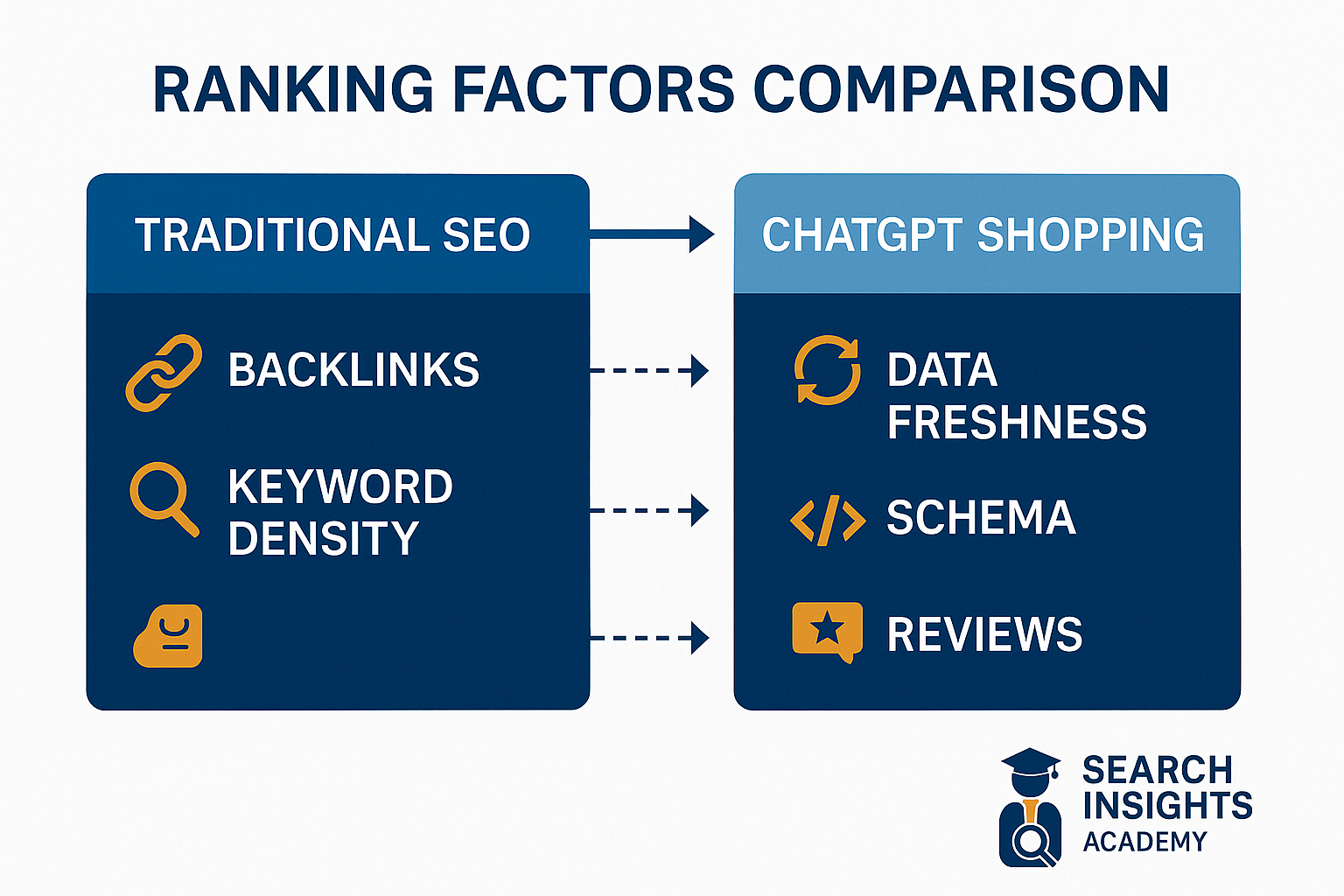
Google Search excels in speed and accuracy, especially for basic and factual queries, due to its vast index and sophisticated algorithms. In comparison, ChatGPT may have delays in delivering information, particularly when browsing is not enabled.
Source Visibility and Control
Google Search offers full visibility of sources with direct links to each result, providing users with the ability to verify and choose trusted sources. On the other hand, ChatGPT's sources may not always be clickable or directly traceable, leading to potential concerns about information reliability.

Ultimately, while ChatGPT offers a unique conversational approach to answering queries, Google Search remains a robust and reliable tool for accessing a wide range of information with transparency and control over sources.