
10 Most Used Gen AI Tools in the Enterprise | CIO
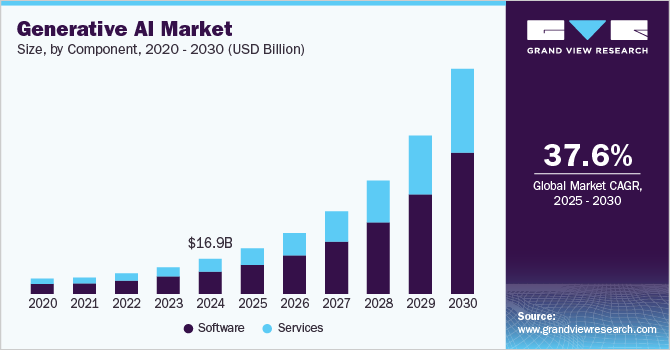
Generative AI has entered the enterprise in a big way since OpenAI first launched ChatGPT in 2022. According to Precedence Research, the global gen AI market was over $25 billion in 2024 and is forecast to reach a staggering $803 billion by 2033. And AI at Wharton, part of the Wharton AI and Analytics Initiative at the UPenn’s Wharton School, together with consultancy GBK Collective, also found in a study of senior decision-makers that enterprises with 1,000 or more employees invested on average more than double in gen AI in 2024 than 2023.
But a recent survey by Deloitte found that even though a majority of director- to C-suite-level respondents experienced with piloting or implementing gen AI plan to increase their overall AI spend in the next fiscal year, they’re tempered in their approach, expecting only 30% or fewer of their gen AI experiments to be fully scaled in the next several months — a reflection of the tools at their disposal. So given the current climate of access and adoption, here are the 10 most-used gen AI tools in the enterprise right now.
1. ChatGPT by OpenAI
ChatGPT, by OpenAI, is a chatbot application built on top of a generative pre-trained transformer (GPT) model. It's the most-used gen AI tool in the enterprise, with 62% of respondents to the recent Wharton survey saying they currently use it. ChatGPT’s strengths are natural language understanding and generation, making it an excellent tool to deal with complex linguistic challenges including automating and enhancing customer service, streamlining operations by handling repetitive inquiries, generating reports, drafting emails, and creating product descriptions.
Like all gen AI, ChatGPT’s accuracy can vary and its inability to understand emotions can lead to issues in some situations. Human oversight and intervention may be necessary.
2. Microsoft Copilot
Microsoft Copilot is a conversational chat interface embedded in Microsoft 365 to enhance productivity in applications like Word, Excel, PowerPoint, Outlook, and Teams. According to Wharton’s survey, 52% of respondents say their enterprise currently uses Copilot. Copilot’s strength lies in its integration with the productivity apps employees in Microsoft 365 environments use all day. Uses include:

As with ChatGPT, Copilot’s accuracy is not perfect. Users need to keep an eye on the output.
3. Google Gemini
Google Gemini (formerly Bard) is a conversational chatbot built on Google’s family of Gemini multimodal AI models. Potential uses of Gemini include:

Gemini integration with Google Workspace makes it an excellent tool in environments that use Workspace but has limited utility outside such environments as it operates within Google’s secure environment. Accuracy may be an issue and human oversight of its output is recommended.
4. Meta AI
Meta AI is Meta’s multimodal AI virtual assistant for the company’s messaging and social media applications, including Facebook, Instagram, WhatsApp, and Messenger. Enterprises can use Meta AI to set up virtual assistants that can:
Meta AI is already integrated with the apps in which many customers spend much of their time online, but there are potential privacy and ethical implications of access to customer data.
5. DALL-E 3 from OpenAI
Gen AI isn’t just about chatbots and virtual assistants. DALL-E 3, also from OpenAI, focuses on generating visuals from text descriptions. Potential business uses include product ideation, app mockups, logo design, creating images and videos for social media posts, and educational materials. Its strength lies in its integration with ChatGPT, yet many users say it struggles with photorealism.