Google Releases Cost-Efficient and Low-Latency Gemini 2.5 Flash Model
Google released its second artificial intelligence (AI) model in the Gemini 2.5 family on Thursday. Dubbed Gemini 2.5 Flash, it is a cost-efficient low-latency model designed for tasks requiring real-time inference, conversations at scale, and those that are generalistic in nature. The Mountain View-based tech giant will soon make the AI model available on both the Google AI Studio as well as Vertex AI to help users and developers access the Gemini 2.5 Flash and build applications and agents using it.
Introduction to Gemini 2.5 Flash Model
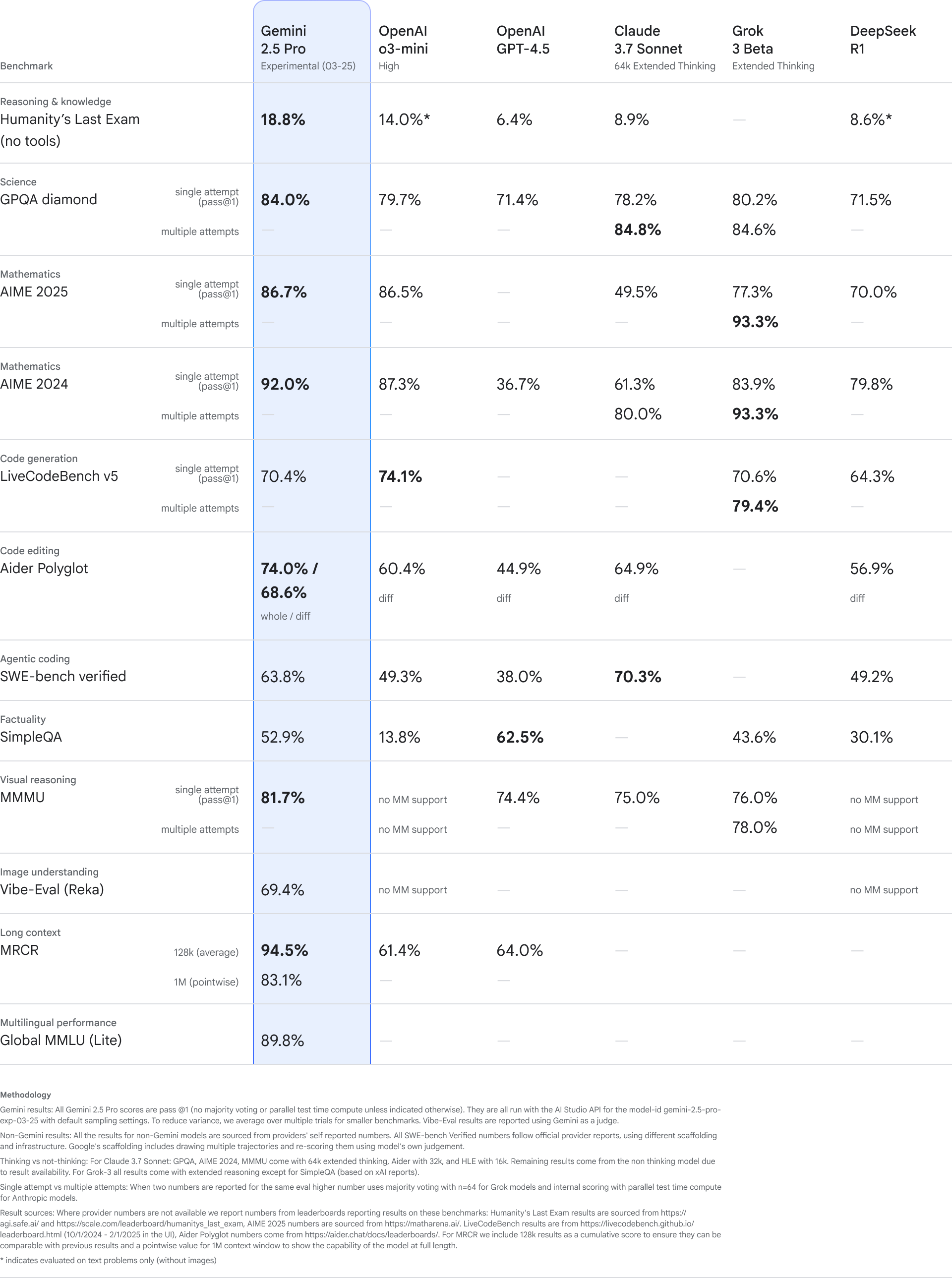
In a blog post, Google detailed its latest large language model (LLM). Alongside announcing the debut of the Flash model, the post also confirmed that the Gemini 2.5 Pro model is now available on Vertex AI. Differentiating between the use cases of the two models, Google said the Pro model is ideal for tasks that require intricate knowledge, multi-step analyses, and making nuanced decisions.

On the other hand, the Flash model prioritizes speed, low latency, and cost efficiency. Calling it a workhorse model, Google said it is an ideal engine for responsive virtual assistants and real-time summarization tools where efficiency at scale is key.
Features and Capabilities
While launching the 2.5 Pro model, Google had specified that all LLMs in this series would feature natively built reasoning or “thinking” capability. This means the 2.5 Flash also comes with “dynamic and controllable reasoning.” Developers can adjust the processing time for a query based on the complexity, enabling them to get granular control over the response generation times.
For its enterprise clients, Google is also introducing the Vertex AI Model Optimizer tool. Available as an experimental feature within the platform, it simplifies the process of choosing a specific model when users are unsure. The feature can automatically generate the highest-quality response for each prompt based on factors such as quality and cost.
Future Developments
Google did not release a technical paper or model information card alongside the release, so information about its architecture, pre- and post-training processes, and benchmark scores is currently unavailable. The company might release it at a later time while making the model available to end consumers.
Meanwhile, Google is also adding new tools to support agentic application building on Vertex AI. The company is adding a new Live application programming interface (API) for Gemini models that will allow AI agents to process streaming audio, video, and text with low latency to complete tasks in real-time.
The Live API, powered by Gemini 2.5 Pro, also supports resumable sessions longer than 30 minutes, multilingual audio output, time-stamped transcripts for analysis, tool integration, and more.